
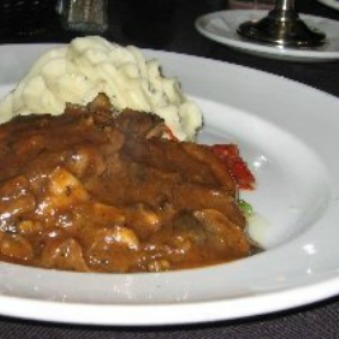
- 4 (3-ounce) center-cut Beef Tenderloin (Filet Mignon) medallions, trimmed of all fat and chilled
- 4 tablespoons butter, divided
- Salt and pepper to taste
- 1 teaspoon Worcestershire sauce
- 2 tablespoons green onions or shallots, finely-chopped
- 1/8 teaspoon garlic, minced
- 1/4 cup mushroom caps, sliced in 1/8-inch thick slices
- 1 tablespoon lemon juice, fresh-squeezed
- 1 teaspoon dry mustard powder
- 1/2 teaspoon thyme leaves, fresh
- 1/4 cup heavy cream
- 1 ounce (2 tablespoons) brandy or cognac
- 1 tablespoon parsley leaves, fresh, chopped
- 1 tablespoon chives, fresh, chopped
- 1/2 teaspoon salt (or to taste)
- Black pepper, freshly-ground, to taste
-
Working with one piece of steak at a time, place each between two pieces of plastic wrap. Working from the center to the edges, gently pound each piece of steak with a meat mallet to 1/2-inch thick.
-
In a small frying pan (8- or 10-inch) over medium heat, heat 1 tablespoon butter for 1 minute. Add the pounded tenderloin steaks, sprinkle with a little salt and pepper; increase heat to medium-high and sautexactly 2 minutes on each side. Remove them to a plate and chill in the refrigerator for 5 minutes.
-
In a large frying pan over medium heat, melt remaining 3 tablespoons butter; stir in Worcestershire sauce. Place the shallots or green onions, garlic, and mushrooms in the center of the pan with the tenderloin steaks around the edges. Using a spoon, stir and toss the mushroom mixture approximately 2 minutes. Add lemon juice, salt. and pepper. Turn the steaks and add the thyme, chopped parsley, and dried mustard powder.
-
Now cook the steaks to the doneness you like. Note: You may want to slightly undercook the steaks prior to adding the cream and brandy so that the reduction process of making the sauce doesn't overcook them. Your steaks are done when the internal temperature registers 120 to 130 degrees F. on your instant-read meat thermometer:
-
What constitutes rare and medium-rare cooked meat? To satisfy government home economists, the Beef Council says rare beef means an internal temperature of 140 degrees F. Well, that is ok if you like well-done and dry meat. If you like moist, rosy meat (like I do), rare begins when the internal temperature registers 120 degrees F. and starts to become medium rare at 125 or 130 degrees F. To cook your meat properly, you must purchase and use a good instant-read digital meat thermometer.
-
Flambé the steaks: -
Check out my web page on How To Flambé for hints and tips.
-
Leave the cooked steak in the frying pan; add the heavy cream and chives.
-
Tilt the pan slightly, and pour the brandy or cognac into the front edge of the pan; turn the heat to high and let the flame (or if electric, light with a match) catch the brandy's vapors and ignite it.
-
Swirl slightly, turn off the heat and let the flame go out.
-
Place steak medallions on individual serving plates and top with the sauce from the pan.
-
Makes 2 servings.
Source: Recipe adapted from a recipe by Chef John J. Vyhnanek from his Good Cooking web site.
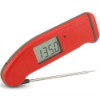 I get many readers asking what cooking/meat thermometer that I prefer and use in my cooking and baking. I, personally, use the Thermapen Thermometer. Originally designed for professional use, the Super-Fast Thermapen Thermometer is used by chefs all over the world. I only endorse a few products, on my web site, that I like and use regularly.
You can learn more or buy yours at: Super-Fast Thermapen Thermometer.
Sponsored Content
Additional Outstanding Steak Recipes:
Beef Tenderloin Steaks Stuffed with Morels
Cabernet-Cherry Filet Mignon
Cabernet Filet Mignon
Chipotle Grilled Filets
Grilled Beef Tenderloin in Cabernet Sauce
Grilled Filet Mignon or T-Bone Steaks
Peppered Top Sirloin Steak
Individual Beef Wellingtons witn Peppercorn Sauce