
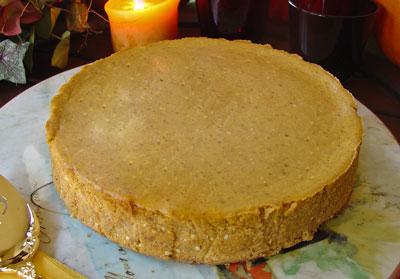
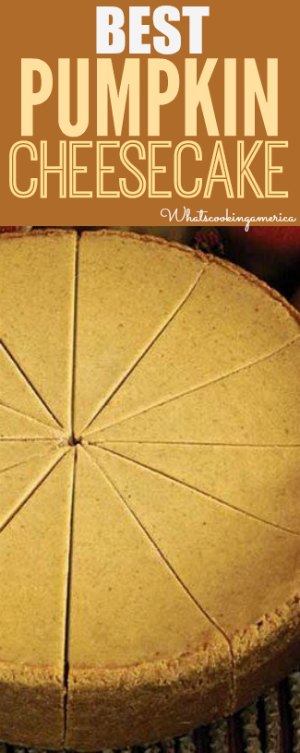
Pumpkin Cheeses is absolutely wonderful and is better tasting than a pumpkin pie! After making this fantastic Pumpkin Cheesecake, you will never again want or have to make a pumpkin pie for the holidays. Let your family be the judge as they will love this cheesecake!
Cheesecake is the absolute perfect dessert for Thanksgiving Dinner. I usually make my cheesecake ahead of time and freeze it. Freezing my cheesecake before Thanksgiving sure saves me a lot of time and stress.
Please read Linda’s tips on Baking A Perfect Cheesecake before making and baking your cheesecake.
Check out more of Linda’s Cheesecake Recipes. Please check out my Thanksgiving Turkey Dinner Menu which includes this delicious Pumpkin Cheesecake.
- 2 (8-ounce) packages cream cheese, room temperature*
- 1 cup granulated sugar
- 1 1/2 teaspoons pure vanilla extract
- 1/4 cup sour cream
- 1/4 cup whipping cream
- 3/4 teaspoon cinnamon, ground
- 1/3 teaspoon ginger, ground
- 1/3 teaspoon nutmeg, ground
- 1/8 teaspoon cloves, ground
- 1/8 cup all-purpose flour
- 4 eggs, room temperature
- 1 1/2 cups pumpkin puree (either canned or homemade)
- 1 cup graham cracker crumbs**
- 1/3 cup hazelnuts, toasted and ground (any type of nut may be used)
- 1/4 cup granulated sugar
- 1/4 cup butter, melted
-
Preheat oven to 350 degrees F. and position rack in center of oven (too high or too low of rack placement will cause baking problems). Lightly grease (butter) a 9-inch springform pan.
-
Prepare Graham Cracker Crust; set aside to cool before using.
-
In a large bowl, combine cream cheese, sugar, and vanilla extract. Add sour cream and whipping cream; beat, on low speed, just until smooth. Mix in cinnamon, ginger, nutmeg, cloves, and flour. Add eggs, one at a time, beating after each addition; beat in pumpkin puree. NOTE: Do not over beat the mixture. You want to avoid beating air into the mixture. Too much air will make the cheesecake fall.
-
Pour pumpkin mixture into prepared graham cracker crust, using the back of a spoon to spread evenly over the crust (this helps get rid of any extra air bubbles).
-
Place cheesecake in center of middle oven rack. Position a baking pan filled halfway with hot water on lower rack.
-
Bake 15 minutes, then lower oven temperature to 300 degrees and bake approximately another 50 to 60 minutes or until edges are light brown and center is almost set. NOTE: There should be no wet spots or liquid areas in the center of the cheesecake. Remember that a cheesecake continues to cook when it is removed from the oven.
-
How to tell when cheesecake is done cooking: The cheesecake is done when center is almost set, but jiggles slightly when gently shaken. For a perfect cheesecake, use a cooking thermometer and take it out of the oven when the cheesecake reaches 150 degrees F. at the center to avoid over baking. Expect a slight shrinkage as it cools. If there is great shrinkage, you have baked it at too high a heat.
-
When the cheesecake is done cooking, turn the oven off. Let cake stand in oven, with door ajar, approximately 30 minutes or until center is completely set.
-
How to prevent cracks in your cheesecake: When the internal temperature of a cheesecake rises beyond 160 degrees F. while baking, it will always crack. To prevent this from happening, use an instant-read cooking thermometer to test its doneness. Take it out of the oven when the cheesecake reaches 150 degrees F. at the center to avoid over baking.
-
NOTE: A wonderful looking baked cheesecake (with no cracks), can crack as it sits on the cooling rack because the cake shrank during cooling and clung to the sides of the springform pan. To avoid this from happening, cool the cheesecake for only a few minutes, and then, using a paring knife, free it from the sides of the pan before allowing it to cool completely. If a crack should appear, simply blend together some sour cream, powdered sugar, and vanilla extract; spread over the top of the cooled cheesecake when ready to serve.
-
Cool cheesecake completely on a wire rack before refrigerating. Cover with plastic wrap and refrigerate 12 to 24 hours before cutting (the cheesecake will solidify to a perfect consistency during this time). To serve, slide a small knife around edges of cake to loosen it and remove sides of the springform pan; transfer onto a cake plate.
-
Learn How To Freeze Cheesecakes.
-
Makes 10 to 12 servings.
-
Preheat oven to 350 degrees F. and position rack in center of oven (too high or too low of rack placement will cause baking problems).
-
Lightly grease (butter) a 9-inch springform pan.
-
In a small bowl, combine graham cracker crumbs, hazelnuts, sugar, and butter. Mix well and press firmly onto bottom of prepared springform pan. Bake 7 minutes or until edges are light brown. Remove from oven and cool crust completely on a wire rack. Maintain oven temperate.
* To quickly bring cream cheese to room temperature, place unwrapped packages in a microwaveable bowl. Microwave on HIGH for 30 to 45 seconds or until slightly softened. Do not let it melt or get warm. Refrigerate if it does.
NOTE: Use a conventional oven rather than a convection oven in baking your cheesecake. The forced hot air from the convection oven causes too much browning and can often cause the center of the cheesecake to collapse.
** Finely ground ginger cookies may be substituted for all or part of the graham cracker crumbs.
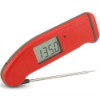 I get many readers asking what cooking/meat thermometer that I prefer and use in my cooking and baking. I, personally, use the Thermapen Thermometer. Originally designed for professional use, the Super-Fast Thermapen Thermometer is used by chefs all over the world. I only endorse a few products, on my web site, that I like and use regularly.
You can learn more or buy yours at: Super-Fast Thermapen Thermometer.
Sponsored Content
You might also like:
Chocolate Hazelnut Swirl Cheesecake
This cheesecake is for serious chocophiles. Imagine the hazelnut spread on a bed of crunchy nuts and a piping hot cup of coffee – it’s a sweet temptation.
Chocolate Peanut Butter Cheesecake
Peanut butter and chocolate! This delightful combination of flavors will remind you of one of your favorite childhood candy bars.
Perfectly Plain Cheesecake
This is just a basic cheesecake recipe, but it can be used as the base for many other varieties. Change the crust, add some chocolate, or just get creative!
Pumpkin Swirl Gingersnap Cheesecake
Pumpkin and plain cheesecake swirled together with a gingersnap crust. Amazing!
Sweet Potato Cheesecake
A wonderful cheesecake with a light sweet potato taste.
Source: Cheesecake photo shared by my sister, Carol Arroyo, and her baking web site called The Baking Pan.
Categories:
Baking Cheesecake Christmas Cream Cheese- Mascarpone Cheese Dessert Recipes Pumpkin Thanksgiving
6 Responses to “Best Pumpkin Cheesecake Recipe”
Megan
The springform pan does not go in the water bath correct?
Nancy
The water bath goes on the rack underneath. Some people do put it directly in the water bath, but then you have to have a large enough pan and the pan has to be sealed so water doesn’t seep in. I always just put the pan of water on the rack below.
Sandy Aycoth
Can you make it without a crust like original new York cheesecake?
Kimberlee
Followed the directions to a tee and this is the BEST cheesecake I’ve ever made!!! Had it for Thanksgiving dessert, and it was devoured. Great recipe!
Sarah k
I used this pumpkin cheesecake recipe and absolutely loved it! If I wanted to make a plain cheesecake using this recipe do I need to ad anything when leaving the pumpkin out??
Whats Cooking America
You can follow our recipe for plain cheesecake that is very delicious: https://whatscookingamerica.net/Cake/PerfectlyPlainCheesecake.htm