
Beverage and Cocktail Recipes
Alcoholic Cocktail Recipe Collection – Non-Alcoholic Beverage Recipe Collection
Find the perfect alcoholic or non-alcoholic beverage and cocktail recipes to serve your family and friends in What’s Cooking America’s large collection of delicious drinks! From favorite beverage recipes, creative cocktails, and eye-opening coffee drinks to refreshing smoothies. It is all here!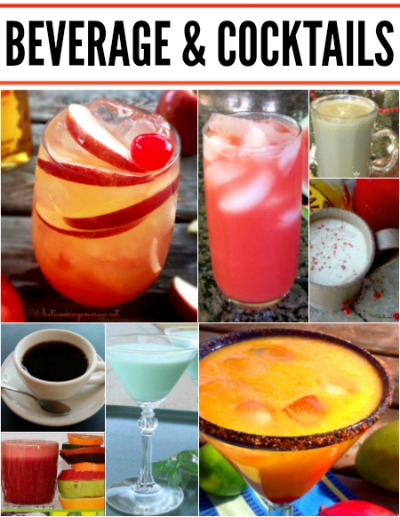
Check out this Basic Simple Syrup Recipe for sweetening your favorite drinks.
Alcoholic Drinks - Absinthe Recipes
Alcoholic Drinks - Bourbon & Whisky Cocktail Recipes
Alcoholic Drinks - Gin Cocktail Recipes
Alcoholic Drinks - Holiday Drink Recipes
Alcoholic Drinks - Ice Cream Cocktail Recipes
Alcoholic Drinks - Limoncello Recipes
Alcoholic Drinks - Liqueur Cocktail Recipes
Alcoholic Drinks - Margarita Recipes
Alcoholic Drinks - Martini Recipes
Alcoholic Drinks - Rum Cocktail Recipes
Alcoholic Drinks - Vodka Cocktail Recipes
Alcoholic Drinks - Wine and Sangria Recipes
Cooking with Wine – How To Cook With Wine
The first and most important rule: Use only wines in your cooking that you would drink. Never, never use any wine that you WOULD NOT DRINK! If your do not like the taste of a wine, you will not like the dish you choose to use it in.
How To Successfully Taste Wine – Wine Tasting Basics
Wine tasting is not the same as drinking it. To experience the true flavor of a wine requires that you slow down and pay attention to your senses of sight, smell, touch, as well as taste.
Non-Alcoholic Drinks - Agua Fresca Recipes
Non-Alcoholic Drinks - Coffee Drink Recipes
Coffee Information
Coffee Time – Java Talk
How to make a perfect cup of coffee
How To Use a French Press
coffee press, plunger press and/or press coffee
How To Use a Moka Pot
Stovetop Espresso Maker
Italian Coffee – Can’t I Just Find a Cup of Joe?
My daughter, a tourist if Italy, wrote this interesting story on Italian coffee.
Espresso Machines
Different Styles for Different Homes
Organic Coffee
Organic Coffee for Your Health and the Environment
Storing Coffee Beans
Non-Alcoholic Drinks - Hot Chocolate Drink Recipes
Non-Alcoholic Drinks - Infused Water/ Flavored Water Drink Recipes
Non-Alcoholic Drinks - Juicing Recipes
Non-Alcoholic Drinks - Lemonade Drink Recipes
Non-Alcoholic Drinks - Milkshake Drink Recipes
Non-Alcoholic Drinks - Smoothie Drink Recipes
Non-Alcoholic Drinks - Tea Drink Recipes
 Tea – Drink to your Health
Whether it’s drunk hot or cold, did you know that tea is one of the best things you can drink?