
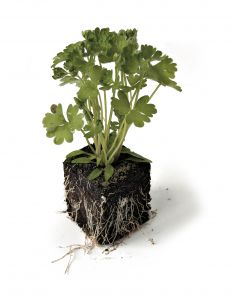
Learn About Parsley
Article contributed by Liz Krause, publisher of the Italian cooking website featuring Easy Italian Recipes.
Parsley is a classic herb which appears in many Mediterranean recipes from Greek to French and naturally, Italian. It is very nutritious, if not the most nutritious herb known. This biennial plant lives for two years before its full life cycle is complete.
There are two popular varieties of the herb, curly parsley which is what we often see used as garnishes and flat parsley, also called Italian parsley. Although both can be used in Italian meals and recipes, the flat parsley has a slightly more bitter taste.
Parsley also makes a good companion plant to tomatoes. Companion planting is when specific plants are purposefully grown near each other for specific reasons. Most reasons are related to the deterrent of harmful insects, or for the attraction of beneficial insects. For example, parsley is recommended to plant near tomato plants because it attracts wasp which like to prey on the harmful tomato hornworm.
History of Parsley:
Parsley dates back to the early Greek and Roman period in history and most likely even before that. However, we do know that parsley was often used as a symbol of victory (as illustrated by the Ancient Greek Olympics which adorned the victorious winners with a crowned wreath made of what else – parsley).
How to Grow Parsley:
Growing parsley is fairly straight forward. However, if growing from seed it is important to keep in mind that the germination period can take approximately 3 to 4 weeks until they begin to grow. Beyond this, it can be grown in most soils and requires watering on a regular basis. Keep in mind, when growing this herb, that the soil must have good drainage, meaning the water can drain properly and not cause the soil to remain waterlogged.
Once the herb begins to grow, create a 6-inch space between plants by using a process called thinning. This simply means to remove any plants which can cause overcrowding. Cut the unwanted herbs at the stem, and do not pull them out as this can disrupt other roots nearby. If planting in a container, remember that parsley has long roots and for this reason should be planted in a taller container rather than a shorter one.
How to Store Parsley
To store parsley you have two main options. Either freeze the herbs or let them dry.
To freeze the herbs: Rinse and pat them dry. Place on paper towels and let dry completely. T hen place on a cookie sheet or other flat surface making sure the leaves do not overlap. Place in a freezer for a few hours until the herbs have frozen. Once frozen remove from the freezer and place in small plastic freezer containers or freezer bags. These will last for 6 months in the freezer. Although they will not have the same fresh texture as fresh herbs, they can still be used in soups, stews, and many meat dishes.
To dry parsley: Simply tie the parsley together by the stems and hang upside down in a dark and dry location. You do not want them exposed to light as this can cause the herb to lose potency. You can also place a brown paper bag over the herb to help prevent light from affecting the herbs. Check the herbs in 2 weeks to see if they have dried. If there is still moisture, let dry for another week.
Once fully dried, take the herbs and over a flat clean surface, rub your hands over the leaves causing them to fall off the stems. Place the crushed and dried parsley in a container, such as a glass jar. Keep in a cool and dark location such as a cupboard or pantry. Dried herbs will keep their freshness for 12 months at which point potency will begin to decrease.
Recipes Using Parsley
Parsley can be used in a variety of ways. It can be used to flavor meats such as leg of lamb or a whole roasted chicken. It can also be used in broths and stocks or simply added in a green salad.
Italian Potato Salad Recipe:
This is an easy recipe which is perfect for a summer picnic or get together.
5 red or white potatoes peeled and cut in 1-inch sizes
1/3 cup of chopped fresh parsley (do not use dried herbs)
2 cloves of garlic crushed and chopped
1/4 cup extra-virgin olive oil
1/4 cup white wine vinegar
Salt and freshly-ground pepper to taste
In a large pan over medium-high heat, add potatoes and cover with cold water; bring to a boil. Reduce heat and simmer, uncovered, approximately 10 to 15 minutes or until just tender (do not let them get mushy, as if you were making mashed potatoes). Remove from heat and drain. As soon as you can handle the potatoes, cut the potatoes into bite-sized chunks and place in a large mixing bowl.
Add the parsley, garlic, olive oil, and vinegar and stir well. NOTE: It is important to do a taste test because some people prefer more vinegar while others prefer less. So adjust quantities to taste. Season to taste with salt and pepper.
Cover the bowl and refrigerate until ready to serve. Use within 3 to 4 days.
Italian Breaded Chicken Breasts:
This recipe is quick to make and requires little effort.
1 cup bread crumbs
1/3 cup chopped fresh parsley
1/2 cup grated Romano or Parmesan cheese
6 (6 to 7 ounces each) chicken breast halves
Olive Oil
Preheat oven to 375 degrees F.
In a shallow pie plate, combine the bread crumbs, parsley, and cheese.
Roll the chicken breasts in the mixture making sure to press the mixture into the chicken to coat all sides.
Place the prepared chicken breasts in a greased oven-proof dish. Drizzle olive oil over the chicken and then cover the pan.
Bake approximately 20 to 40 minutes (depending on size of the chicken breasts) or until a meat thermometer registers an internal temperature of 165 degrees F (juices will run clear when cut with the tip of a knife). Remove from oven.
Serve with a salad and a side dish of your favorite pasta.
Makes 6 servings.
Categories:
Herbs, Spices and Seasoning Hints & Tips