
Cooking A Perfect Ham
Ham is always popular to serve for a holiday dinner. We are sharing our How To Prepare and Cook Perfect Ham resource guide with tips on quantities to purchase, how to thaw ham, cooking time table, carving tips and some of our favorite ham recipes and glazes to help you.
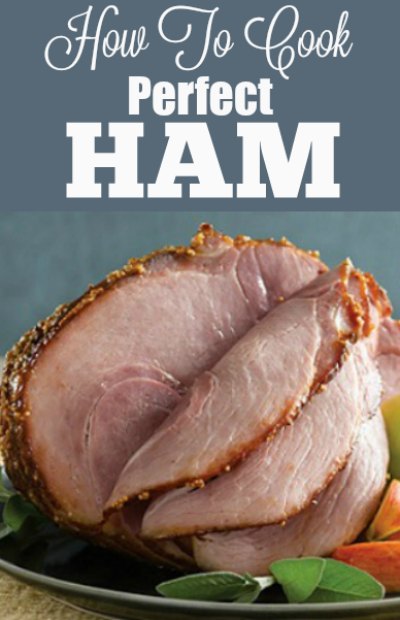
Some of the following information is from The Food Safety and Inspection Service (FSIS). FSIS is the public health agency in the U.S. Department of Agriculture responsible for ensuring that the nation’s commercial supply of meat, poultry, and egg products is safe, wholesome, and correctly labeled and packaged.
Definition – The word HAM means pork which comes from the hind leg of a hog. Ham made from the front leg of a hog will be labeled pork shoulder picnic.
Hams are either ready-to-eat or not. Ready-to-eat hams include prosciutto and fully-cooked hams; they can be eaten right out of the package. Fresh hams must be cooked by the consumer before eating.
Hams may be fresh, cured, or cured and smoked. The usual color for cured ham is deep rose or pink:
Fresh Ham (which is not cured) – is a raw uncured rear leg of a pig. The cut usually comes with the skin still on. The meat is typically pale pink to beige (the color of raw pork). Since the meat is not cured or smoked, it has the flavor of a fresh pork loin roast or pork chops. Its raw color is pinkish red and after cooking, grayish white.
Dry Cured Ham – is cured by burying it in a mound of salt or by rubbing the skin with salt. It is usually hung and air-dried for 6 to 18 months at cool temperatures allowing for dehydration and concentration of flavors. Often a dry cured ham is smoked at low temperatures to help enhance the flavor.
Quantity to Buy – How Much Ham To Purchase
When buying a ham, estimate the size needed according to the number of servings the type of ham should yield:
Boneless Ham: 1/4 to 1/3 pound per serving
Ham with Small Bone: 1/3 to 1/2 pound of meat per serving
Ham with Large Bone: 3/4 to 1 pound of meat per serving
How To Prepare and Cook Perfect Ham – Ham 101
Following information is from Hormel Foods.
Raw pork must be stored in the refrigerator at 40 degrees F. or lower and used within 3 to 5 days of the “sell by” date on the package or it should be frozen.
Ham can be cooked without thawing first. You will need to increase the cooking time when starting with frozen meat. Larger cuts, such as ham roasts, will require up to 1 1/2 times the cooking time of an unfrozen ham cut.
Thawing Frozen Hams – Two methods that can be used to safely thaw ham are the refrigerator method and the cold water method. Never thaw ham on the kitchen counter. The outside of the ham will reach a temperature above 40 degrees F. while the inside is still frozen. The area that reaches a temperature above 40 degrees F. would be susceptible to bacterial growth. Use one of the thawing methods described below.
Refrigerator Method – Thawing ham in the refrigerator is the slowest but safest method and will result in the least amount of moisture loss in comparison to the other methods. The temperature of the refrigerator should be maintained at 35 to 40 degrees F. to discourage growth of harmful organisms as the ham thaws. Leave the ham wrapped and placed on a platter or a tray to catch the drippings as it thaws or unwrap and loosely cover with plastic or foil.
Approximate Refrigerator Thawing Time
Small Ham – 4 to 5 hours per pound
Large Roast – 5 to 7 hours per pound
After thawing in the refrigerator, the ham can be refrigerated safely for 3 to 5 days. If you decide not to cook the ham within this time, the ham can be refrozen. Remember however, that each time the ham is frozen, it loses some of its flavor quality. Do not refreeze ham that has been thawed using the cold water or microwave methods.
Cold Water Method – Thawing ham in cold water is a faster method than thawing in the refrigerator and it is safe as long as the proper precautions are taken. Fill the sink with enough cold tap water to cover the cut of ham, place the ham in a leak-proof bag and put it into the cold water. Be sure that the ham is sealed tightly so that it is not exposed to the water. Meat exposed to the water will result in flavor and color loss, and will have a greater chance of bacterial growth. The water must be replaced with fresh cold water every 30 minutes. Do not use warm or hot water because it will encourage the growth of bacteria.
Approximate Cold Water Thawing Time
Small Ham – 2 to 3 hours
Large Roast – 30 minutes per pound
Important: Do not use the sink for other purposes during the thawing period and be sure the water does not splash onto other preparation surfaces or food.
Once the ham is thawed, remove it from the sink and sanitize all utensils and surfaces affected during the thawing period. The ham should be cooked immediately after thawing and should not be stored for any period of time. Do not refreeze the ham that has been thawed using this method, unless it has been cooked first.
Favorite Ham Recipes:
 Baked Honey-Glazed Ham
Balsamic and Dijon Glazed Ham with Roasted Pearl Onions
Herb-Crusted Ham
Honey-Glazed Ham Dinner Menu – includes Recipes
How To Cook A Fully Cooked Ham: Both vacuum-packaged fully cooked and canned hams can be eaten cold just as they come from their packaging. However, if you want to reheat these fully-cooked hams, set the oven no lower than 325 degrees F. and heat to an internal temperature of 140 degrees F. as measured with a meat thermometer.
For fully cooked hams that has been repackaged in any other location outside the plant or for leftover fully cooked ham, heat to a temperature of 140 degrees F.
Cook-before-eating hams must reach a temperature of 160 degrees F. to be safely cooked before serving. Cook in an oven set no lower than 325 degrees F. Hams can also be safely cooked in a microwave oven, other counter top appliances and on the stove top. Consult a cookbook for specific methods and timing.
Country hams or dry-cured hams (ham that has been cured, smoked and aged for a period ranging from a few months to a year or more) can be soaked 4 to 12 hours or longer in the refrigerator to reduce the salt content before cooking. Then they can be cooked by boiling or baking and must much a temperature of 160 degrees F. Follow the manufacturer’s cooking instruction.
Ham Glazes – Glazes can range from a simple brush of maple syrup to complicated mixtures made of sugars and seasonings. Prepare your favorite ham glaze and brush evenly over the surface of the warm ham. The glaze should be added during the last 20 to 30 minutes of heating time so the glaze does not burn.
Timetable For Cooking Ham:
Set oven temperature to 325 degrees F. Both cook-before-eating cured and fresh hams should be cooked to an internal temperature 160 degrees F. Reheat fully-cooked ham to an internal temperature 140 degrees F.
Use a Cooking or Meat Thermometer for the perfect ham for your dinner. You definitely need a Cooking or Meat Thermometer! Never guess if your meat is done again!
A precooked ham does not have to be cooked, but will taste better if you heat it thoroughly to an internal temperature of 140 degrees F. (60 degrees C). Place the ham in a 325 degrees F. oven (163 degrees C). You want to reheat the ham without drying it out. he best way to do this is to place the ham on a rack in a roasting pan. Add water to the bottom of the pan and cover tightly with aluminum foil (cover the pan with the ham).
Whole or Boneless ham (10-15 pounds): Cook approximately 12 to 15 minutes per pound
Half ham (5-7 pounds): Cook approximately 18 to 20 minutes per pound
 This is the type of cooking and meat thermometer that I prefer and use in my cooking. I get many readers asking what cooking/meat thermometer that I prefer and use in my cooking and baking. I, personally, use the Thermapen Thermometer shown in the photo on the right. To learn more about this excellent thermometer and to also purchase one (if you desire), just click on the underlined: Thermapen Thermometer.
Adding Ham Glaze: When meat thermometer registers 135 degrees F., unwrap the ham and apply your favorite glaze. Do not rewrap with aluminum foil. Increase oven temperature to 400 degrees F. and bake approximately 15 to 20 minutes longer until the glaze is burnished and the meat thermometer registers 140 degrees F.
Carving Ham – How To Carve Ham:
When checking the temperature of your ham, insert meat thermometer so tip is in thickest part of ham, not resting in fat or touching bone. Cook until the ham reaches an internal temperature of 160 degrees F.
Remove from oven, cover loosely with aluminum foil, and let sit approximately 15 to 20 minutes. NOTE: Cutting into the meat too early will cause a significant loss of juice. Do not skip the resting stage.
 Use a long, thin, sharp knife (choose a carving knife that is long enough to cut the entire length of the cut). Sharpen your Carving Knife, if necessary, using either a sharpening rod or stone.

Steel Sharpening Rod – To use a Steel Sharpening Rod or Steel, pull the edge down and across the rod, holding the carving knife at a 22-degree angle. Repeat this process anywhere from 5 to 10 times.
Sharpening Stone (whetstones) – To use a Sharpening Stone (whetstones), hold the carving knife at a 10- to 15-degree angle to the stone. Push back and forth in smooth, steady strokes.
Place the ham on a cutting board and trim off 2 or 3 slices, parallel to its length, from the thin side of the ham.
Turn the ham so that it rests on the flat side created from trimming off the slices. Hold the ham firmly with a carving fork and starting at the shank end, cut slices across the ham, down to the bone.
After cutting the slices, cut parallel along the bone to release the slices. Place slices on a serving platter.
Turn the ham and continue to carve slices in the same manner.
Ham Do’s And Do Nots:
Do allow the ham to sit at room temperature for 1 to 2 hours before cooking.
Do trim the fat, leaving a 1/4-inch layer. Score the fat into a diamond pattern by cutting 1/4-inch to 1/2-inch deep into 1-inch to 2-inch squares. Not only does scoring look nice, but it allows fat to render from the ham and provides greater surface area for the glaze to stick to. You may not be able to score a ham that has been “super trimmed” and has little fat left.
Do use a sharp carving knife with a thin blade to cut the ham, or buy a spiral-sliced ham.
Do Not forget to line your water pan with aluminum foil if cooking a ham at high temperature and with an empty water. Cleanup will be much easier.
Do Not baste the ham with its drippings during cooking, as they tend to be too salty.
Do Not coat the ham with sugar, honey or glaze until the last hour of cooking. One application is usually enough.
Do Not throw out the ham bone – use it to flavor soups or bean dishes.
Ham – the all-purpose leftover – You can use leftover ham in soups, casseroles, pasta dishes, and salads. And, like turkey leftovers at Thanksgiving, ham makes an wonderful sandwich. It is a perfect pairing for many egg dishes. Chopped ham tastes great in frittatas (an egg dish resembling an omelet that’s not folded over and is usually finished under the broiler) and quiches. Ham is ideal pan-fried and served with scrambled eggs. See the delicious recipes using ham in the left column.
Remember to save the ham bone for your soups. Especially Lentil Soup and Senate Bean Soup. Just remember to watch how you salt or season the leftover dishes you make. Ham tends to be salty and can make whatever you are making salty, too.
Ham Nutrition – Ham is one of the leanest cuts of pork. According to the USDA, a 3.4 ounce (100 gram) serving of roasted extra-lean ham has about 145 calories, 5.5 grams of fat, 21 grams of protein and 53 milligrams of cholesterol. Ham contains a significant amount of vitamins B-1 and B-12. While fresh pork is low in sodium, ham is high in sodium as a result of the curing process. According to the USDA, a serving of ham can contain about one-half of the recommended daily intake of sodium.
Foodborne Organisms – These organisms are associated with ham.
Trichinella spiralis (trichina) – worms sometimes present in hogs. All hams are specifically processed to USDA guidelines to kill trichinae.
Staphylococcus aureus (staph) – is destroyed by cooking and processing but can be re-introduced via mishandling; the bacteria can then produce a toxin which is not destroyed by further cooking. Dry curing may or may not destroy S. aureus, but the high salt content on the exterior inhibits these bacteria. When the ham is sliced, the moister interior will permit staphylococcal multiplication; thus sliced dry-cured hams must be refrigerated.
Mold – can often be found on country cured ham. We believe most of these are harmless but some molds can produce mycotoxins. Molds grow on hams during the long curing and drying process because the high salt and low temperatures it with hot water and scrub off the mold with a stiff vegetable brush.
Glossary of Ham Terms:
BUTT END, HALF OR PORTION – The upper, meatier part of the whole leg; a butt portion has had some center slices removed for separate sale as ham steaks or center cut ham slices. The half includes this meat.
CANNED HAM – Canned hams come in two forms:
Shelf stable – Store on shelf up to 2 years at room temperature. Generally not over 3 pounds in size.
Refrigerated – May be stored in the refrigerator up to 6 to 9 months. Its weight can be up to 8% more than original uncured weight due to uptake of water during curing. It need not be labeled “Added water” except for “In Natural Juices.” Net Weight is the weight of the actual ham excluding the container.
CAPACOLLA – Boneless pork shoulder butts which are dry cured; not necessarily cooked.
HAM CAPACOLLA – Is made with ham instead of pork shoulder butts.
COOK BEFORE EATING – Needs further cooking. Is not completely cooked in the plant and should be cooked to 160F.
COTTAGE HAM – A ham made from the shoulder butt end.
COUNTRY HAM – Uncooked, cured, dried, smoked-or-not smoked meat products made from a single piece of meat from the hind leg of a hog or from a single piece of meat from a pork shoulder. Smithfield and country hams are not fully cooked but are dry cured to be safe stored at room temperature.
FRESH HAM – The uncured leg of pork. Since the meat is not cured or smoked, it has the flavor of a fresh pork loin roast or pork chops. Its raw color is pinkish red and after cooking, greyish white.
FULLY COOKED – Needs no further cooking. Fully cooked in plant. Can be eaten directly as it comes from its packaging or reheated.
GELATIN – About one-fourth ounce of dry gelatin is often added before a canned ham is sealed to cushion the ham during shipment. During processing, natural juices cook out of the ham and combine with the gelatin. When the ham cools, a jell forms.
HAM – The product is at least 20.5% protein in lean portion and contains no added water.
HAM with NATURAL JUICES – The product is at least 18.5% protein. Can weigh 8% more than uncured weight. Example: canned hams.
HAM – WATER ADDED – The product is at least 17.0% protein with 10% added solution; it can weigh 8% more after curing than uncured.
HAM AND WATER PRODUCTS – Product may contain any amount of water but label must indicate percent of “added ingredients.” For example, “X % of weight is added ingredients” for any canned ham with less than 17.0% protein.
HAM STEAK – Another name for center cut ham slices.
HICKORY-SMOKED HAM – A cured ham which has been smoked by hanging over burning hickory wood chips in a smokehouse. May not be labeled “hickory smoked” unless hickory wood has been used.
HONEY-CURED – May be shown on the labeling of a cured product if honey is the only sweetening ingredient or is at least half the sweetening ingredients used, and if the honey is used in an amount sufficient to flavor and/or affect the appearance of the finished product.
“LEAN” HAM – The term “lean” may be used on a ham’s label provided the product contains less than 10 grams fat, 4.5 grams or less of saturated fat, and less than 95 milligrams cholesterol per 100 grams and Reference Amount Customarily Consumed (RACC).
“EXTRA LEAN” HAM – A ham labeled “extra lean” must contain less than 5 grams fat, less than 2 grams saturated fat and the same cholesterol as allowed per the amount of “lean” ham.
PICNIC, PORK SHOULDER PICNIC – A front shoulder cut of pork which has been cured in the same manner as ham.
PROSCIUTTO HAM – An Italian-style dry cured raw ham; not smoked; often coated with pepper. Proscuitti can be eaten raw because of the way they are processed. PARMA HAM is prosciutto from the Parma locale in Italy. These hams tend to be larger than the U.S. produced product, as Italian hogs are larger at slaughter.
SECTIONED AND FORMED or CHUNKED AND FORMED – A boneless ham that is made from different cuts, tumbled or massaged and reassembled into a casing or mold and fully cooked. During this process it is usually thoroughly defatted.
SHANK END, HALF OR PORTION – The lower, slightly pointed part of the leg. A “portion” has the center slices removed for separate sale as “ham steaks” or center cut ham slices. The half includes this meat.
SKINLESS, SHANKLESS – A ham with all of the skin and the shank removed. The leg bone and aitch (hip) bone remain.
SUGAR CURED – A term that may appear on ham labels if cane or beet sugar is at least half the sweetening ingredients used and if the sugar is used in an amount sufficient to flavor and/or affect the appearance of the finished product. Most hams contain sugar in the curing mixture.
WESTPHALIAN HAM – A German-style dry cured ham that is similar to Prosciutto; smoked, sometimes with juniper berries. Also called Westfalischer Schinken.
Favorite Recipes Using Ham:
Baked Eggs and Mushrooms in Ham Crisps
Prosciutto & Gruyere Pastry Pinwheels
Prosciutto de Parma Quesadillas
Roasted Asparagus Wrapped in Prosciutto
11 Responses to “How To Prepare and Cook Perfect Ham”
Marion
Not enough instruction on cooking ham steak… that was my search!! And the “manufacturer” (processor?) did not include ANY cooking information
Linda Stradley
How can I help you?
DH Malloy
Looking for recipes for how to prepare a fresh ham, not smoked. I am a bit surprised to see ham referenced as beef! Last I heard, ham was always pork!
Whats Cooking America
Thanks for catching the typo! This has been fixed. 🙂
Whats Cooking America
The only way that ham gets it’s flavor is by smoking the meat. If the meat wasn’t smoked then it would just be a Pork roast.
SUSAN
I purchased a half ham. fully cooked.
I want to know how long will it keep in the frig. After it’s been cooked?
Whats Cooking America
You can typically refrigerate cooked food for up to 1 week.
Jim
Not an experienced cook. Far from it. I want to bake a ham for Easter to feed about 10 people. HELP!
Whats Cooking America
You’ve come to the right page. All the ham cooking tips and links to several different ham recipes for glaze/flavor options.
Angela A Levi
Thanks so much for this comprehensive information!It’s so nice to find it here in one place and even ways to use the left overs.I really needed it for I was planning to use ham and had no idea where to begin.
Nancy
You’re welcome and thank you for visiting What’s Cooking America!
Nancy