
There is a dispute about who actually made the first hamburger and bun in America. Have you ever wondered where the first hamburger on a bun came from? Which story you believe depends on your definition of a hamburger.
Is it a hamburger when served on a bun? Or is it a hamburger when served between two slices of bread?
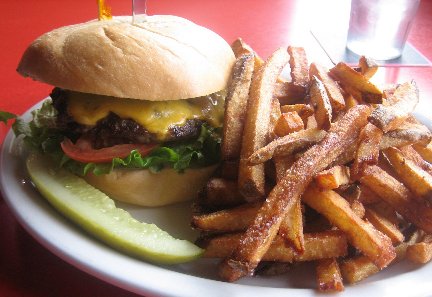
Tracing history back thousands of years, we learn that even the ancient Egyptians ate ground meat, and down through the ages we also find that ground meat has been shaped into patties and eaten all over the world under many different name.
1121 – 1209 – Genghis Khan (1162-1227), crowned the “emperor of all emperors,” and his army of fierce Mongol horsemen, known as the “Golden Horde,” conquered two thirds of the then known world. The Mongols were a fast-moving, cavalry-based army that rode small sturdy ponies. They stayed in their saddles for long period of time, sometimes days without ever dismounting. They had little opportunity to stop and build a fire for their meal.
The entire village would follow behind the army on great wheeled carts they called “yurts,” leading huge herds of sheep, goats, oxen, and horses. As the army needed food that could be carried on their mounts and eaten easily with one hand while they rode, ground meat was the perfect choice. They would use scrapings of lamb or mutton which were formed into flat patties. They softened the meat by placing them under the saddles of their horses while riding into battle. When it was time to eat, the meat would be eaten raw, having been tenderized by the saddle and the back of the horse.
1238 – When Genghis Khan’s grandson, Khubilai Khan (1215-1294), invaded Moscow, they naturally brought their unique dietary ground meat with them. The Russians adopted it into their own cuisine with the name “Steak Tartare,” (Tartars being their name for the Mongols). Over many years, Russian chefs adapted and developed this dish and refining it with chopped onions and raw eggs.
15th Century
Beginning in the fifteenth century, minced beef was a valued delicacy throughout Europe. Hashed beef was made into sausage in several different regions of Europe.
1600s – Ships from the German port of Hamburg, Germany began calling on Russian port. During this period the Russian steak tartare was brought back to Germany and called “tartare steak.”
18th and 19th Centuries
Hamburg Steak:
In the late eighteenth century, the largest ports in Europe were in Germany. Sailors who had visited the ports of Hamburg, Germany and New York, brought this food and term “Hamburg Steak” into popular usage. To attract German sailors, eating stands along the New York city harbor offered “steak cooked in the Hamburg style.”
Immigrants to the United States from German-speaking countries brought with them some of their favorite foods. One of them was Hamburg Steak. The Germans simply flavored shredded low-grade beef with regional spices, and both cooked and raw it became a standard meal among the poorer classes. In the seaport town of Hamburg, it acquired the name Hamburg steak. Today, this hamburger patty is no longer called Hamburg Steak in Germany but rather “Frikadelle,” “Frikandelle” or “Bulette,” orginally Italian and French words.
According to Theodora Fitzgibbon in her book The Food of the Western World – An Encyclopedia of food from North American and Europe:
The originated on the German Hamburg-Amerika line boats, which brought emigrants to America in the 1850s. There was at that time a famous Hamburg beef which was salted and sometimes slightly smoked, and therefore ideal for keeping on a long sea voyage. As it was hard, it was minced and sometimes stretched with soaked breadcrumbs and chopped onion. It was popular with the Jewish emigrants, who continued to make Hamburg steaks, as the patties were then called, with fresh meat when they settled in the U.S.
The Origin of Hamburgers and Ketchup, by Prof. Giovanni Ballarini:
The origin of the hamburger is not very clear, but the prevailing version is that at the end of 1800′ s, European emigrants reached America on the ships of the Hamburg Lines and were served meat patties quickly cooked on the grill and placed between two pieces of bread.
Invention of Meat Choppers:
Referring to ground beef as hamburger dates to the invention of the mechanical meat choppers during the 1800s. It was not until the early nineteenth century that wood, tin, and pewter cylinders with wooden plunger pushers became common. Steve Church of Ridgecrest, California uncovered some long forgotten U. S. patents on Meat Cutters:
E. Wade received Patent Number x5348 on January 26, 1829 for what may be the first patented “Meat Cutter.” The patent shows choppers moving up and down onto a rotating block.
G. A. Coffman of Virginia received Patent Number 3935 on February 28, 1845 for an “Improvement in Machines for Cutting Sausage-Meat” using a spiral feeder and rotating knives something like a modern food grinder.
Old Restaurant Menus:
Many historians claim the first printed American menu was in 1826 on New York’s Delmonico’s Restaurant. Ellen Steinberg, Ph.D, of Illinois sent me the following information from the Nutrition Today Magazine, Volume 39, January/February 2004, pp 18-25:
Food in American History, Part 6 – Beef (Part 1): Reconstruction and Growth Into the 20th Century (1865-1910), by Louis E. Grivetti, PhD, Jan L. Corlett, PhD, Bertram M. Gordon, PhD, and Cassius T. Lockett, PhD:
Others have written the first hamburger – specifically hamburger steak – was served in 1834 at Delmonico’s Restaurant, New York City, for $.10. However, this oft-quoted origin is not based on the original Delmonico menu but rather a facsimile, and it can be demonstrated through careful scholarship that the published facsimile could not be correct, because the printer of the purported original menu was not in business in 1834!
According to the Los Angeles, CA Metropolitan New-Enterprise newspaper article, Old Menus Tell the History of Hamburgers in L.A., by Roger M. Grace:
From 1871-1884, “Hamburg Beefsteak” was on the “Breakfast and Supper Menu” of the Clipper Restaurant at 311/313 Pacific Street in San Fernando. It cost 10 cents—the same price as mutton chops, pig’s feet in batter, and stewed veal. It was not, however, on the dinner menu; “Pig’s Head” “Calf Tongue” and “Stewed Kidneys” were.
Hamburger Steak, Plain and Hamburger Steak with Onions, was served at the Tyrolean Alps Restaurant at the 1904 St. Louis World’s Fair.
Old Cookbooks:
1758 – By the mid-18th century, German immigrants also begin arriving in England. One recipe, titled “Hamburgh Sausage,” appeared in Hannah Glasse’s 1758 English cookbook called The Art of Cookery Made Plain and Easy. It consisted of chopped beef, suet, and spices. The author recommended that this sausage be served with toasted bread. Hannah Glasse’s cookbook was also very popular in Colonial America, although it was not published in the United States until 1805. This American edition also contained the “Hamburgh Sausage” recipe with slight revisions.
1844 – The original Boston Cooking School Cook Book, by Mrs. D.A. Lincoln (Mary Bailey), 1844 had a recipe for Broiled Meat Cakes and also Hamburgh Steak:
Broiled Meat Cakes – Chop lean, raw beef quite fine. Season with salt, pepper, and a little chopped onion, or onion juice. Make it into small flat cakes, and broil on a well-greased gridiron or on a hot frying pan. Serve very hot with butter or Maitre de’ Hotel sauce.
Hamburgh Steak – Pound a slice of round steak enough to break the fibre. Fry two or three onions, minced fine, in butter until slightly browned. Spread the onions over the meat, fold the ends of the meat together, and pound again, to keep the onions in the middle. Broil two or three minutes. Spread with butter, salt, and pepper.
1894 – In the 1894 edition of the book The Epicurean: A Complete Treatise of Analytical & Practical Studies, by Charles Ranhofer (1836-1899), chef at the famous Delmonico’s restaurant in New York, there is a listing for Beef Steak Hamburg Style. The dish is also listed in French as Bifteck Hambourgeoise. What made his version unique was that the recipe called for the ground beef to be mixed with kidney and bone marrow:
One pound of tenderloin beef free of sinews and fat; chop it up on a chopping block with four ounces of beef kidney suet, free of nerves and skin or else the same quantity of marrow; add one ounce of chopped onions fried in butter without attaining color; season all with salt, pepper and nutmeg, and divide the preparation into balls, each one weighing four ounces; flatten them down, roll them in bread-crumbs and fry them in a sautpan in butter. When of a fine color on both sides, dish them up pouring a good thickened gravy . . . over.”
1906 – Upton Sinclair (1878-1968), American novelist, wrote in his book called The Jungle, which told of the horrors of Chicago meat packing plants. This book caused much distrust in the United States regarding chopped meat. Sinclair was surprised that the public missed the main point of his impressionistic fiction and took it to be an indictment of unhygienic conditions of the meat packing industry. This caused people to not trust chopped meat for several years.
History of American Hamburgers
Only one of the claimants below served their hamburgers on a bun – Oscar Weber Bilby in 1891. The rest served them as sandwiches between two slices of bread.
Most of the following stories on the history of the hamburgers were told after the fact and are based on the recollections of family members. For many people, which story or legend you believe probably depends on where you are from. You be the judge! The claims are as follows:
1885 – Charlie Nagreen of Seymour, Wisconsin – At the age of 15, he sold hamburgers from his ox-drawn food stand at the Outagamie County Fair. He went to the Outagamie County Fair and set up a stand selling meatballs. Business wasn’t good and he quickly realized that it was because meatballs were too difficult to eat while strolling around the fair. In a flash of innovation, he flattened the meatballs, placed them between two slices of bread and called his new creation a hamburger. He was known to many as “Hamburger Charlie.” He returned to sell hamburgers at the fair every year until his death in 1951, and he would entertain people with guitar and mouth organ and his jingle:
Hamburgers, hamburgers, hamburgers hot; onions in the middle, pickle on top. Makes your lips go flippity flop.
The town of Seymour, Wisconsin is so certain about this claim that they even have a Hamburger Hall of Fame that they built as a tribute to Charlie Nagreen and the legacy he left behind. The town claims to be “Home of the Hamburger” and holds an annual Burger Festival on the first Saturday of August each year. Events include a ketchup slide, bun toss, and hamburger-eating contest, as well as the “world’s largest hamburger parade.”
On May 9, 2007, members of the Wisconsin legislature declared Seymour, Wisconsin, as the home of the hamburger:
Whereas, Seymour, Wisconsin, is the right home of the hamburger; and,
Whereas, other accounts of the origination of the hamburger trace back only so far as the 1880s, while Seymour’s claim can be traced to 1885; and,
Whereas, Charles Nagreen, also known as Hamburger Charlie, of Seymour, Wisconsin, began calling ground beef patties in a bun “hamburgers” in 1885; and,
Whereas, Hamburger Charlie first sold his world-famous hamburgers at age 15 at the first Seymour Fair in 1885, and later at the Brown and Outagamie county fairs; and,
Whereas, Hamburger Charlie employed as many as eight people at his famous hamburger tent, selling 150 pounds of hamburgers on some days; and,
Whereas, the hamburger has since become an American classic, enjoyed by families and backyard grills alike; now, therefore, be it
Resolved by the assembly, the senate concurring, That the members of the Wisconsin legislature declare Seymour, Wisconsin, the Original Home of the Hamburger.
1885 – The family of Frank and Charles Menches from Akron, Ohio, claim the brothers invented the hamburger while traveling in a 100-man traveling concession circuit at events (fairs, race meetings, and farmers’ picnics) in the Midwest in the early 1880s. During a stop at the Erie County Fair in Hamburg, New York, the brothers ran out of pork for their hot sausage patty sandwiches. Because this happened on a particularly hot day, the local butchers stop slaughtering pigs. The butcher suggested that they substitute beef for the pork. The brothers ground up the beef, mixed it with some brown sugar, coffee, and other spices and served it as a sandwich between two pieces of bread. They called this sandwich the “hamburger” after Hamburg, New York where the fair was being held. According to family legend, Frank didn’t really know what to call it, so he looked up and saw the banner for the Hamburg fair and said, “This is the hamburger.” In Frank’s 1951 obituary in The Los Angeles Times, he is acknowledged him as the ”inventor” of the hamburger.
Hamburg held its first Burgerfest in 1985 to mark the 100th anniversary of the birth of the hamburger after organizers discovered a history book detailing the burger’s origins.
In 1991, Menches and his siblings stumbled across the original recipe among some old papers their great-grandmother left behind. After selling their burgers at county fairs for a few years, the family opened up the Menches Bros. Restaurant in Akron, Ohio. The Menches family is still in the restaurant business and still serving hamburgers in Ohio.
On May 28, 2005, the town of Akron, Ohio hosted the First Annual National Hamburger Festival to celebrate the 120th Anniversary of the invention of the hamburger. The festival will be dedicated to Frank and Charles Menches. That is how sure the city of Akron is on the Menches’ family claim on the contested contention that two residents invented the hamburger. The Ohio legislature is also considering making hamburgers the state food.
1891 – The family of Oscar Weber Bilby claim the first-known hamburger on a bun was served on Grandpa Oscar’s farm just west of Tulsa, Oklahoma in 1891. The family says that Grandpa Oscar was the first to add the bun, but they concede that hamburger sandwiches made with bread may predate Grandpa Oscar’s famous hamburger.
Michael Wallis, travel writer and reporter for Oklahoma Today magazine, did an extensive search in 1995 for the true origins of the hamburger and determined that Oscar Weber Bilby himself was the creator of the hamburger as we know it. According to Wallis’s 1995 article, Welcome To Hamburger Heaven, in an interview with Harold Bilby:
The story has been passed down through the generations like a family Bible. “Grandpa himself told me that it was in June of 1891 when he took up a chunk of iron and made himself a big ol’ grill,” explains Harold. “Then the next month on the Fourth of July he built a hickory wood fire underneath that grill, and when those coals were glowing hot, he took some ground Angus meat and fired up a big batch of hamburgers. When they were cooked all good and juicy, he put them on my Grandma Fanny’s homemade yeast buns – the best buns in all the world, made from her own secret recipe. He served those burgers on buns to neighbors and friends under a grove of pecan trees . . . They couldn’t get enough, so Grandpa hosted another big feed. He did that every Fourth of July, and sometimes as many as 125 people showed up.”
Simple math supports Harold Bilby’s contention that if his Grandpa served burgers on Grandma Fanny’s buns in 1891, then the Bilbys eclipsed the St. Louis World’s Fair vendors by at least thirteen years. That would make Oklahoma the cradle of the hamburger. “There’s not even the trace of a doubt in my mind,” say Harold. “My grandpa invented the hamburger on a bun right here in what became Oklahoma, and if anybody wants to say different, then let them prove otherwise.”
In 1933, Oscar and his son, Leo, opened the family’s first hamburger stand in Tulsa, Oklahoma, called Weber’s Superior Root Beer Stand. They still use the same grill used in 1891, with one minor variation, the wood stove has been converted to natural gas. In a letter to me, Linda Stradley, dated July 31, 2004, Rick Bilby states the following:
My great-grandfather, Oscar Weber Bilby invented the hamburger on July 4, 1891. He served ground beef patties that were seared to perfection on a open flame from a hand-made grill. My great-grandmother Fanny made her own home-made yeast hamburger buns to put around the ground beef patties. They served this new sandwich along with their tasty home-made rood beer which was also carbonated with yeast. People would come for all over the county on July 4th each year to consume and enjoy these treats. To this day we still cook our hamburger on grandpa’s grill, which is now fired by natural gas.
On April 13, 1995, Governor Frank Keating of Oklahoma proclaimed that the real birthplace of the hamburger on the bun, was created and consumed in Tulsa in 1891. The State of Oklahoma Proclamation states:
Whereas, scurrilous rumors have credited Athens, Texas, as the birthplace of the hamburger, claiming for that region south of the Red River commonly known as Baja Oklahoma a fame and renown which are hardly its due; and
Whereas, the Legislature of Baja Oklahoma has gone so far as to declare April 3, 1995, to be Athens Day at the State Capitol, largely on the strength of this bogus claim, and
Whereas, while the residents, the scenery, the hospitality and the food found in Athens are no doubt superior to those in virtually any other locale, they must be recognized. In the words of Mark Twain, as “the lightning bug is to the lightning” when compared with the Great City of Tulsa in the Great State of Oklahoma; and
Whereas, although someone in Athens, in the 1860’s, may have place cooked ground beef between two slices of bread, this minor accomplishment can in no way be regarded comes on a bun accompanied by such delight as pickles, onions, lettuce, tomato, cheese and, in some cases, special sauce; and
Whereas, the first true hamburger on a bun, as meticulous research shows, was created and consumed in Tulsa in 1891 and was only copied for resale at the St. Louis World’s Fair a full 13 years after that momentous and history-making occasion:
Now Therefore, I, Frank Keating, Governor of the State of Oklahoma, do hereby proclaim April 12, 1995, as THE REAL BIRTHPLACE OF THE HAMBURGER IN TULSA DAY.
1900 – Louis Lassen of New Haven, Connecticut is also recorded as serving the first “burger” at his New Haven luncheonette called Louis’ Lunch Wagon. Louis ran a small lunch wagon selling steak sandwiches to local factory workers. A frugal business man, he did not like to waste the excess beef from his daily lunch rush. It is said that he ground up some scraps of beef and served it as a sandwich, the sandwich was sold between pieces of toasted bread, to a customer who was in a hurry and wanted to eat on the run.
Kenneth Lassen, Louis’ grandson, was quoted in the September 25, 1991 Athens Daily Review as saying;
“We have signed, dated and notarized affidavits saying we served the first hamburger sandwiches in 1900. Other people may have been serving the steak but there’s a big difference between a hamburger steak and a hamburger sandwich.”
In the mid-1960s, the New Haven Preservation Trust placed a plaque on the building where Louis’ Lunch is located proclaiming Louis’ Lunch to be the first place the hamburger was sold.
Louis’ Lunch is still selling their hamburgers from a small brick building in New Haven. The sandwich is grilled vertically in antique gas grills and served between pieces of toast rather than a bun, and refuse to provide mustard or ketchup.
Library of Congress named Louis’ Lunch a “Connecticut Legacy.” The following is taken from the Congressional Record, 27 July 2000, page E1377:
Honoring Louis’ Lunch on Its 105th Anniversary – Representative Rosa L. DeLauro:
. . . it is with great pleasure that I rise today to celebrate the 105th anniversary of a true New Haven landmark: Louis’ Lunch. Recently the Lassen family celebrated this landmark as well as the 100th anniversary of their claim to fame — the invention and commercial serving of one of America’s favorites, the hamburger . . . The Lassens and the community of New Haven shared unparalleled excitement when the Library of Congress named Louis’ Lunch a “Connecticut Legacy” — nothing could be more true.
1901 or 1902 – Bert W. Gary of Clarinda, Iowa, in an article by Paige Carlin for the Omaha World Herald newspaper, takes no credit for having invented it, but he stakes uncompromising claim to being the “daddy” of the hamburger industry. He served his hamburger on a bun:
The hamburger business all started about 1901 or 1902 (The Grays aren’t sure which) when Mr. Gray operated a little cafe on the east side of Clarinda’s Courthouse Square.
Mr. Gray recalled: “There was an old German here named Ail Wall (or Wahl, maybe) and he ran a butcher shop. One day he was stuffing bologna with a little hand machine, and he said to me: ‘Bert, why wouldn’t ground meat make a good sandwich?'”
“I said I’d try it, so I took this ground beef and mixed it with an egg batter and fried it. I couldn’t bet anybody to eat it. I quit the egg batter and just took the meat with a little flour to hold it together. The new technique paid off.”
“He almost ran the other cafes out of the sandwich business,” Mrs. Gray put in. “He could make hamburgers so nice and soft and juicy – better than I ever could,” she added.
“This old German, Wall, came over here from Hamburg, and that’s what he said to call it,” Mr. Gray explained. “I sold them for a nickel apiece in those days. That was when the meat was 10 or 12 cents a pound,” he added. “I bought $5 or $6 worth of meat at a time and I got three or four dozen pans of buns from the bakery a day.”
One time the Grays heard a conflicting claim by a man (somewhere in the northern part of the state) that he was the hamburger’s inventor. “I didn’t pay any attention to him,” Mr. Gray snorted. “I’ve got plenty of proof mine was the first,” he said.
1904 World’s Fair – Louisiana Purchase Exhibition
1904 – The hamburger gets its first widespread attention at the 1904 World’s Fair in St. Louis, Missouri, also known as the Louisiana Purchase Exhibition, where it created a sensation. A reporter for the New York Tribune wrote from the 1904 St. Louis World’s Fair of a new sandwich called a hamburger, “the innovation of a food vendor on the pike.” By “Pike” he meant the World’s Fair midway.
Most Texans believe the vendor in question was Fletch Davis (1864-1941), also known as “old Dave” who owned a lunch counter in Athens, Texas. Supposedly Fletch Davis, at his Athens lunch counter, took some raw hamburger steak and placed it on his flat grill and fried it until it was a crisp brown on both sides. Then he placed the browned patty of meat between two thick slices of homemade toast and added a thick slice of raw onion to the top. He offered it as a special to his patrons to see if they would like it.
According to some historians, he opened up a concession stand and began selling the ground beef patty sandwich at the amusement area, known as The Pike (there is no evidence for that claim, however). According to the book Beyond The Ice Cream Cone – The Whole Scoop on Food at the 1904 World’s Fair by Pamela J. Vaccaro:
There is no Fletcher Davis on the official concessionaire’s list or on the final financial balance sheet of the LPE Co., and the company certainly would not have let anyone exert any kind of “squatter’s rights.”
According to an article written by John E. Harmon called The Better Burger Battle:
In 1904 Davis and his wife went to the St. Louis World’s Fair either on his own or the townspeople took up a collection to send him (there is no evidence for that claim, however). Whoever paid for the trip, he was there since a reporter for the New York Tribune wrote from the fair of a new sandwich called a hamburger, “the innovation of a food vendor on the pike.” The reporter did not name the vendor but Athens resident Clint Murchison said that his grandfather had strong memories of the sandwich in the 1880s but remembered the innovator only as “Old Dave.” Murchison also had a large photograph of the midway at the 1904 fair with “Old Dave’s Hamburger Stand” marked apparently by his grandfather. When Davis returned from the fair there were already several cafes in Athens serving the sandwich and he went back to firing pots in the Miller pottery works. Tolbert’s investigation proved that “Old Dave” was Fletcher Davis from Athens (Tolbert 1983).
In 1983, Frank X. Tolbert, former newspaper columnist of the Dallas Morning News, wrote the following in his book Tolbert’s Texas, The Henderson County Hamburger:
“It took me years of sweatneck research before I finally determined, at least in mine and in some other Texas historian’s estimation, that Fletcher Davis (1864-1941), also known as “Old Dave” of Athens, in Henderson County, Texas, invented the hamburger sandwich.”
In 1984, a plaque was placed on the Ginger Murchison Building, approximately on Fletch Davis’ cafe site.
In 2006, a bill was introduced into the Texas Legislature, H.C.R. No. 15 – CONCURRENT RESOLUTION, to make Athens, Texas “Original Home of the Hamburger.” This bill is based on the research of Frank X. Tolbert into Fletcher Davis only.
1916 – Walter Anderson from Wichita, Kansas, a fry cook, developed buns to accommodate the hamburger patties. The dough he selected was heavier than ordinary bread dough, and he formed it into small, square shapes that were just big enough for one of his hamburgers. He quit his job as a cook and used his life savings to purchase an old trolley car and developed it into a diner featuring his hamburgers. In 1921, Anderson co-founded the White Castle Hamburger with Edgar Waldo “Billy” Ingram, an insurance executive, in Wichita, Kansas. It is the oldest hamburger chain. They serve steam-fried hamburgers, 18 per pound of fresh ground beef, cooked on a bed of chopped onions, for a nickel.
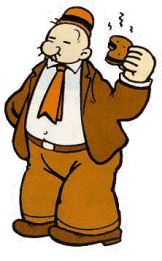
1931 – Popeye the sailor man, a cartoon figures in the comic strip created by American cartoonist Elzie Crisler Segar (1894-1938) in 1929, and syndicated by the Hearst newspaper’s King Features syndicate featured the character J. Wellington Wimpy, known as Wimpy. Wimpy joined the Popeye comic strip in 1931, and he played a significant role in popularizing the hamburger in the United States. Wimpy is probably best know for his consumption of hamburgers. Wimpy loves to eat hamburgers, but is usually too cheap to pay for them. A recurring joke is Wimpy’s attempts to con other members of the diner into buying him burgers. Wimpy often tries to outwit fellow patrons with his convoluted logic. His famous line is “I’d gladly pay you Tuesday for a hamburger today.”
The popularity the character Wimpy spawned a successful chain of hamburger restaurants called Wimpy’s, that flourished for over a decade. This burger went for the upscale market at 10 cents a burger. In keeping with the founder’s wishes, all 1,500 restaurants were closed down when he died in 1978.
1941 – A California Supreme Court decision, that arose from a sales tax dispute where the plaintiff wanted a refund of taxes paid, under protest, on sales made during the 1937-39 World’s Fair on San Francisco’s Treasure Island. Operating food booths, it “sold only frankfurter (commonly referred to as ‘hot dog’) and hamburger sandwiches, together with coffee, milk, ale and beer, ”the per curiam decision said. The issue was whether these sandwiches constituted a “meal,” rendering them exempt from the sales tax. Resolving the issue against the concessionaire, the high court said:
A ‘hot dog’ or hamburger sandwich is the type of food frequently offered for sale to and desired by persons who wish to eat something while walking about. It is not the type of food generally ordered by a person who patronizes a hotel, restaurant or other public eating establishment with the intention of securing a ‘meal’. It may not be said that one has ‘served’ a meal who merely prepares a sandwich for consumption, wraps it in a paper napkin and hands it to a purchaser without offering any facilities for its consumption on the premises, and with the intention that it be consumed elsewhere.
Cheeseburger
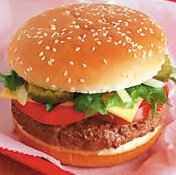 There is also a dispute between Denver, Colorado, Louisville, Kentucky, and Pasadena, California on who and where the cheeseburger was invented.
1920s – Pasadena, California:
According to the 1995 book called Welcome To Hamburger Heaven by Jeffrey Tennyson:
Tennyson said he interviewed former restaurant employees who confirmed that the Rite Spot is where the cheeseburger debuted — although it was called the cheese hamburger.
From the article, Who Invented Hamburger Sandwich? And What About the Cheeseburger? By Roger M. Grace, Metropolitan News-Enterprise, Thursday, January 8, 2004:
Lionel C. Sternberger is believed to have invented the “cheese hamburger” in the 1920s in the Northeast portion of Los Angeles County. Tales differ, however, as to precisely when this occurred, and where. Some peg the date as 1924, others as 1926. The site is usually said to be Pasadena, though that has been called into question.
Steve Harvey, in his column in the L.A. Times, wrote on March 27, 1991: “American Heritage magazine points out that a local restaurateur was identified as the inventor of the cheeseburger at his death in 1964. Cooking at his father’s short-order joint in Pasadena in the early 1920s, the lad experimentally tossed a slice (variety unknown) on a hamburger ‘and lo! the cheeseburger sizzled to life.’
1934 – Louisville, Kentucky:
According to Robin Garr’s Louisville Restaurant Reviews:
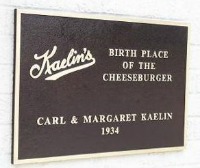 Charles Kaelin and his wife opened the restaurant in 1934, the menu claims, dubbing the old brick building at the corner of Newburg and Speed “The birthplace of the cheeseburger.” The standard hamburger had already become “an established staple of the diet” by then. But Kaelin was an inveterate experimenter, always looking for new food ideas. “One day in the kitchen … it occurred to him that if he put a slice of cheese on top of the hamburger patty just before it was done, the cheese would melt down into the patty and add a new tang to the hamburger. It was an instant success – it’s popularity spread nationwide until just about everyone the world over enjoys the cheeseburger. .
The Humpty Dumpty Barrel Drive-In, in Denver, also gone from the scene, trumps that with evidence that it sought to trademark the name “cheeseburger” in Colorado in March 1935. But Kaelin’s claim beats Humpty Dumpty by a year, substantiated by a 1934 menu that reads, “Try Kaelin’s Cheese, burgers … 15 cents … You’ll like ’em.”
Today, a plaque (probably placed there by the owners) on the wall of the Kaelin Restaurant proudly state that Carl Kaelin invented the cheeseburger.
1935 – Denver, Colorado:
The cheeseburger trademark was supposedly registered by Louis Ballast on March 5, 1935 of the Humpty Dumpty Barrel Drive-In in Denver, Colorado. Ballast claimed to have come up with the idea while testing hamburger toppings. Although Louis registered the name, he never made any claims, and the restaurant is now a thing of the past. Some historians dispute that he actually was issued a trademark.
SOURCES:
The American and His Food, Revised Edition, by Richard Osborn Cummings, published by University of Chicago Press, 1970.
American Forum – Fast Food History, Handout #4: Mcfast-food Conques America.
Birthplace of the Burger, The Lassen family has ’em the same way for generations at Louis’ Lunch, by Jim Shelton, Register Staff.
The Better Burger Battle, Atlas of Popular Culture in the Northeatern United States, by John E. Harmon.
Beyond the Ice Cream Cone – The Whole Scoop on food at the 1904 World’s Fair, by Pamela J. Vaccaro, Enid Press, St. Louis, 2004.
Brief History of Athens, Texas, Texas Highways Magazine, July 1994.
Boston Cooking School Cook Book, by Mrs. D.A. Lincoln, Dover Publications, Inc. Mineola, New York (1996 Reprint of the 1884 Classic).
Bull Cook and authentic Historical Recipes and Practices, Volume II, by George Leonard Herter & Berthe E. Herter, 1967.
Can you believe some dispute us? We won, now we celebrate – newspaper guide to hamburger cookoff, Athens (TX) Daily Review, Athens Daily Review, September 25, 1991.
Cheap burger in paradise: History of the hamburger, by Milford Prewitt, North Carolina Discoveries.
Food in American History, Part 6 – Beef (Part 1): Reconstruction and Growth Into the 20th Century (1865-1910), by Louis E. Grivetti, PhD, Jan L. Corlett, PhD, Bertram M. Gordon, PhD, and Cassius T. Lockett, PhD, Nutrition Today Magazine, Volume 39, January/February 2004, pp 16-25.
From Boarding House to Bistro: the American Restaurant Then and Now, by Richard Pillsbury. Boston: Unwin Hyman, 1990.
Hamburgers and Mustard: A Match Made in Wisconsin, by Eric Model, published by Hidden America – USA Today, July 23, 1999.
History of the Menches Brothers.
Louis’ Lunch (A little bit a history).
Menches Bros. is more than just burgers, by Michelle Detwiler, 7/18/2002, Leader Publications, Akron, Ohio.
National Even Coming to Akron – Today is National Hamburger Day! City of Akron, 2004 News Release, May 28, 1994.
The Night 2000 Men Came To Dinner, by Douglas G. Meldrum, published by Charles Scribner’s Sons, 1994.
Old Menus Tell the History of Hamburgers in L.A., by Roger M. Grace, Thursday, January 15, 2004, Los Angeles, CA Metropolitan New-Enterprise.
Online Extra: A Hamburger’s Tasty Legacy, March 14, 2005, BusinessWeek.com.
Clarindan Is ‘Dan’ of Hamburgers, Omaha World-Herald, by Paige Carlin, date unknown.
Paying Homage To The Hamburger Is A Patriotic Duty, by Doris Reynolds, Naples Daily News, May 26, 1999.
State of Oklahoma, Executive Department, Proclamation, April 12, 1995.
Steve Church, Ridgecrest, California.
The Better Burger Battle, by John E. Harmon, Atlas of Popular Culture in the Northeastern United States.
The Complete Hamburger – The History of America’s Favorite Sandwich, by Ronald L. McDonald, published by Carol Publishing Group, 1997.
The Food of the Western World – An Encyclopedia of Food from North America and Europe, by Theodora Fitzgibbon, Quadrangle/The New York Times Book Co., 1976.
The Food Chronology – The Food Chronology – A Food Lover’s Compendium of Events and Anecdotes, from Prehistory to the Present, by James Trager, New York, published by Henry Holt and Company, 1995.
The Origin of Hamburgers and Ketchup, by Giovanni Ballarini, University of the Studies of Parma.
The White Shoe Irregular: It was Fun while it lasted, Honoring Louis’ Lunch on Its 15th Anniversary, Representative Rosa L. DeLauro, Congressional Record, 27 July 2000, page E1377.
They Only Serve Burgers Their Way, Making It In Connecticut, Your Money, March 12, 1994.
Tolbert’s Texas, The Henderson County Hamburger, by F. X. Tolbert, Doubleday & Co., Garden City, New York, 1983.
Weber’s Sperior Root Beer, by the Weber family.
Welcome To Hamburger Heaven, by Michael Wallis, Oklahoma Today Magazine, May 1995.
Who Invented Hamburger Sandwich? And What About the Cheeseburger?, by Roger M. Grace, Reminiscing, Thursday, January 8, 2004, Metropolitan News-Enterprise.
7 Responses to “History and Legends of Hamburgers”
Raymond Cooper
I had no idea that hamburgers had been around for such a long time! It was especially interesting to learn that the american hamburger claims its roots in Wisconsin. It was also cool to learn that the cheeseburger didn’t come about until much later than the hamburger too.
Steve Graves
One of the better articles I’ve read on the subject of hamburgers. In the early 70’s one of my Connecticut buddies took me to Louis Lassens in New Haven. Certainly a great treat and memory
Nancy
Thank you, and glad you had that once-in-a-lifetime experience.
Zain
Great article, but I think there is an error near the beginning with the dates 1209 – 1121 for Genghis Khan.
Nancy
Thanks for catching!
Choi siwoo
I thought hamburgers were similar to early hamburgers. However, I was a little surprised to see that hamburgers went through a lot of history and change process.
Katie
I love love love hamburgers. However, the 2021 variety just aren’t as juicy or delicious as the one in the diners of the 50s and 60s. The biggest treat ever was a hamburger with fries at the local diner followed by a milkshake down at the drug store fountain counter.