
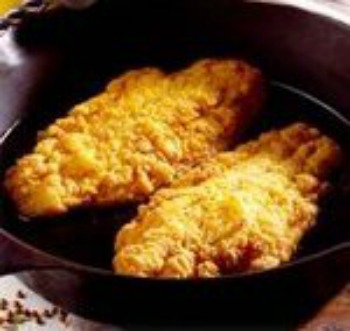
Fried catfish is considered a quintessential southern dish along with southern fried chicken, sweet tea, and hushpuppies. Once considered the “food of the Poor,” chefs around the country are now inventing new ways to cook and eat this fish.
Small-town restaurants in the south feature fried catfish on their menus. Most urban dwellers have never tasted good catfish and tend to scorn it as a fish of lowly social status. but rural fish lovers, especially in the southern states, dote on the sweet flavor of catfish. It is the most widely eaten American fish. Catfish can be used in any recipe calling for a non-oily white fish, but most southerners prefer it dredged in cornmeal and fried. In the South, hushpuppies are considered an absolute must to serve with fried catfish, along with coleslaw and ketchup.
About Catfish:
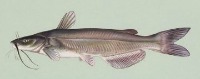 Catfish are not beautiful to look at, with their odd whiskers and big, gaping mouths, but beauty is not important when it comes to choosing fish that is flavorful. Catfish have skin that is similar to that of an eel, which is thick, slippery, and strong. All catfish should be skinned before cooking. The easiest method to skin a catfish is to nail the head of the dead fish to a board, hold on to its tail, and pull the skin off with pliers.
Channel catfish are farmed in Mississippi, Louisiana, and Arkansas. Mississippi is the world’s leading producer of pong-raised catfish. Of all the catfish grown in the United States, 80 percent comes from Mississippi, where more than 102,000 acres are devoted to catfish farms. Humphreys County, Mississippi, produces about 70 percent of the catfish consumed in the United States, and has over 30,000 acres under water.
The town of Belzoni, in Humphreys County, is called the “Catfish Capital of the World.” Each spring the streets of downtown Belzoni are transformed into a large carnival during the World Catfish Festival. Due in part to its reputation as a family oriented event, the World Catfish Festival has received several awards including Top 100 Events in North America and TOP 20 Events of the Southeast.
- Vegetable oil, olive oil, or butter (your choice for pan frying)*
- 4 medium freshwater catfish fillets**
- 1 cup milk, cold
- 1 cup yellow cornmeal
- 2 to 3 teaspoons salt
- 1 teaspoon black pepper, freshly ground
- 1 teaspoon cayenne pepper
- Lemon wedges
-
Rinse the catfish fillets under cold water and dry thoroughly with paper towels. HINT: An hour-long soak in buttermilk washes away the muddy flavor from freshwater fish such as catfish and tilapia.
-
In a pie place, lay the dried catfish fillets and pour milk over the top.
-
In another pie plate, combine cornmeal, salt, pepper, and cayenne pepper.
-
Remove the fillets, one at a time, from the milk and roll in the cornmeal mixture to coat evenly; place on a large platter to dry, leaving space between them. Set aside and let dry at least 5 minutes.
-
Preheat oven to 200 degrees F.
-
Heat the oil or butter in a large skillet or frying pan (I like to use my cast-iron frying pan). Add the coated catfish filets and cook for 5 to 7 minutes on each side, sprinkling additional salt on the catfish after each turn. Cook until golden brown and fish flakes easily with a fork. Remove from heat and drain on paper towels.
-
After draining, place the fillets on another platter covered with paper towels; place in preheated oven to keep warm while frying the remaining fillets. The fillets will remain hot and crisp for as long as 35 minutes.
-
Serve with lemon wedges.
-
In a large pot or deep fat fryer, add some peanut oil and preheat peanut oil to 357 degrees F. Use enough peanut oil to completely cover catfish fillets while frying.
-
Preheat oven to 200 degrees F.
-
Place 4 to 6 pieces of catfish at a time in the hot oil to fry (do not crowd the fryer or the oil temperature will drop too much). Fry 6 to 7 minutes per side or until the catfish fillets are a light golden brown and the meat flakes easily with a fork. A simple test for properly fried catfish is to pick up a fried fillet by one end and not have it bend or wilt.
-
Remove from the oil and place on paper towels to drain. After draining, place the fillets on another platter covered with paper towels; place in preheated oven to keep warm while frying the remaining fillets. The fillets will remain hot and crisp for as long as 35 minutes.
-
Makes 4 servings.
* Use Peanut Oil if deep frying.
** To clean a whole catfish, remove skin from the catfish, then slice the fillet across to a thickness of no more than 1/4 inch. The secret to frying catfish is using thin fillets less than 1/4-inch thick. An hour-long soak in buttermilk washes away the muddy flavor from freshwater fish such as catfish and tilapia.
4 Responses to “Fried Catfish Recipes”
Shonna
I just finished my fried catfish and it tastes good but it just leaves a dry taste in my mouth and when getting to certain parts I noticed it’s a little too soft and even one piece was a little slimy looking when I got to the last piece. Can it be it wasn’t done all the way? I was cooking for about 14 minutes.
Kolam Terpal
Wow its look so delicious. Thank you for sharing
Stanley
Sometimes you have to press the fish down especially at the tail end. It has a tendency to curl. Keep it from curling by pressing, until it’s flattened and the fish can cook evenly .ENJOY
Namerr
Try to fry it without removing the ski