
How to Make Perfect Flour Tortillas
Making homemade flour tortillas really does not take much time. In fact, they probably don’t take much longer than the time it would take to pop open a can of biscuits and cook. I love the results of making my own homemade flour tortillas! They do taste so much better than store bought tortillas that making them is definitely worth the time and effort. Nothing taste much better than hot tortillas fresh off the comal with a little butter and rolled up.
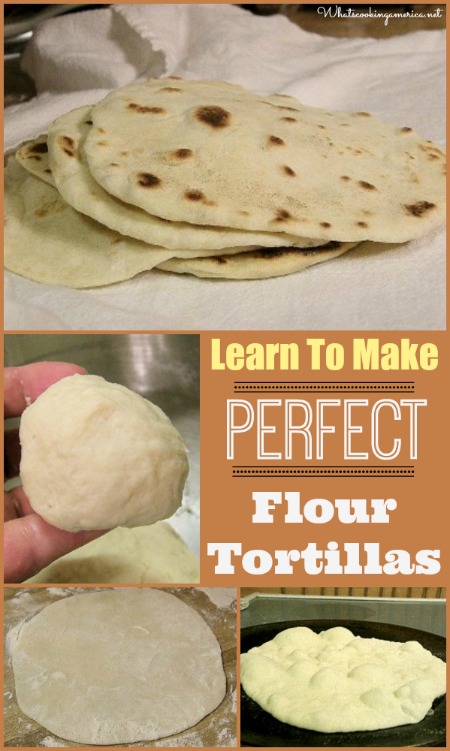
Also learn how to make Corn Tortillas (Tortillas de Maiz) and learn about the history of Tortillas and Tacos.
- 3 cups all-purpose flour
- 2 teaspoons baking powder
- 1 teaspoon salt
- 4 to 6 tablespoons vegetable shortening or lard
- 1 1/4 cups warm water (approximate)
-
In a large bowl, blend the flour, baking powder, and salt together.
-
With a pastry cutter/blender (unless you are one of those, like my teachers, who always used their hands) cut in the lard or shortening. You want these ingredients to cling together slightly and hold a form when squeezed in your hands.
-
If the mixture crumbles, you do not have the shortening mixed in well or have too little (if it makes a hard clump them you need more flour and less shortening).
-

-
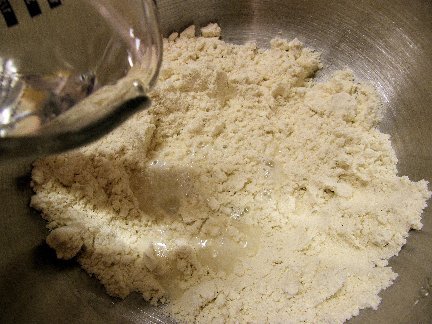
Add the water all at once and mix the dough quickly with a fork or by hand until the dough forms a mass. Work it in the bowl, moving it around the sides to pick up any flour remaining in the bowl.
-
-
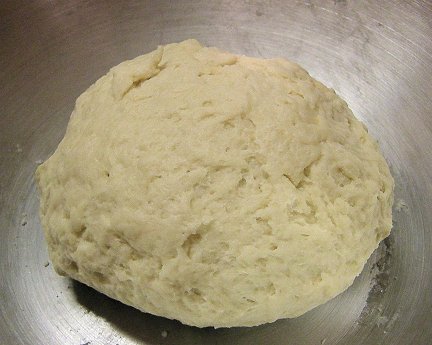
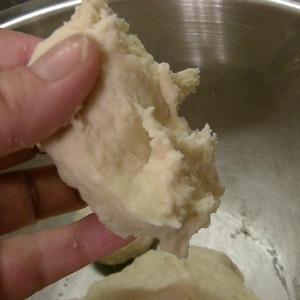
Knead the dough by folding it in half, pushing it down, and folding again. It should take about a dozen folds to form soft dough that is no longer sticky.
-
-
-
Cover the dough with a towel or plastic wrap to let it rest for about 5 to 10 minutes.
-
Allowing the dough to rest lets any of the liquid absorb into the flour, which will give you a softer tortilla after cooking.
-
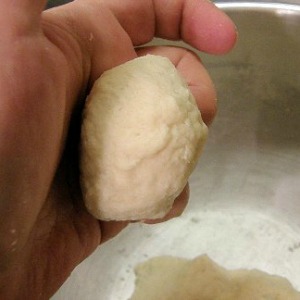
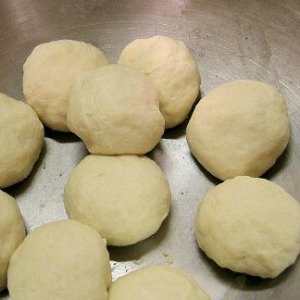
Take your ball of dough and begin pinching off 1-inch diameter balls. Knead each of these into a tight ball by folding them over with your fingers, turning and repeating until it is shaped like a fat disk. Place it to one side of the mixing bowl and continue to do this until you have used all of the dough.
-
Before rolling out the tortillas, allow the dough balls to rest at least 10 minutes. This will permit the gluten to relax and make them much easier to shape and roll.
-
-
-
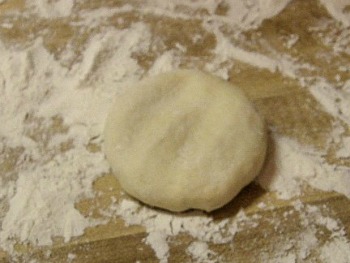
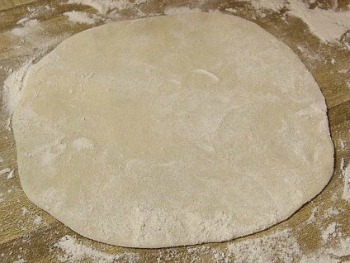
On a lightly floured surface take one of the dough balls and begin to roll it out. To keep a somewhat round shape, roll one directions, make a 1/4 turn and roll again, make another 1/4 turn and roll. Continue to roll and turn until you the dough is about 1/8-inch thick and 8 to 10 inches in diameter. NOTE: You can roll them thinner or thicker, if you like. Just remember to adjust the cooking time for how thick they are rolled. I roll mine the way they are done in New Mexico – slightly thicker than any store bought ones.
-
-
-
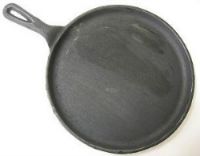
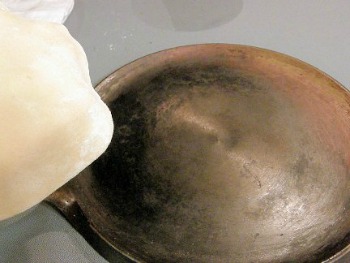
Heat a Comal, cast-iron griddle, or small skillet to about 450 degrees F. over medium to medium-high heat until water droplets "dance" when dropped on the surface. You might have to increase or decrease the heat after you cook your first tortilla, but you should be able to tell if the tortilla is cooking too fast on the outside and still raw on the inside, or increase it if your tortilla is taking more than 30 seconds to begin to “puff” when placed on the comal.
-
Comal Definition - Mexican Comal or cast iron plate used to make tortillas. If you do not have a comal, a large cast iron skillet or griddle works well, or even an electric griddle can be used when heated up to 400 to 450 degrees F.
-
-
-
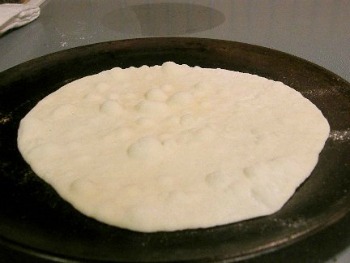
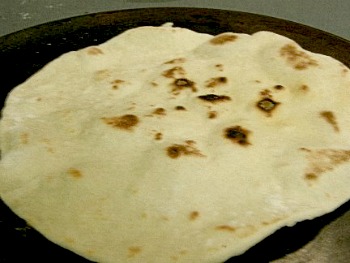
Place the raw tortilla on the preheated Comal and allow it to cook until it begins to puff up with air pockets, turn carefully since not only is the comal hot, the tortilla is hot and the air pockets may release steam that can burn. Each side should cook about 30 seconds, leaving the tortilla puffy. Press on a center part of the tortilla slightly to be certain the inside is cooked. If it looks as though it has compressed down and is a darker color, your dough is not cooked in the center and will need to be returned to the comal.
Notes on cooking tortillas: I, along with others who have been making tortillas for quite some time, will roll the next tortilla while the previous is cooking. Unless you feel very comfortable doing this, I would recommend either having someone else flip the tortillas and pull them off the comal, or wait until the present tortilla is cooked before starting to roll a new one. You will find that tortillas can cook very quickly (approximately 1 minute), and they can burn very quickly! If you are using a cast iron comal, and the tortilla burns, you will need to scrape off the char and use a damp rag to wipe down your comal before continuing to cook. The flavor of one burnt tortilla can ruin the remainder of the batch.
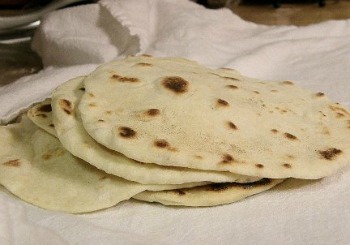
As you pull the tortillas off the comal, place them in a tortilla warmer or on a plate (lined with a dish towel or paper towels to keep them warm).
Storing fresh-made tortillas: The tortillas can be place in bags or containers and kept for several days in the refrigerator, and they can be frozen (although I do not recommend this as the taste changes some when they are thawed).
The dough can be frozen easily before cooking and thawed later.
Store extra tortillas in a plastic bag in the refrigerator. Since they don't have preservatives, they will spoil after a couple of days on the counter.
Sopapillas: This recipe can be also be used to make savory sopapillas. Simply cut your rolled out rounds into wedge shapes and deep fry in 400 degree F. oil until they are puffy and browned. Remove from the oil and drain on a slotted rack of paper towels. These “sopapillas” are a quick easy way to make “double duty” of your masa (dough), but a good sopapilla should have milk instead of water as the liquid for making the dough.
51 Responses to “Perfect Flour Tortilla Recipe – Torillas de Harina”
Pat Pineda
Great tortilla recipe. Also great last name.
Julie
Thank you for a great tortilla recipe! I was so excited to finally make good tortillas and serve them to my family! I can’t stand the mildewy-chemically smell of the store bought ones and just hated seeing my family eat them, not knowing any better. Thanks again!
Minerva
My dough doesn’t stay flat as I rolled out it tends to shrink back. What can I do to roll it pu2t without having that problem?
DIANE ADDISON
Let the dough rest for 20 or 30 minutes , covered. It needs to rest so it will stop snapping back when you roll it.
Leticia
Allow the dough to rest and you my need to add more fat.
Ruth Alvarez
I make soft, thin pliable tortillas and the times when they did not stretch properly was when the dough was not soft enough. Too much flour and not enough water. Another thing I learned from a video is that the water needs to be quite hot. I use boiling hot water and use a wooden spoon to mix it until i can handle it. Your dough should be a bit sticky when you begin to knead it. And you knead it until it is no longer sticky. It took me a while to learn the texture of it. Also, i let it rest about 20 minutes after I knead it. I don’t want to brag, but I make beautiful tortillas that remain pliable even afterrefrigeratoon.
Patricia Ceja
I’ve made tortillas from your recipe twice now and the first time they were actually pretty good. My husband and grandson finished them off in no time. My second try not so great. I usually use gold medal flour but I ran out and used some baking flour that I had. I used about 6 tablespoons of lard to 3 cups of flour. After combining all of the ingredients I don’t knead very long at all. Just long enough to form a large ball. I let the dough rest twice. Also, I think I might be letting them cook too long on heat that’s too low? Because they weren’t soft and pliable. They have no elasticity to them and kind of heavy. Help! What did I do wrong this time? Thanks!
Heather Dunkle
Baking flour has gluten added. Gluten is great in bread but not tortillas.
Isabel
I don’t whose recpie this is, but I Thank You for it. Tried this one today and the tortillas were Amazingly perfect….better than
My sisters. I will copy this and laminate it for my girls to learn and pass down…..
Natalie
I cannot wait to try this recipe……we love tortillas.
Domenicsmommy
These turned out great!!! I will use it again!!!!
P
OMG! I lived in Andrews TX for 15 years about 20 years ago!! Can’t wait to try this! Oh, I do miss the real Mexican food after I moved away.
EG
Hello, I tried to do this but my dough was so sticky I couldn’t work with it. I tried adding flour but it was still super sticky :/ how can I fix it?
Whats Cooking America
Sounds like you may have added too much liquid. Keep adding a little bit of flour at a time and knead into the dough until the stickiness is gone.
Leticia
Add more flour. This is a starting point recipe. An exact tortilla recipe does not exist. As girls we learn by trial and error and practice practice practice.
Ali Moore
My grandmother made fresh tortillas every morning for my grandfather and his coworkers! Burritos for breakfast and then she would make more tortillas for dinner. We were always allowed one with butter while she made them, then had to wait for dinner. Some of my best childhood memories are in my grandmothers kitchen. Found a different recipe and made some tortillas for the first time last night and they just didn’t taste like “home”. Going to try your recipe tonight!! Thank you!
Christine
The best!…..The longer you let the dough sit 35 minutes, they are much better!
Tony
I’ve looked at a number of flour tortilla recipes and none of them call for butter. Is there a reason for that?
Linda Stradley
This is Cynthia’s recipe and she is Mexican.
Tina
So, to tell the truth, I had no lard, and less than a tablespoon of Crisco, so…… I filled the recipe with grated butter and the less than a tablespoon of Crisco. This was the first time I ever attempted to make tortillas, and your recipe worked well even though I cheated to avoid a trip to the store. Thank you. They were very tasty! Will do it proper the next go around just to compare. (oh yeah, I have and use the camal regularly, never knew what it was called)
Dalayna C
Great recipe!
Thanks so much for sharing your recipe. And, for not very domestic women like myself, thanks so very much for the detailed steps & pictures. It REALLY helped me.
God bless!
D-
Jae
Going right now to try these. I am Australian and we don’t have much of a Mexican sub-culture here. I make most things from scratch but NEVER considered making tortillas or any Mexican ‘bread’ accompaniments. Going to use butter? Lol, we don’t really use lard/shortening here? All I know about those things is that my Gran used to let the roast meats drip to catch the hot fat… ? It’s funny just little things that are different in different countries. Your recipe is written beautifully, thank you.
Ruth Alvarez
You can use oil. It does not have to be lard. I use about 1/2 a cup of oil to four coffee cup sizes of flour. (The mug size). Works perfet.
John K
Butter, unlike lard and crisco, contains water (about 16-17%). You will have to use more,then cut back on the added water.
Sarah
THANK YOU SO MUCH FOR THIS! Thank you for all the explanations along the way for why you do this or that and what outcome it affects. I grew up in far south Texas and every one would bring breakfast tacos to school that their mom or grandma made. All the restaurants have someone making real tortillas. I have lived a lot of different places and had a lot of friends who say they can make amazing fluffy tortillas… No, they cannot. Taste flat like store bought. I can’t wait to try this! It looks like an amazing recipe!
Leticia
Use lard. That is the true fat used. With different diet fads shortening and butter have been used. The true recipe for ” tortillas de harina” is “manteca”. Lard!
Amanda
Thank you so much for this. I was trying to explain to some friends how to make tortillas but I’m not great at giving instructions. I found this and from now I’ll just show them your instructions instead. I stumbled upon so many not-right-looking and usually way too pale and thin tortillas in the process. This is EXACTLY the recipe my abuelita, mom, tias, and myself have always made. Although it’s written down instead of being “about four handfulls” and “a pinch, and then a little smaller pinch” lol. So again, thank you!
William Smith
Hi,
I have found a real difficulty when making the dough. It was either too sticky or too tough to roll. I’ve tried some extra flour to make it non-sticky, but after that, it was too tough to roll. Can you please suggest me any process by which I can adjust it and make a perfect one? Thanks in Advance
Erica
I’ve been looking for a tortilla recipe that is smilar to how my mom used to make hers. This recipe is the best I’ve found! I’ve made this recipe several times using 1/2 cup of canola oil when I don’t have shortening and they come out so good and soft! BEST RECIPE! MUST TRY!
Renee
I love this recipe. I’ve been making tortillas for decades but as my kids grew up and the arthritis in my shoulders and neck made it very painful to make I stopped making them. I tried to make them a month ago and they were so tough. Today I was making breakfast but no flour tortillas so I decided to make a few and tried your recipe and they came out so beautifully. They reminded me of the ones I used to make. I was so glad I tried it. Thank you for the great recipe. (Sorry my post was long but I had to say something also this is my 1st time posting to any recipe I have ever tried and I have tried a lot.)
Gloria
I don’t have any lard so I will try the tip from Erica and use the canola oil. I learned how to make these years ago from a friend of mine who is Mexican and she never used a cast iron skillet. What she did is put it right on the grate of a gas top stove, low flames and turned them over after a few minutes. So I will try this recipe, but next time will use lard because that is what she used. Thanks for the recipe and the tip ladies.
Steven, Big Spring, TX
I’ve missed having homemade tortillas so I finally said enough is enough I’m gonna find a recipe and make em myself. I found your recipe and the tortillas turned out great! I’m extremely grateful for this recipe and the wonderful tortillas it turns out!
Mark
Been making these for the daughters breakfast for the last several weeks. Only change I have made is I add 2 tablespoon garlic powder and 1 tablespoon chipotle powder. Batch I made last week I had 2 tablespoons of each, little to much heat for a breakfast tortilla.
Melinda
How to put away some of the dough in the refrigerator for later
Ashley
Melinda I have used this recipe going on two years now and it is honestly my go to for tortillas for any occasion. If I have any unused masa I simply wrap it in plastic cling wrap tightly removing all air and put it in either a ziplock or air tight/spill proof container and leave it in the refrigerator for a few days(I usually make the rest in a day or two) to a week. I have never froze it before but I suppose you could use the same wrap and seal method for the freezer and it would possibly keep for a lot longer. I would do a few smaller rounds of the dough so that you can check them one at a time to see how they keep differently a week to a month or two months at a time. I’d love to know the outcome of such freezer experament if you do try to store the made dough in the freezer. I always check for discoloration when keeping it in the refrigerator. Old dough will turn like a grayish color.
Prissy
I have never commented on any recipe that I have tried, but I had to for this one! I am so very glad that I found this recipe. They taste just like my own mom’s tortillas. Tortillas were a staple in our home growing up, I never realized how “lucky” we were to have them around until I was grown and moved away from home. Thank you, thank you for sharing!
Sharon
I want to do this right but first…I dont have lard but I DO have Crisco butter flavored baking sticks. Would this be a good substitute?
Mary
I had never heard of using Lard or Oil in making the masa for tortillas, I’ve always used my hands to blend the flour and other ingredients together i always use Crisco shortening..also the recipe states to pour all the water in the flour mixture it would be better if you would add a bit at a time that way you don’t over do Someone mentioned using Butter favore Crisco I’ve done that before and the tortillas actually turned really good.. I don’t mean to offend anyone just stating my own way of how i make my tortillas I’ve made many a tortilla I’m 70 so i have a bit of experience To make tortillas it is! 😊
Norma
Hi so I been making tortillas using the white wing flour and I wanted to try the kind my mom makes so I found this recipe and tried it , my family loves them it’s just I’m not happy . They come out to thick and doesn’t rise , wat am doing wrong?
Maria
I tried your tortillas recipe. They did not rise nor tasted good. I follow all the steps Very disappointed
Marilyn
I just made these for dinner. They are simply awesome! Thank you for the recipe and explicit instructions.
Charlotte
These tortillas are a family favorite. I started making them when I lived in the States and have continued them now in South America. My little ones beg for them and my husband raves about them. Thank you deeply for sharing this post.
Nancy
Thank you for taking the time to leave such a sweet message! I am glad you like them and thank you for coming back to What’s Cooking America for your cooking guide.
Linda Thornton
Can I use avocado oil
Cheryl
Re: Mark
October 12, 2018
Been making these for the daughters breakfast for the last several weeks. Only change I have made is I add 2 tablespoon garlic powder and 1 tablespoon chipotle powder. Batch I made last week I had 2 tablespoons of each, little to much heat for a breakfast tortilla.
OMG!!! What do you call them?
Vickie
This is a very basic recipe that is taught as soon as you are old enough to cook as a kid. We learn by trial and error. mine was why aren’t my tortillas perfectly round like all the abuelita’used to make. She would commen saying practice practice practice. . redeem any of the comments brings back many memories especially those of putting butter or peanut butter on the tortillas as a snack after school. Living in Chicago it’s very hard to find homemade flour tortillas where you can buy. Mostly the corn tortillas are the big seller is in most stores. So learning to make flour tortillas is a big plus tovv treat for your family
Yvette
I use this exact same recipe. But I’m very particular about the brands i use:
Flour: Selecta
Shortening: Crisco
Baking powder: Rumsford
Also, I was scratching my head because you’re from Texas and used the word “burritos” instead of “tacos” — then I looked up Andrews, Tx and mystery solved! Lol it’s up west so I know the terminology is different from South Texas =)
Norma
I have been making flour tortillas m, since the 60s. I used to cry when I had to make them being the eldest girl of seven children. It seemed so unfair back then, but I realized later in life that making tortillas would come in handy. I still make them for my only daughter & her family, including a small tortilla for my grandson, you could say; it’s a family tradition in our culture.
Emerald
. My tortillas were nice e and soft but they did not puff up? I I flip them the first time when there’s little air bubbles firming. What a. I doing wrong and why don’t they puff up?
Sunnie
Just made these and sigh, they were awesome! Just the way I remember my grandma’s Mexican friend made them!
Charlie
This is a great recipe. I’ve used it a lot, and have mostly made some of the best tortillas that I’ve had, outside of a tortilleria at the IGA in NM where I grew up as a kid. A couple of tips:
I bite the bullet and use lard for this. I think it matters. It’s a different sort of fat than butter, shortening, etc…
When mixing, get your hands dirty and mix it by hand. You’ll learn to feel what the “right” dough feels like. When mixing in the fat, press the fat and dry ingredients between your palms and slide one off of the other, to compress the fat into the dry mixture. Do that until your dry and fat mix is homogenous, and the flour is slightly darkened.
When you add the water, make a well, and dump it all in at once. Then mix it from the outside in, like with our crusts or biscuits.
Rest is important, I rest twice: once after I mix in the fat and water, then again after I break up the balls. It helps to allow the gluten to relax and prevents some of the shrinkage.