
How to Boil Perfect Eggs
The simple and classic boiled egg – full of nature’s most perfect form of protein. At one time people were concerned about eating eggs because of the amount of cholesterol in the yolks. Today, research has found that eggs also raise the good cholesterol that our bodies need.
Boiling an egg is really very simple! I have read many different opinions about the best method for making perfect hard-cooked (boiled) eggs and have discovered, through my own personal testing, the following method which gives perfect results.
Coddling:
The method of coddling eggs will not toughen the whites as boiling does. Coddling also makes an egg easier to peel. The cold water finish creates steam between the egg white and the shell which makes the shell easier to remove.
According to the American Egg Board, the terms “hard-boiled” and “soft-boiled” eggs are really misnomers, because boiling eggs makes them tough and rubbery. Instead, these eggs should be “hard-” or “soft-cooked” in hot (still) water.
Reference Chart For Perfect Boiled Eggs:
The following quick reference chart contains cooking times to use as a guide for the desired firmness for the yolk of a large egg size. The timing begins once the pot of eggs is removed from the heat source. Timing is everything in cooking perfect boiled eggs.
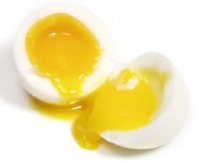 Soft-cooked (boiled) eggs – 5 minutes
The perfect soft boiled egg has firmly set whites, but a soft runny yolk. Serve in an egg cup by placing the egg in the cup with the small end down. Slice off large the end of egg with knife, egg scissors or egg topper and eat from the shell with a spoon. Egg toppers can be found in most kitchen stores. They are very quick and practical to use. I finally purchased one, and now my eggs look beautiful when I top them!
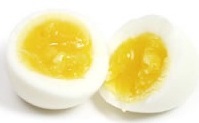 Medium-cooked (boiled) eggs – 7 to 8 minutes
A medium-cooked egg has a firm white and a slightly firm yolk. Medium-boiled eggs look exactly like hard-boiled egg from the outside – the whites are tender, yet cooked and hold their shape. Inside the egg, you see creamy golden yolks which are neither liquid nor completely solid.
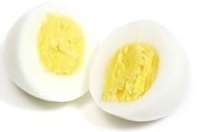 Hard-cooked (boiled) eggs – 19 minutes
A hard-cooked egg has both a firm white and a firm yolk. Hard-cooked eggs should never be boiled – always simmer them in water. If you cook them for too long, the protein toughens (becomes rubbery) and a greenish or purplish ring forms around the yolk.
Extremely fresh eggs are not recommended when making hard-boiled eggs, as they are very difficult to peel. Refrigeration is necessary for hard cooked eggs if the eggs are not to be consumed within a few hours. You can refrigerate Hard-cooked eggs in the shell up to one week.
How to Boil Perfect Eggs in 6 Steps
1. For perfect cooking, start with eggs that do not have any visible cracks:
There are two problems you will want to avoid: cracked shells and the ugly green layer that can form around the yolk.
Do not add salt to water. The salt will raise the boiling point of the water making the egg whites rubbery.
2. The best eggs for boiling are NOT the freshest eggs – use eggs that are at least 3 to 5 days:
Eggs that are too fresh are difficult to peel. The fresher the eggs, the harder it will be to peel them because the white membrane is just not mature enough. Hard boiling farm fresh eggs will invariably lead to eggs that are difficult to peel. Eggs need to be at least three (3) days old to peel well.
First, figure out if your eggs are fresh, because looking at the date on the carton is not always the best indicator of freshness, as eggs within the same carton with the same sell-by-date could have been laid on different days. Check out Sell Date of Eggs.
In a fresh egg, the yolk stands tall and the white is thick and cloudy. In an older egg, the yolk looks flatter and breaks easily, and the white is thin and watery. The best eggs for boiling are the ones on their way to standing up because that extra air makes peeling easier. That is why you should buy eggs for hard-cooking at least a week ahead of time.
How To Test Freshness of Eggs: A simple test in water will answer the freshness question for you. Place the egg in a bowl of water; if it lies on its side, it is very fresh. As it ages, the air pocket inside the egg grows, which buoys the egg up so it stands on one end. If the egg floats to the top, it is ready for the trash.
Making Deviled Eggs: When making deviled eggs, place the carton of eggs on its side for a day. The yolk will then center itself so you have it directly in the middle of the white. No more off centered deviled eggs.
3. Bring your eggs to room temperature before cooking:
If the egg has been stored in the refrigerator, it can be warmed gently under a flowing hot tap water or sit at room temperature for 20 to 30 minutes.
By bringing the eggs to room temperature, they are much less likely to crack in the hot water. Also the temperature of the egg at the start of the cooking process will affect the cooking time. An egg that is at room temperature at the start of the cooking process will require about 1 minute less cooking time than eggs taken directly from the refrigerator.
4. Technique for hard-cooking (boiled) eggs:
Choose the right size pot to cook your eggs in. The eggs must not be stacked but be in one (1) layer only. Gently place in the cooking pot.
Place the eggs in a single layer in a pan with enough cold water to cover eggs completely (approximately by 1 inch of water over the top of the eggs).
Using too much water will take too long for the water to get boiling, which can throw off the timing and give you overcooked eggs. Too little water causes parts of the eggs to be exposed and end up under cooked.
If you have 2 or 3 layers of eggs stacked up in a small pot, they may cook unevenly. Use a large pan and limit cooking to two (2) dozen eggs at a time only.
5. Over high heat, bring water JUST to a rapid boil.
As soon as the water reaches a rapid boil, remove pan from heat and cover egg pan tightly with a lid.
After 17 or 20 minutes (depending on size of your eggs), remove lid and drain off water from the eggs.
Watch the time when cooking the eggs carefully. Overcooking causes a green layer to form around the yolk. This layer is caused by a reaction between the iron in the yolk and the sulfur in the white. Heat speeds up this reaction, so the longer your eggs cook, the greater the chance of discoloration.
6. IMPORTANT – Stop the cooking process – Residual Heat or “Carry Over Heat.”
After the eggs are removed from the heat source, some cooking will continue, particularly the yolk of the egg. This is due to residual heat called “carry over cooking.” For this reason, transfer the eggs to the bowl of ice cubes and/or cold water after the cooking time is over. While the eggs are in the cold water, a layer of steam develops between the shell and the egg white. The steam helps make peeling an egg much easier.
Let eggs cool at least 10 minutes in cold water, then drain. Either store in refrigerator or peel the eggs (see below for How To Peel Hard-Cooked Eggs Easily).
A quick test to ensure that your eggs are hardboiled: When eggs have cooled, spin them on a hard surface (just like you would spin a top). If the eggs spins quickly without taking off or flying off in one direction, the egg is hard boiled and finished. Undercooked eggs (or uncooked eggs) will have a wobbly and unsteady spin.
Storing of Hard-Cooked (Boiled) Eggs:
Refrigeration is necessary for hard boiled eggs if the eggs are not to be consumed within a few hours.
It is preferable not to peel your eggs until you are ready to eat or use in your recipe. Hard-cooked eggs in the shell can be refrigerated up to one week. Peeled hard boiled eggs can be stored in the refrigerator in a bowl of cold water to cover for about 1 week (change the water daily) – or in a sealed container without water (cover the eggs with damp paper towels) for the same length of time.
SAFETY NOTE: It is not safe to leave hard boiled eggs (including those in their shells) out at room temperature for long. If they have been taken to a picnic, or served on a buffet, keep them cool while they are being served, and discard any leftovers.
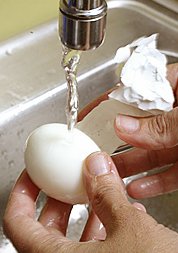 How To Peel Hard-Cooked Eggs Easily:
This is what I do:
I leave the hard-cooked eggs in the pan they were cooked in and add cold water.
I then crack the eggs under water (this seems to help loosen the membrane under the shell).
Start peeling at the larger end, (the flat side) where the air pocket is, and remove the shell under running water to make the shelling easier. You must get a hold of the membrane under the shell when you remove the shell.
Very fresh eggs are harder to peel. The fresher the eggs, the more the shell membranes cling tenaciously to the shells.
Additional Egg Cooking Techniques:
In France, this basic methods of baked eggs is called oeufs en cocotte. People love this dish. Baked eggs are both comforting and sophisticated. The eggs come out looking beautiful in their individual ramekins and are easy to serve.
Coddled Eggs
Coddled eggs are made by very briefly immersing an egg in the shell in boiling water (to cook in water just below the boiling point) to slightly cook or coddle them.
Deviled eggs have their roots in ancient Roman recipes. In the 17th century, this was a common way to prepare eggs. They were not called “deviled” until the 18th Century, in England.
Fried Eggs – Perfect Fried Eggs
Here are the absolute best fried eggs. This method is adapted from the ultra-meticulous French chef Fernand Point (1897-1955). This technique makes one spectacular fried egg and demonstrates that simplicity and purity often yield the best dishes of all.
Microwave Eggs
How to microwave poached eggs, fried eggs, scrambled eggs, and boiled eggs.
Poached Eggs
The best eggs for poaching are the freshest eggs you can find. If eggs are more than a week old, the whites thin out. Whites of fresh eggs will gather compactly around the yolk, making a rounder, neater shape.
Scrambled Eggs and Omelettes
Scrambled eggs make a delicious and quick meal, but there is a little science to getting them just right. The secret to successfully scrambling eggs is slow cooking.
Comments from readers:
I always wondered what caused the shell on some hard boiled eggs to stick to that membrane? Sometimes it was only two out of the same dozen. An old cooks tale said that they were “old” eggs. Thanks for your answer, I will test it out on the next batch, seems more likely your right, because eggs don’t stay in my house more than a couple of days!
I would like to pass on another trick with hard boiled eggs, the automatic hard boiled peeler machine (maybe you have already done this?). I use the same pot that I boil the eggs in, empty the hot water, add cold water, rinse well to cool down, drain, put the lid on the pot, and gently shake the pot back and forth for about 20 to 30 seconds (as you would for popcorn).
If you get good at it, all the eggs are peeled! I was a fireman for almost 30 years, of which most of those years I did spend cooking for a crew of a 10-man station, among all the “other duties” required of the job. – Dennis Anderson (10/12/09)
Source: Photos of the different types of boiled eggs is courtesy of Hormel Foods.
11 Responses to “How to Make Perfect Hard or Soft Boiled Eggs”
KIM ZELEZNIKAR
confused, so as soon as water boils you SHUT off heat,,,I’m confused about nest steps…it first sound like you leave eggs sit in hot water for 17- 20 minutes pulling pan off heat as soon as it starts to boil.. covering with tight lid and let it sit and AFTER 17-20 you then drain eggs… But the next step eludes that you don’t want them to cook so you do an ice bath!!?? Which I assume would be as SOON as you remove from burner??!!?? can you clarify this for me..maybe I’m thinking to hard?
Whats Cooking America
You are reading the instructions correctly. You start with the eggs sitting in cold water. Then you bring the eggs to a rolling boil. As soon as the rolling boil starts, take the pan off eggs off the heat and let them sit in the hot water to cool down for 17-20 minutes. The eggs have been cooking all along. Then after 20 minutes put them in an ice bath to stop the cooking, so they don’t turn green from over boiling. This is a tried and true technique.
Jess
You bring the eggs to a rolling boil then move the pot off the burner and cover with a pot lid for 17-20 minutes. After it has been sitting in the hot water off of the burner for 17-20 minutes, you can put the pot in the sink and add cold water until the water in the pot is cold. I’ve never used ice so I can’t comment on that.
Candy P
I have used ice, esp. in summer when the tap water is warm. First I place the eggs from the pot (with my pasta scoop) in a bowl, run cold water, drain, run cold water, then add ice. Happy egg cooking.
Stan
In an Instant Pot, add 1/2 to 1 cup water, set for STEAM in a steamer basket for 5 minutes (soft center) or 6 minutes (solid center), hit the STOP / CANCEL and then trip the pressure release once it hits 5 or 6 minutes and then immediately move into the ice bath. Steaming is faster and seems to make the membrane more loose, as I rarely have anything but a perfect egg. I leave them in the ice bath no more than 5 minutes. The 5 minute steam setting is nearly perfect if you’ll be making Scotch Eggs with them.
Amy Langston
I have found that a “hot start” is the key to effortless peeling of boiled eggs. If you place your eggs in very hot water, as opposed to cold water, to begin the cooking process, they will literally almost peel themselves— even after refrigerating. The water doesn’t need to be boiling when you place the eggs in it, but it should be much too hot to comfortably touch— perhaps around 150 degrees (I use whatever is handy to put the eggs in the water without burning myself: I’ve used a ladle or slotted spoon and put them in 2 at a time; I’ve used a large mesh strainer basket and put several eggs in at once). This simple change will solve ALL your peeling difficulties. It doesn’t matter how fresh or less-than-fresh the eggs are, and it doesn’t matter if you peel them immediately after boiling, or refrigerate them and peel later. They peel as easily cold as they do warm— so if you love boiled eggs but absolutely despise peeling them (like I did), the hot-start is a major game changer!
Will
I have had perfect results every time by steaming my eggs. 12 minutes in the steam an your eggs are hard boiled to perfection and peel easily.
Lynette
At last! Instructions that consider starting temperature (refrigerated vs room temperature.) Thank you for your attention to detail.
Barbara
Carefully hard cook eggs exactly as described – one layer, etc. Even when eggs from same carton, occasionally one or more will have dark ring while others cooked at same time and in same batch will not. WHY???
Ang
Best way to hard boiled eggs is the instant pot! I swear I’ve used the method listed here…n it’s the best when u don’t have the instant pot. But now that I do, hard boiling eggs is worth the price of the instant pot alone! It makes the absolute best! N it’s a simple 5-5-5 “recipe”
Add eggs to the instant pot…regardless how many u add the ingredients n times r the same…but I recommend keeping it to under 18 eggs.
Add 1 cup water to instant pot
Add eggs
Set instant pot to high pressure and turn off “keep warm” setting
Cook 5 min (after it reaches pressure setting)
Do a NR (natural release) for 5 min then manually release remaining pressure.
Put all eggs into an ICE BATH for 5 min (at least)
And u will have perfectly cooked hard boiled eggs EVERY TIME!
It took a lil trial n error to figure this out…but it has literally never failed me! Not ever!
Nathan Lovins
First off, tap the big end of the egg with a spoon lightly until you hear a crack or a pop that breaks the membrane inside the egg, but does not crack the egg if you do not hit it hard, then bring the eggs to a rolling boil then turn them off leave them on the burner covered with the lid for 13 to 15 minutes. That makes a perfect egg every time. They are always easy to peel because you broke the membrane first before you boil the eggs