
How To Make Perfect Poached Eggs
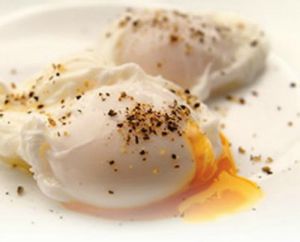
The best eggs for poaching are the freshest eggs you can find. If eggs are more than a week old, the whites thin out. Whites of fresh eggs will gather compactly around the yolk, making a rounder, neater shape.
(1) I like to poach my eggs in a wide shallow pan. Use a pan that is at least 3-inches deep so there is enough water to cover the eggs, and they do not stick to the bottom of the pan. Also make sure your pan is wide enough to hold all the eggs you will be poaching, as you don’t want the eggs to stick together. NOTE: I like to use a non-stick pan so the poached eggs will not stick to the bottom of the pan.
(2) Working with the eggs, one by one, break or crack each egg onto a saucer, ramekin, small cups, or bowls. There are two reason for doing this – So you will not break the yolk and it also prevents adding bad eggs. Place all cups of eggs so that they are convenient to the stove.
(3) If the water is too cool, the egg will separate apart before it cooks. If your water is too hot, you will end up with tough whites and an over-cooked yolk.
Water Temperature: You will want to bring the water to a temperature of about 160 to 180 degrees F. (71 to 82 degrees C.). As a rule of thumb, bring the water to a boil, then reduce it to a simmer before cooking. To obtain the correct temperature, spin the boiling water with a spoon to cool down the water before you drop in the egg. I like to use my instant-read thermometer to test the water temperature (adjust heat to maintain the proper temperature).
Do not drop the egg into boiling water (212 degrees F. or 100 degrees F.). This will negatively affect the taste and texture of your eggs.
Do not add salt, which would do the opposite and loosen the whites.
Vinegar – Pros and Cons: The usual problem with eggs is that the whites often end up too firm or tough by the time the yolks are ready. This is because egg whites are mostly protein, and protein starts to set (coagulate) as soon it meets heat. Yolks cook slower to begin with, and even more slowly when they are surrounded by their whites. Adding vinegar to poaching water makes the whites firm even faster to prevent them from dispersing in the water. But that extra firmness comes with a slightly grainy texture and an odd flavor. I want my poached eggs with lovely tender yolks and whites. So I say, hold the vinegar. – Pros and Cons of Using Vinegar, by Alice Medrich.
(4) Slip eggs carefully into slowly or gently simmering water by lowering the lip of each egg cup 1/2-inch below the surface of the water.
Let the eggs flow out. Do not put too many eggs in the pot at one time. If the yolk breaks as you crack the egg or as you are putting the egg in the water, that egg is a goner. Pull it out and use it for something else or perhaps someone wants scrambled eggs instead. With a spoon, gently nudge the egg whites closer to their yolks. Immediately cover with a lid and turn off the heat. Do not disturb the egg/eggs once you have put it in the water!
Hints to keep the eggs contained:
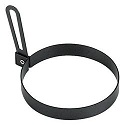 Egg Rings – Use an egg ring in a flat bottomed pan. Drop the egg over the mason jar ring and let it settle in the ring, then turn off the heat, and cover.
Mason Jar Rings – Use a ring from a mason jar and place it in the pan. Drop the egg over the mason jar ring and let it settle in the ring, then turn off the heat, and cover.
Tuna Cans – Remove the top an bottom off a small washed tuna can and place it in the pan. Drop the egg over the can and let it settle in the ring, then turn off the heat, and cover.
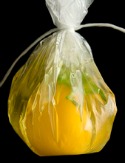
Plastic Egg Bags – Take a piece of plastic wrap and lay it over a coffee mug, pushing the plastic down into it a bit. Then crack an egg into the plastic wrap and tie/twist the ends together tightly. NOTE: Leave a little air in the egg packet and maybe a drop of water.
Drop the egg bag into the hot water. Let cook approximately 2 to 4 minutes depending on how hot your water is and the size of the eggs. When done, take your eggs out of the water with a pair of tongs or a slotted spoon. Cut off the plastic wrap and serve.
Other Poaching Egg Equipment – There are many types of poaching gadgets, such as:
Nonstick Egg Pan Inserts with egg-shaped cups for steam-cooking eggs held above the liquid
Silicone Egg Poaching Cups
Steam-Poaching Electric Egg Cookers
(5) Set a timer for exactly 3 minutes for medium-firm yolks. Adjust the time up or down for runnier or firmer yolks. Cook 3 to 5 minutes, depending on firmness desired. You can test for softness/firmness by lifting an egg on a spoon and gently pressing a finger on the yolk.
(6) Remove from water with slotted spoon. Remove each egg in succession after they have each cooked like you want. Keep track of which egg went into the water first and remove in the same order. Lift each perfectly poached egg from the water with a slotted spoon, but hold it over the skillet briefly to let any water clinging to the egg drain off. Drain well before serving. Optional: Put the finished poached eggs in a bowl of cold water. This stops the cooking.
(7) To serve best-quality poach eggs, the poached eggs should be served as soon as they are pulled from the water and drained. They cool down quickly and once cold, they’re not as desirable for the diner.
(8) Poaching Eggs For A Crowd:
To poach eggs for a crowd, cook eggs ahead of time, slightly under cooking them. Slide them into a large bowl of cold water. Place in the refrigerator and leave until it’s time to serve – they keep well for up to a day in the refrigerator.
When ready to be served, drop them into a pan of simmering, salted water for 20 to 30 seconds (no more than one minute) and they are ready to serve immediately.
If you are making eggs only a short while ahead, slide all of them, as they are cooked, into a large bowl of hot (not boiling) water. Do not worry about them sticking together. Top with more hot water from time to time to keep them warm. The eggs will be soft, warm, and ready to eat when you are ready to serve them.
Favorite Recipe Ideas Using Poached Eggs:
Artichoke Benedict
Not the traditional way, but a very beautiful way to serve Eggs Benedict.
Asparagus with Poached Eggs and Shaved Parmesan
My husband loves this dish! He looked at me funny when I first served it to him, but he loved it! He said I could make this anytime. It would make a wonderful luncheon dish. I have also served this asparagus dish as a side dish for my gourmet dinner group.
Burgundy Salad with Poached Egg
This is a classic French salad from Burgundy, France. This recipe has been adapted from a recipe from the famous Hotel Barge La Reine Pedauque (a luxury hotel barge that cruises on the Burgundy Canal in France). It is a perfect lunch salad or served as an appetizer. Everyone you serve this delightful salad to will want the recipe.
Croque Madame Egg Sandwich
This breakfast-style sandwich is good anytime of the day. Especially for breakfast or brunch. This is a French version of the American grilled cheese sandwich with the difference being the egg on top of the sandwich. The Croque-Madame was invented in Paris sometime around 1910 as a fast food to be eaten in cafes and bistros. According to some historians, this sandwich is called a Croque Madame because the fried egg on top is reminiscent of a ladies hat.
Eggs Benedict
Eggs Benedict make any meal an elegant specialoccasion. This egg dish is specially great for weekend breakfast or brunch, or a unique evening meal. I often cheat on making the Hollandaise Sauce and use the Knorr Hollandaise Sauce mix (know ones seems to notice).
Pasta with Poached Eggs and Truffle Oil
This pasta dish will give your taste buds a wonderful sensation! This could be considered an aphrodisiac dish because it is so sensual. Don’t miss making this wonderful pasta dish. Serve it at your next dinner party.
Poached Eggs and Tomato on Potato Pancakes
This recipe is basically a version of Eggs Benedict using potato pancakes instead of English muffins.
Poached Eggs on Toast
Poached Eggs on Toast is the perfect breakfast. It fills you up and also providers the protein needed for your body.
Spring Greens with Poached Egg
This is a classic French recipe. This salad makes a perfect lunch or a great appetizer. Everyone you serve this delightful salad to will want the recipe.
6 Responses to “Perfect Poached Eggs”
Sonny Diers
Hey, I am a massive follower of your website. I really enjoy your article! I am a avid angler and hunter so your stuff are really interesting to me and my friends. Fish & hunt on! Cheers.
Verna G de Wet
Thankyou for your most informative article on how to poach an egg – I’m 73 years young and about to poach my first egg!! Love the accompanying recipes.
fnaf
Thank you for posting such a great article!
Hotmail Login Tip
Excellent post. This article is very helpful for the people and also for me. I get the some useful knowledge in this post. Thanks for sharing the informative topic, by the way
Newity Heil
Very Informative article, Amazing article. I am so impressed.
temple run
The perfect way to make boiled eggs you share is very detailed and easy to understand. I will learn how to make this boiled dish.