
History of Cuban Sandwich, Cubano Sandwich
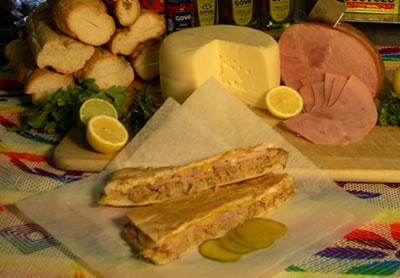
Photo courtesy of Tony Hernandez III of Mr. Cubano, authentic Cuban Sandwiches, in Cape Canaveral, Florida
The Cuban sandwich, also known as the cubano, is a popular meal in south Florida where many Cubans have settled since the early 20th century. These tasty, toasted Cuban sandwiches are definitely Tampa and Miami, Florida’s favorite snack. These treats can be found in most restaurants in these cities, but the best places to buy them are from the street corner-snack bars, called loncherias.
Every Cuban sandwich aficionado believes in their own version of this sandwich. In fact, they are usually passionate about this and will readily debate among themselves the finer point of how to make a Cuban sandwich. No visit to Tampa or Miami would be complete without sampling the cities claim to fame – the Cuban sandwich.
The sandwiches have a submarine-style layering of ham, roast pork, cheese, and pickle between a sliced length of Cuban bread. The key to a great, versus a good, Cuban Sandwich lies in the grilling. A great Cuban sandwich is grilled in a sandwich press (called a plancha) until the ham, pork, and pickles have warmed in their own steam (the steady application of heat and weight fuse the meat, cheese, and bread into a delectable and compact treat). One of the greatest sins in Cuban sandwich preparation is too light a press. A heavy hand on the press pushes all the juices and flavors together while still achieving the desired crunch crust. These sandwiches use no mayonnaise, lettuce, onions, bell peppers, or tomatoes; however, butter and mustard are optional. Cuban sandwiches are sold hot (pressed) or cold (room temperature).
The most important part of a Cuban sandwich is the bread. It is not ordinary bread, but Cuban bread. Believers say that true Cuban bread cannot be found outside of Tampa or Miami. Italian bread or French bread are acceptable substitutions in other parts of the country, but they are not the same. Cuban bread is noted for its split or bloom down the middle of its crust. This long, crusty loaf features a tender, but not chewy, interior. Cuban bread is best when it is eaten on the same day that it is made, as Cuban bread contains lard. After a day or so, the lard hardens, and the bread gets dry.
Jorge Astorquiza of Tampa, Florida sent me the following information on the Cuban Sandwich:
In Cuba, the sandwich was not known as a Cuban sandwich, but simply called sandwich. Since it was made in Cuba with Cuban bread there was no need to name it Cuban sandwich. Not so much that the Cuban bread in Cuba was not called Cuban bread, simply it is called bread. The sandwich has been a Cuban tradition since the early 1500’s. In fact before the Cuban cigar makers came to Tampa, they lived in Key West, Florida.
Cubans also had the ham which was brought by the Spaniards, and the cheese that was also brought by the Spaniards. Also at the time of the discovery, the original inhabitants of Cuba, the Taino/Arakaks, were making cheese. The traditional Cuban sandwich had evolved into the delicacy we know today, however not in Tampa, but to the Cubans in the island who took better than 400 years to make this delicacy perfect and allow all of us to enjoy the fruit of their expertise in sandwich making.
In Cuba when regular ham was not available or was to expensive, jamonada was used (this is more along the lines of chopped ham). Also in past centuries when bread was not available, casabe (a crispy flat bread made from cassava or yuca flour) was a logical substitute. This happened primarily in the Oriente province, not so much in the central provinces. The main reason why this happened mainly in Oriente is because the Taino influence was stronger in that area.
Another aspect of the Cuban sandwich is that for the most part what makes it different is ” La Plancha” this is a unit that toasts the sandwich to make it crispy and warm. Also, the best bread is called the water bread, which toasts better in ” La Plancha.”
How did the Cuban Sandwich make its way to Florida?
 1870s – Since Cuba is only 90 miles from Key West, Florida, many Cubans moved to Key West Florida in the late 1800s to avoid Spanish Rule. The Cuban cigar manufacturers also wanted a safer place to manufacture. There were twenty-nine factories with twenty-one hundred employees producing 171,000 cigars a day in Key West. This marked the beginning of a significant Cuban influence in Key West and the rest of Florida that continues today.
1886 – Among the first of the large factories to come to Key West was “El Principe de Gales” owned by Vincente Martinez Ybor. In 1886, Mr. Ybor’s cigar factory was destroyed by a fire. After the fire, Mr. Ybor, induced by a committee that came from Tampa, moved his factory there. This was the beginning of Tampa’s competition as a cigar manufacturing center. It was also the beginning of Ybor City in Tampa and the end of the cigar industry in Key West.
From the opening of the first cigar factory in 1886 until the 1930’s, Ybor City was a flourishing Latin community and was the “Cigar Capital of the World.” As a result of severe depressions in Cuba, thousands of Cuban immigrants, both black and white, came to the Tampa, Florida area. In fact, Ybor City would later be called the “Havana” of America by the Florida Branch of the Federal Writers Project Archives in 1941.
The sandwiches were popular with the Cuban immigrants who worked in cigar factories, selling for 15 cents each. Somewhere in time, Italian Genoa salami was added to the Cuban sandwiches of the Tampa area. In the late 1800s, the major ethnic groups of Ybor City were Cubans and Italians.
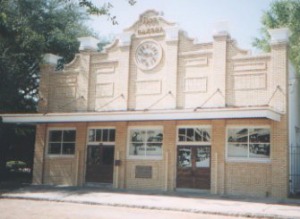 1896 – The first bakery, La Joven Francesca Bakery, to bake Cuban bread in Tampa was established by an Sicilan, Francisco Ferlita in 1896. The bakery was a major source of the community’s daily bread with bread selling for 3 and 5 cents a loaf.
In 1922, a fire destroyed the bakery, leaving only the brick oven standing. Ferlita rebuilt with a larger bakery, and each morning delivery boys distributed fresh bread throughout the community. A nail was placed on the outside wall of houses, and the delivery boys would slap the Cuban bread again the nail. The wall-hung bread would be waiting for the customer to retrieve. Firefighters used to come and get free hot Cuban bread to take back to the fire station. People used to congregate at the bakery to catch up on local news and drink some Cuban coffee. It was not unusual for this to happen in the middle of the night, while the bakers were kneading and baking the bread. During the peak years, the bakery could produce 1500 loaves of bread per day.
The bakery closed in 1973, and reopened as the Ybor City State Museum in 1974 as part of the museum complex, now known as the Ferlita Bakery.
1915 – Today, the La Segunda, a third-generation, family-owned bakery produces most of Tampa’s Cuban bread. The original bakery opened in 1915. This particular Cuban bread was first baked by Juan Mor the bakery’s founder who migrated from Cuba after the Spanish-American War. The formula is believed to have come from a particular town in Cuba, and its quite unlike anything around. The 3-foot long loaves have a crisp flakey crust with a bloom down the center created by placing a long palmetto frond atop the doughy loaves after proofing.
Frank Garces Jr. sent me the following information me about his father, Frank Garces of Miami, Florida:
I read your article on the Cuban sandwich and was impressed with such detail on how where and how it started. The Cuban sandwich is dear to my heart because my father was the first person to sell the original Cuban sandwich in Miami.
My fathers name was Frank Garces, but everyone called him by his nickname Paco. I can attest that my father made and sold the first Cuban sandwich in Miami in 1947. My father was born in Palma Soriano, Oriente, Cuba, and he went to New York in 1927. Our family moved to Miami in 1947 when he bought his first bar called Do Drop Inn in northwest Miami, where he also sold sandwich’s, one of them he called the “Cuban Sandwich.” He made his Cuban sandwiches using cut ham, roasted pork, Swiss cheese, sliced pickle, butter, and yellow mustard. He then pressed the sandwich to heat it. He never used mortadella or salami in his Cuban sandwiches as they do in Tampa.
In 1949 he sold that bar and bought a bigger one at a better location (N.W. 7th Ave and 26 Street) and converted it into a Spanish/American restaurant called the Knife & Fork. There were not many Cubans in Miami at that time and most of his customers were Americans. They ordered mostly Spanish food. By 1951, his Cuban sandwich became so popular and famous in Miami that he painted a large sign “Home of the Cuban Sandwich” on face of his restaurant. He owned this restaurant until he retired in 1969.
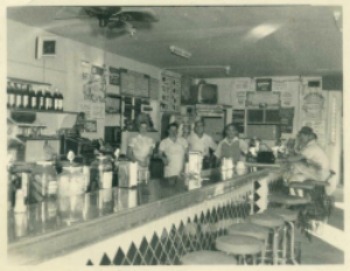
1947 – The oldest Cuban sandwich shop in Tampa, Florida, that is still in business today, is The Silver Ring Cafe. This cafe started as an Ybor City longshoremen’s bar in 1929. According to the story or legend of the cafe, in 1947, the owner smelled his staff’s preparation of Cuban sandwiches for their lunch. They smelled and tasted so good that they were put on the menu as a featured item. In 1997, the cafe moved to downtown Tampa and continues to served their award-winning Cuban sandwiches.
1959 – In Miami, the community known as Little Havana hosts a large Cuban population that fled to the United States after the 1959 Cuban revolution. The community keeps alive the rich culinary traditions of Cuba and has altered the eating style of South Florida. As stated above, the Cuban sandwiches in Miami do not have any kind of salami on them as the Tampa ones do.
Check out What’s Cooking America’s favorite Cuban Sandwich Recipe.
Comments from readers:
I just read your article on the History of the Cuban Sandwich. I want to thank you for posting it. Not only did it answer a question for me about the ingredients but you were kind enough to include the name of The Silver Ring Cafe and its current location.
Having grown up near Tampa (Dover to be exact) and my aunt working for an oil company close to the dock area there in Tampa, I can remember the old sandwiches which the Silver Ring made. They were out of this world and for years I have longed to have them again- especially since my own children have begged for them. I remember that the restaurant was at the dock area and thought that it had closed its doors many years ago. I’m glad to see that it was still open in 2006 (when you wrote your article) and pray that it is still open today. Since I and my sons now live near Daytona Beach (about 2 1/2 hours east of Tampa), it will make the drive back home so much enjoyable and allow me to bring a little of my childhood to my sons. If the sandwiches are still as good as in the 1960s, then they will make the drive worth it alone – Thanks again, Mary N Triplett (4/06/09)
I enjoyed reading about the Cuban Sandwich on your website. I discovered it one day while searching the web for the ingredients for this wonderful tasting food. When I was a young boy, I was stationed in Guantanamo Bay, Cuba at the Navy base. We used to venture off limits to the Cuban Village and buy the Cuban sandwiches for late night dinners. I thought I would mention what I saw in the cooking process and what I believe I saw in the ingredients.
The bread was sandwich style, like we are used to in the United States. I did not notice anything special about it except that it was typical sandwich cut. The meat was a gray color and was not shredded, but sliced rather thin and it was gray in color (sounds like fresh ham). It reminded me of the color of an eye roast like my parents made. There was a bit of lettuce, thin tomato slices, and some sauce that was red in color and very delicious . It was a little spicy, not hot, and really added a zesty flavor. There was no melted cheese. In Guantanamo there were not many dairy products available. Even the Navy milk was a daily fly-in from the states. Maybe that is why. The sandwiches had some thin sliced pickles, like a dill round slice. The pickles and the sauce were a very zesty addition the really made the sandwich. The sandwiches were cooked in a sandwich press, like we use to make grilled cheese sandwiches. They were placed four at a time on the press then it was closed. There was no pressure added to make the juices press together. After a few minutes they were done, golden brown. They were then wrapped in tin foil and placed in a paper bag. They were 79 cents apiece in 1971. We never ever tasted anything so delicious. I used to buy four to six of them depending on how hungry I was. And I was a little guy back then. I do not remember any type of mustard, although maybe it was a mixture in the sauce. Again, the bread was just like our sandwich-style loaf cut here in the USA. These sandwiches were made in the Cuban village by the Cuban people for the GI’s that came to eat and drink.
I do hope you can pass this on to folks for comment as I truly wish I knew if this is a variant of the traditional style or something very real and basic the Cubans eat. This was over 30 years ago. I have still to this day never had a sandwich that delicious. Thank You for reading my mail and thank you for your recipes. – Ron Witt, Rochester, NY (1/03/06)
2 Responses to “Cuban Sandwich History”
Tom Roberts
Thoroughly enjoyed your article on Cuban Sandwich history. Other articles rarely mention Key West: as a 4th generation Key West “Conch” I appreciated inclusion of Key West’s place and participation in such history. Cheers
Luke Smith
I like that you mentioned how the key to a great, versus a good, Cuban sandwich lies in the grilling. I think Cuban sandwiches look nice, so I want to try them out sometime. Going to Cuba is definitely impossible right now, so I am thinking of stopping by a Cuban restaurant instead.