
Seasoning, Cleaning, and Cooking with Cast Iron Pans
Please do not throw away that old cast iron frying pan that was your mother’s or grandmother’s! Clean it – as long as it has no cracks or nicks, you can clean, season, and use it.
There are several reasons that people rave about their cast iron cookware. Besides being an ideal heat conductor, cast iron cookware heats evenly and consistently, and will last a lifetime (actually several lifetimes) with proper care. When well seasoned, a cast iron pan will be stick resistant and require no additional oil.
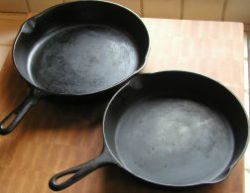 Cast Iron Skillet or Frying Pans:
Choose the size most comfortable for you. I recommend the 10-inch one, as it is the best trade off of size and weight. Personally, I own 10-inch cast iron frying pan and a 12-inch cast iron frying pan because on occasion, I am called on to feed large groups of people.
Check out the large selection of Cast Iron Cooking Recipes.
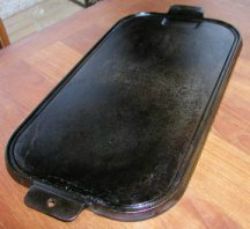 Cast Iron Griddles:
Want to make the greatest pancakes you’ve ever eaten? Want your French toast to have that crispy edge so prized at breakfast time? You need to get a cast iron griddle and get it good and hot on the stove top. Cast Iron Pots and pans work fine on electric or gas ranges, or over a campfire if you’re so inclined.
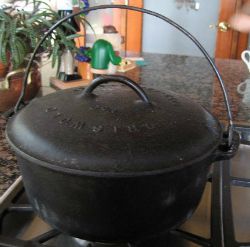
Cast Iron Dutch Ovens:
Before anyone ever thought of a crock pot, there was the cast iron Dutch oven. Dutch ovens have been used for hundreds of years.
Nothing will hold a good, even temperature better than the heavy metal of this monster pot, and it can go from stove top to oven without missing a beat.
Check out this very interesting and informative article on Dutch Oven Camp Cooking.
Cooking with Cast Iron Cookware:
I personally have five (5) old cast iron pots – a 10-inch and a 12-inch cast iron skillet, two large cast iron griddles, and a cast iron Dutch Oven. I love my cast iron pans!
You can use a single cast iron frying pan or cast iron skillet for just about any cooking task. Bake a cake, sear a filet, roast or fry a chicken, fry potatoes, stir-fry vegetables, etc. One skillet is all you need, but because cast iron cooking is lot of fun and makes the food you cook taste great, you are probably going to want more than one cast iron pan.
Using Cast-Iron Cookware – The benefits of cast iron pans and skillets are terrific:
Foods glide out of it as from a pan made with Teflon.
Cast-Iron goes from stove to oven.
No special utensils are needed to cook in it.
Cast-Iron will not war, and cleanup is a cinch.
A well-seasoned cast-iron pan will only get better with age, and will last you for a lifetime.
It is time people realize the culinary wonder that a cast iron pan can be!
Professional chefs consider cast iron cookware to be precision cooking tools, as these dependable pans enable precise control of cooking temperatures. Their heat retention qualities allow for even cooking temperature without hot spots. Cast iron pans can be used on top of the stove or to bake in the oven. All our grandmothers had cast iron skillets and cast iron stove-top griddles. In fact, your grandmother swore by it and the pioneers depended on it.
If you do not own a cast iron skillet, it is well worth the time and money to invest in one. You can find them for sale on the internet, at cook stores everywhere, thrift stores, flea markets, or you can scour the tag and yard sales for one that might look as if it has seen better days. If the pan is rusty or encrusted with grease, buy it anyway. Don’t worry! I’ll tell you how to get that new or old one into shape so you can enjoy it for a lifetime of fat free cooking. You’ll be able to pass the pan on to your own children and grandchildren.
Caring For Cast Iron Pans and Cast Iron Skillets
The first most common mistake of why people do not like cast iron is that they say everything sticks. If food sticks to your cast iron pan, your pan is NOT seasoned right and you need to re-season it. Cast iron is a natural non-stick surface and if your pan is seasoned correctly it WILL NOT stick!
Always preheat your cast iron frying pans before frying in them.
Water droplets should sizzle, then roll and hop around the pan, when dropped onto the heated surface. If the water disappears immediately after being dropped, the pan is too hot. If water only rests and bubbles in the pan, it is not quite hot enough. NOTE: Do not pour large amounts of cold liquid into your hot cast iron frying pan. This can cause the cast iron to break. Never forget your potholders! Cast iron pan handles get HOT when cooking!
There is a trick to maintaining cast iron cookware and that trick is known as “seasoning” or “curing.” Your food will never stick to the bottom of the skillet or pot and the iron will not rust if it is properly seasoned. Plus the cast iron cookware cleans up easily as well. Seasoning or curing cast iron cookware means filling the pores and voids in the metal with grease of some sort, which subsequently gets cooked in. This provides a smooth, non-stick surface on the inside of the cast iron pan.
If the cast iron pan was not seasoned properly or a portion of the seasoning wore off and food sticks to the surface or there is rust, then it should be properly cleaned and re-seasoned. Seasoning a cast iron pan is a natural way of creating non-stick cookware. And, like you cook and clean the modern non-stick cookware with special care to avoid scratching the surface, your cast iron cookware wants some special attention too.
NOTE: All new (not old cast iron cookware) cast iron pans and skillets have a protective coating on them, which must be removed. American companies use a special food-safe wax; imports are covered with a water-soluble shellac. In either case, scrub the item with a stainless steel scouring pads (steel wool), using soap and the hottest tap water you can stand.
How To Season Cast Iron Pans and Cast Iron Skillets:
Definition of Seasoning: To season a cast iron pan means to create a slick and glassy coating by baking on multiple thin coats of oil. This will protect the cast iron pan from getting rusted and makes for a non-stick cooking surface.
You season a cast iron pan by rubbing it with a relatively thin coat of neutral food-grade oil (I stress a light coat of oil). Rub the oil off with paper towels or a cotton cloth. The pan will look like there is no oil left on the surface, but there is as the oil is just very thin (the pan will look dry, not glistening with oil).
Use vegetable oils (canola, sunflower, etc.), shortening (like Crisco shortening) or lard for seasoning your cast iron pans. I recently experimented and found out that food-grade coconut oil/butter also works great. Check out Smoking Points of Oils – Types of Cooking Oils.
Also check out the Q&A’s web pages below: Techniques for Restoring and Seasoning Old Cast Iron Pans and Cast Iron Skillets.
Place the lightly-oiled cast iron pan, upside down, in the oven, with a sheet of aluminum foil on the bottom to catch any drips. Heat the pan for 30 minutes in a 450 to 500 degree F. oven. Once done, turn off the oven, and let the pan cool to room temperature in the oven. Repeating this process several times is recommended as it will help create a stronger “seasoning” bond. I usually do this process 3 to 4 times. NOTE: Seasoning cast iron pans does generate smoke similar to cooking in a dirty oven.
The oil fills the cavities and becomes entrenched in them, as well as rounding off the peaks. By seasoning a new pan, the cooking surface develops a nonstick quality because the formerly jagged and pitted surface becomes smooth. Also, because the pores are permeated with oil, water cannot seep in and create rust that would give food an off-flavor. Your ironware will be slightly discolored at this stage, but a couple of frying jobs will help complete the cure, and turn the iron into the rich, black color that is the sign of a well-seasoned, well-used skillet or pot.
Never put cold liquids into a very hot cast iron pan or oven. They will crack on the spot!
Be careful when cooking with your cast iron pans on an electric range, because the burners create hot spots that can warp cast iron or even cause it to crack. Be sure to preheat the iron very slowly when using an electric range and keep the settings to medium or even medium-low.
Important:
Unless you use your cast iron pans daily, they should be washed briefly with a little soapy water and then rinsed and thoroughly dried in order to rid them of excess surface oil. If you do not do this, the surplus oil will become rancid within a couple of days.
Remember – Every time you cook in your cast iron frying pan, you are actually seasoning it again by filling in the microscopic pores and valleys that are part of the cast iron surface. The more you cook, the smoother the surface becomes!
How To Maintain Cast Iron Pans and Cast Iron Skillets:
Every time, after I use my cast iron pans, I do the following:
Let the cast iron frying pan cool.
Wash it with dish washing soap and water. Never soak or let soapy water sit in the pan for any length of time – just briefly wash it out. Rinse thoroughly, then dry with paper towels. NEVER put cast iron cookware in the dishwasher.
A lot of people disagree with using dish washing soap and water to wash cast iron pans. A chef told me that if a health inspector ever found a pan that had not been washed with soap and water in his kitchen, he would be in trouble. Plus the grease that is left behind will eventually become rancid. You do not want rancid oil in your foods and body.
Place the cleaned cast iron frying pan on the heated burner of your stove for a minute or two to make sure that it is bone dry. While the pan is still hot and on the stove burner, lightly oil inside of pan (I mean a light coat) with a neutral cooking oil. I use a paper towel to spread the oil lightly over the pan.
Neutral Food-Grade Oils – Use vegetable oils (canola, sunflower, etc.), shortening (like Crisco shortening) or lard for seasoning your cast iron pans. I recently experimented and found out that food-grade coconut oil/butter also works great.
Leave frying pan on the hot burner of stove for a few minutes. Remove from hot burner and wipe excess oil off the pan with a paper towel.
Store your cast iron cookware with the lids off (especially in humid weather, because if covered, moisture can build up and cause rust). Be sure that you place a couple paper towels inside your cast iron pan when storing to make sure that any moisture that forms will be absorbed by the paper towel. Never put the utensil in the dishwasher or store it away without drying it thoroughly.
How To Cook in Cast Iron Cookware:
Cast iron is a great alternative to non-stick cooking surfaces. Cast iron can be pre-heated to temperatures that will brown meat and will withstand oven temperatures well above what is considered safe for non-stick pans. You can cook almost any food in cast iron cookware.
One of the reasons cast iron is so highly valued is for its cooking properties. Heat is evenly distributed and held, making it ideal for deep frying, searing, and even baking. The versatility of the cast iron frying pan or skillet is unrivaled; use it on the stove top, on your barbecue grill, and/or in your oven.
You can also bake food in your oven using your cast iron cookware. Instead of using that casserole dish, try using your cast iron cookware. You can bake your cakes, pies, biscuits in cast iron cookware. Be creative!
Always preheat your cast iron frying pan before frying in it (see above).
Acidic items like tomato sauces will be darker from iron leaching out, but many people with iron deficiencies do this for extra iron in their diet.
Never store acidic products in cast iron cookware. In fact, never ever use your cast iron pots for storing any foods.
It is not recommended that you use your cast iron as a pot for boiling water. Some people say that the hot water will remove small bits of oil from the surface which will then be found floating around. Water breaks down the seasoning and can cause your cast iron to rust.
Check out the large selection of Cast Iron Cooking Recipes.
Measuring Cast Iron Pans:
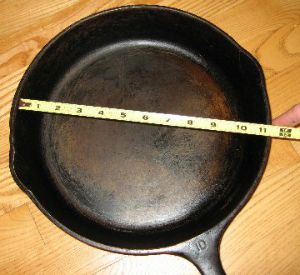
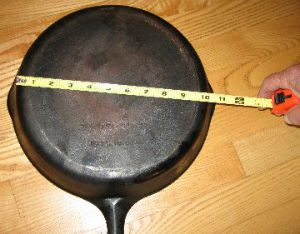
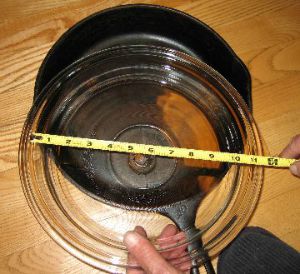
Measuring for Lid Size
Metallic Taste – If your food gets a metallic taste, or turns “black”, it means one of two things are wrong. Either your pot has not been sufficiently seasoned, or you are leaving the food in the pot after it has been cooked. Never store food in the cast iron pan as the acid in the food will breakdown the seasoning and take on a metallic flavor.
Rust Spots -If your old or new cast iron pans gets light rust spots, scour the rusty areas with steel wool, until all traces of rust are gone. Wash, dry, and repeat seasoning process.
Goo or Guck in Pan – If too much oil or shortening is applied to a cast iron pan in the seasoning process, it will pool and “gum up” when the pan is heated. In this case, the goo can be scraped off and some more grease rubbed over the spot, or the pan can be re-scrubbed and re-seasoned.
Heating the pan upside-down may help prevent gumming but protect your oven by using a foiled-lined baking sheet or aluminum foil to catch the grease. Seasoning at higher temperatures, approaching the smoking point, of the oil used will result in darker seasoned coatings in less time that are not sticky or gummy.
Techniques for Restoring and Seasoning – Old Cast Iron Pans and Cast Iron Skillets:
Questions and Answers – Comments and Hints
Please check out my Q&A pages below on the many different techniques on restoring and seasoning cast iron pans.
Hopefully the following topics will help to answer your many cast iron questions:
Ceramic Top (Flat Top) Electric Range and Cast Iron Pots
Hot Fire for Curing & Cleaning
Iron and Carcinogens in Cast Iron
Propane Torch for Cleaning Cast Iron
Self-Cleaning Oven for Cleaning & Seasoning
Smoking Points of Oils – Types of Cooking Oils
Warped or Cracked Cast Iron Pots
15 Responses to “The Irreplaceable Cast Iron Pans”
roberta
Do you have to reoil after the pan cools? Or do you just leave in the oven and turn the oven on again?:
Place the lightly-oiled cast iron pan, upside down, in the oven, with a sheet of aluminum foil on the bottom to catch any drips. Heat the pan for 30 minutes in a 450 to 500 degree F. oven. Once done, turn off the oven, and let the pan cool to room temperature in the oven. Repeating this process several times is recommended as it will help create a stronger “seasoning” bond. I usually do this process 3 to 4 times.
Linda Stradley
I lightly oil the seasoned cast iron pan before using.
Lisa Bradford
I need a lid for a Weber Sydney O 1268 dutch oven. Where can I get one?
Jason Petorak
Using the guide above, you should be able to measure the distance of the inside of the pan to determine what size of lid you can use. I tried for years to find metallic basting lids (the ones with the little spikes on the top to drip liquid on the contents) and had very little luck. There are, however, a metric ton of lids for non-cast iron cookware sitting alone on a shelf somewhere in a thrift store that would work just fine.
Deysi Alvarado
Hello,
I was wondering if it’s normal to always have a blackened, sooty paper towel after I’ve seasoned my cast iron pan (I followed your directions) and am reoiling it before use?
Thank you
Mike Thaxton
They are really great to take with you when you go fishing and camping . Nothing like cooking steak and eggs in it and biscuits . Even frying the fish you catch and clean . My mom used to fry okra , squash and tomatoes along with other things as well which were always great .
carpes88
Im so excited that this actually worked! I inherited a cast iron skillet from former housemates. I kept it around b/c I liked the idea of using non-teflon cookware but it actually drove me crazy the way things stuck to it. I thought that was just a normal characteristic of iron skillets until i found and read your tips. I was skeptical thinking it had already been oiled so many times (via cooking) but curing twice alone (with coconut oil in my toaster oven!) did the trick! Just had me some french toast that came off and out beautifully. Thanks for sharing your know-how!
robert dennis
1st of all, why don’t manufacturers send new products to consumers non-stick? Instead of people saying what should work to make them so?
I have tried 3 different cast iron pans and never have they been non-stick!
I have a feeling that this is a cult like defense of cast iron!
Vethamalar
I understand cast iron must be cooled down before it can be cleaned under running water which is at room temperature. Otherwise it might crack. In this case, using a cast iron skillet to cook a few dishes becomes time consuming as compared to stainless steel. Is that right? Is there any way to speed this up?
Zondra turner
What does it mean when my skillet has a number on the bottom of it? (87)
emposter
Usually, a manufacturer will use the “number” to identify which “casting mold “ was used to produce your frying pan.
donna jeffrey
hi was just wondering I followed your instructions for my cast-iron pan this morning when I got the pan the instructures in side said you salt to clean it now I noticed there’s pieces of black coming off of my cast-iron pan after I washed it and put the oil in it and spread it around and then wiped the excess oil off it with a paper towel there were pieces of black on the paper towel does this mean that my pan is no more good or is that supposed to happen
Whats Cooking America
If your cast iron pan has cracks and nicks then it’s not usable.
Donna Harrison
I have a cast iron skillet that came up cross the Prairie with my great great great grandmother it is perfectly smooth on the inside I have it hanging on the wall as decoration that I have always wondered if it was safe to cook in it
Martha
I have a large cast iron skillet that my son bought me. I don’t use it frequently because I was not sure how to season and take care of it. I will start using it more now. Your information is very helpful. Thank you.