
Roasting Perfect Turkey Guidelines
Learn How to Roast the Thanksgiving and Christmas Turkey
It is hard to beat the classic roast turkey with the wonderful aromas that waft from the oven kicking off the anticipation for the holiday meal. Roasting perfect turkey is one of easiest ways to accommodate a large crowd of family and friends. Follow the below guidelines for roasting a perfect turkey.
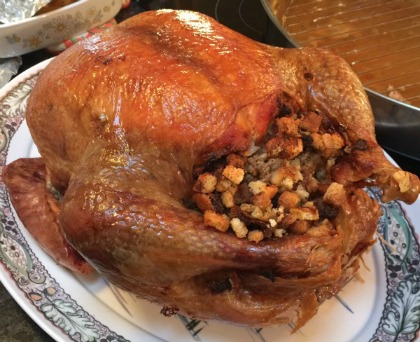
What are the USDA guidelines for roasting whole turkeys?
Based on a study conducted by the University of Georgia, which showed that the existing USDA cooking times were longer than needed to assure safety and doneness. The data supported reductions of 15 minutes to one hour, depending on the size of the bird.
The USDA has come up with a one-temperature-suits-all for poultry safety: 165 degrees F. For safety, the internal turkey temp for doneness should be checked with a meat thermometer.
It appears that looking for your turkey cook time isn’t the best way because “timing is NOT everything.” Recommended cooking techniques must also be followed. A meat thermometer should be used to check the internal temperature of the turkey in several places for safety’s sake and to prevent overcooking.
Many variables affect roasting times of a whole turkey:
- A partially frozen bird requires longer cooking.
- Dark turkey roasting pans cook faster than shiny metals.
- The depth and size of the pan can reduce heat circulation to all areas of the bird.
- The use of a foil tent for the entire time can slow cooking.
- Use of the roasting pan’s lid speeds cooking.
- An oven cooking bag can accelerate cooking time.
- A stuffed bird takes longer to cook.
- The oven may heat food unevenly.
- Calibration of the oven’s thermostat may be inaccurate.
- The rack position can have an affect on even cooking and heat circulation.
- A turkey or its pan may be too large for the oven, thus blocking heat circulation.
- The meat thermometer must be placed properly in the thigh joint. See Taking The Turkey’s Internal Temperature below.
All these factors must be considered when roasting a turkey or any meat product. They can lengthen or shorten the total cooking time. Safe cooking relies on a combination of factors and the use of a meat thermometer.
The roasting methods or techniques used in the University of Georgia study to determine the new approximate cooking times did show that turkeys were cooking faster. The new times are based on cooking turkeys according to the following recommendations.
Learn How to Roast a Perfect Turkey – Turkey Roasting Instructions and Video:
1. Oven temperature for cooking a turkey – Set the oven temperature no lower than 325 degrees F. Pre-heating is not necessary.
2. Be sure the turkey is completely thawed. Times are based on fresh or completely thawed frozen birds at a refrigerator temperature of about 40 degrees F. or below.
3. Placing Turkey in Roasting Pan – Place turkey breast-side up on a flat wire rack in a shallow roasting pans, 2 to 2 1/2 inches deep.
Optional steps:
Truss or Not to Truss – You do not need to bother with complicated trussing. Instead, secure the legs by tucking the ankle joints into the pocket of skin at the tail end. Tuck wing tips back under the shoulders of bird (called “akimbo”).
Adding Liquid – Add 1 cup chicken broth/stock to the bottom of the turkey pan before beginning the cooking. This will create a steam room-type environment in the oven, which help keep the breast moist but will not prevent browning of the skin.
Tenting the Turkey – In the beginning, a tent of aluminum foil may be place loosely over the breast of the turkey for the first 1 to 1-1/2 hours, then removed for browning. Or, a tent of foil may be placed over the turkey after the turkey has reached the desired golden brown. As part of the study, some birds were tented with foil for the entire cooking time; this increased the cooking time required.
4. How to baste a Turkey – Brush the turkey with butter or vegetable oil at the beginning before roasting it in the oven. This will contribute to browning. Basting during the roasting process is an unnecessary extra step. Basting in the last hour of roasting can actually turn a beautiful crisp turkey skin soft.
Easy ways to baste a turkey:
Use a Turkey Baster (bulb turkey baster).
Use a basting brush.
Use a large spoon to scoop up the juices and drizzle over the turkey.
5. What are turkey cooking times? – The new roasting times are based on the recommendations above and on an internal temperature, and 325 degree F. oven temperature. These times are approximate and should always be used in conjunction with a properly placed meat thermometer for roasting perfect turkey.
Approximate Turkey Cooking Times:
Un-Stuffed Turkey
4 to 8 pounds………….1-1/2 to 3-1/4 hours
8 to 12 pounds…………….2-3/4 to 3 hours
12 to 14 pounds……………3 to 3-3/4 hours
14 to 18 pounds……………3-3/4 to 4-1/4 hours
18 to 20 pounds……………4-1/4 to 4-1/2 hours
20 to 24 pounds……………4-1/2 to 5 hours
Stuffed Turkey
8 to 12 pounds…………….3 to 3-1/2 hours
12 to 14 pounds……………3-1/2 to 4 hours
14 to 18 pounds……………4 to 4-1/4 hours
18 to 20 pounds……………4-1/4 to 4-3/4 hours
20 to 24 pounds……………4-3/4 to 5-1/4 hours
6. Taking The Turkey’s Internal Temperature – The USDA has come up with a one-temperature-suits-all for poultry safety: 165 degrees F. For safety and doneness, the internal temperature should be checked with a meat thermometer.
 This is the type of cooking and meat thermometer that I prefer and use in my cooking. I get many readers asking what cooking/meat thermometer that I prefer and use in my cooking and baking. I, personally, use the Thermapen Thermometer shown in the photo on the right. To learn more about this excellent thermometer and to also purchase one (if you desire), just click on the Thermapen Thermometer. – Affiliate Link
To Take Temperature of Thigh – Place the thermometer in the thickest part of thigh away from the bone of the turkey to check the internal temperature at intervals during the cooking time.
To Take Temperature of Breast – Insert thermometer at neck end, holding it parallel to the turkey. Confirm temperature by inserting thermometer in both sides of the turkey.
Cleaning Meat Thermometer – After each use, wash the stem section of the thermometer thoroughly in hot, soapy water.
Pop-Up Thermometer – If your turkey has a “pop-up” temperature indicator, it is also recommended that you also check the internal temperature of the turkey in the innermost part of the thigh and wine, and the thickest part of the breast with a meat thermometer. Pop-Up thermometer are not usually accurate.
Temperature of Cooked Turkey and Stuffing/Dressing – The temperature must reach a minimum internal temperature of 165 degrees F. in the thigh before removing from the oven. The center of the stuffing should reach 165 degrees F. after stand time.
In Absence of a Meat Thermometer – Juices should be clear. Pierce the turkey with a fork in several places; juices should be clear with no trace of pink. NOTE: The old-fashioned way of wiggling the leg to see if it’s loose will give you an indication that the turkey is ready, but unfortunately, by the time the leg is truly loose, the turkey is sadly overcooked. The only reliable test for doneness is to check the internal temperature with a meat thermometer in the thickest part of the thigh, without touching the bone.
7. Removing the Turkey From the Oven – Once you remove the turkey from the oven, tent it with aluminum foil and allow it to rest for 20 to 30 minutes, so the meat can firm up and hold the juices, making it easier to carve.
8. Letting the Turkey Rest – Resting allows for the redistribution and re-absorption of the juices in the meat before slicing. This makes for ultra-moist, flavorful meat while also giving the turkey a chance to cool for easier carving. If you skip this important step, you will both burn yourself and end up with a flood of juices on your carving board, not to mention a dry turkey.
Learn how to carve a turkey – Video Instruction
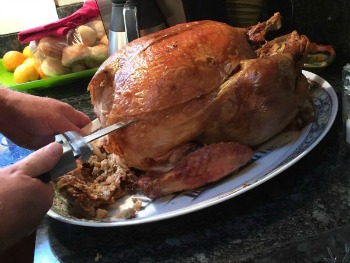
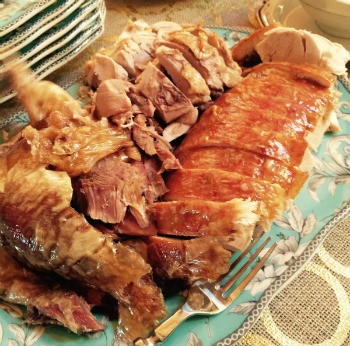
Different Types of Turkey Cooking Styles:
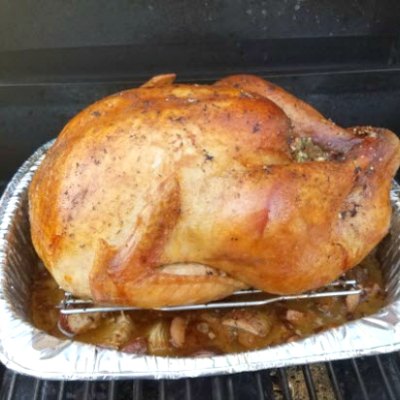 Barbecued or Grilled Turkey
Outdoor barbecuing or grilling is a very easy and a efficient way to cook your Thanksgiving or Christmas turkey. No mess in your oven or the kitchen! A whole turkey may be prepared on either a gas grill or a charcoal grill. This method requires a covered barbecue grill and heavy duty aluminum foil. Your turkey will be crisp outside and juicy inside.
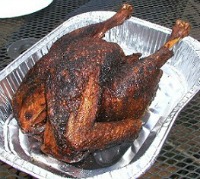
Cajun Fried Turkey
This is the best way of cooking a turkey I have ever tasted! This way of cooking your turkey is anything but greasy as the deep-frying process seals the outside and the turkey remains incredibly juicy, while the skin gets wonderfully crispy. These fried turkeys were a big hit at our festival!
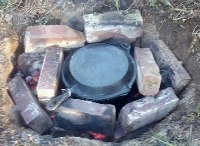 Outdoor Turkey Pit Cooking Recipe – Turkey In the Hole Recipe
This style of pit cooking is also know as “Bean Hold Cooking.” A pit barbecue is an exercise in turning a hole in the ground into an oven with hot coals provide the heat. Covering the top with aluminum foil and then dirt, regulates the oxygen so the coals burn slowly, providing an even, controlled heat for many hours. If you have the time and place to cook your holiday turkey in an outdoor pit. This make a great Thanksgiving or Christmas turkey dinner.
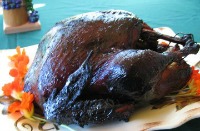 Smoked Turkey
Smoking a turkey is no different from barbecuing in your back yard. You follow all these rules without even noticing them in most cases – so go ahead, give it a try. You will not be dissatisfied when you try a smoked turkey.
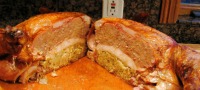 Turducken
What the heck is that? Well, it is a 15 to 16 pound deboned turkey (except for wing bones and drumsticks), a fully hand deboned duck, and a fully hand deboned chicken, all rolled into one and stuffed with lots of delicious stuffing (three kinds of stuffing are layered between the three kinds of meat). This regional delight has become one of the latest food fads. From the outside it looks like a turkey, but when you cut through it, you see a series of rings making up the three birds and three stuffing.
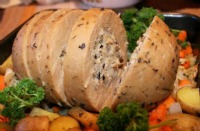 Tofurky/Tofurkey Recipe with Vegan Gravy
Tofurky is very popular “mock” meat substitute to serve for Thanksgiving and Christmas dinners. I am not a vegetarian or a vegan, but I have several family members who are. For them and my many readers who are also vegetarians or vegans, I created this page on how to cook Tofurky.
Turkey Dinner Information:
Turkey Basics
How to purchase, stuff, and roast a turkey – Choosing a fresh or frozen turkey – How to thaw a frozen turkey – How to prepare turkey for stuffing.
Perfect Turkey Gravy
Homemade gravy, made using the turkey giblet stock, pan drippings, and meat juices from the roast turkey, is an essential part of a traditional Thanksgiving dinner.
Guidelines for Brining Poultry
This is the secret that chefs never tell you about. It is very easy and economical, and requires no special cookware. Brining is like a marinade, as it keeps food moist and tender.
Let’s Make Turkey Stock
Don’t throw out those leftover turkey bones! My favorite thing to do the morning after Thanksgiving is to make homemade turkey stock from the turkey carcass. It is so easy to do and so delicious!
Linda’s Favorite Turkey Stuffing
Whether you call it “stuffing” or “dressing,” what’s not to love about turkey stuffing? Everyone knows that stuffing is the best part of a turkey dinner!
Make Ahead Mashed Potatoes
Save your valuable kitchen time on Thanksgiving day by using this easy-to-make mashed potato dish for your next Thanksgiving dinner. This is the recipe I use every year for Thanksgiving Dinner.
Using a Cooking or Meat Thermometer
Have you ever cut into a turkey to see if it has finished cooking? You DEFINITELY need to use a cooking thermometer! A cooking thermometer or meat thermometer should not be a “sometime thing.” Use it every time you prepare foods like poultry, roasts, hams, casseroles, meat loaves and egg dishes.
Internal Temperature Cooking Charts
Cooking thermometers take the guesswork out of cooking, as they measure the internal temperatures of your cooked meat, poultry, seafood, baked goods, and/or casseroles, to assure that a safe temperature has been reached, harmful bacteria have been destroyed, and your food is cooked perfectly. Always follow internal cooking temperatures to be safe!
Advice on Handling Leftovers Safely
Leftover” foods are cooked foods that you or your family do not eat within 2 hours after they are cooked. The chance of food poisoning increases the longer you store a food after it is cooked. Improper handling or storing cooked food is one of the most common causes of food poisoning in the home.
Categories:
Christmas Cooking Lessons - Cooking 101 Holiday Turkey Dinners Thanksgiving Turkey Turkey Hints & Tips
8 Responses to “Roasting Perfect Turkey Guidelines”
Linda Johnson
This Thanksgiving we had a 15lb turkey. it was thoroughly defrosted. We rubbed seasoning on it and we put it in a plastic cooking bag and put it in the oven at 9:00 PM to slow cook overnight. The oven was set on 250 degrees. I got up at 6;30 AM and looked at the turkey and it had completely collapsed. It was practically floating in broth and was completely done. The turkey was good and there seemed to be no harm done but I am puzzled as to why it collapsed like it did. The breast of the turkey was completely flat. I have never seen that happen before and want to make sure next year it doesn’t happen again.
What did we do wrong?
Thank you for your help!
Sincerely,
Linda Johnson
Linda Stradley
I have never heard of a turkey collasping during cooking. Can anyone help her?
Carol Cordier
I think you just cooked the turkey much too long, resulting in the ligaments holding the rib bones together softening so much that they became unconnected, as they would if you were boiling a chicken or turkey carcass to make broth. Remember that using a cooking bag speeds up the cooking time no matter what temperature you roast at. It also steams the turkey so there was a great deal of moisture in the bag/turkey, contributing to the “boiled” effect on the ligaments.
If you look at the list of cooking times above a 15 lb turkey at normal oven temp would take about 4 to 4 1/2 hours. You reduced the oven temp 75 degrees from the minimum suggested 325, but that isn’t really a tremendous reduction considering you cooked your turkey for 9 1/2 hours, over twice as long as the chart suggests above. I love turkeys cooked in cooking bags, they always result in very moist meat, but I wouldn’t suggest using them for slow cooking any meat, or cooking any turkey for 9 1/2 hours (unless its a 40 lb turkey!).
Julie Vass
How low or high should the oven rack be to cook Turkey? Thank you
Whats Cooking America
Since the turkeys are large, adjust your oven rack to the lowest rack to make room for the turkey to fit in the oven.
Bridget Elliott
Every article I read says turkey cooks quicker in a covered dark enamel and don’t cook it for 20 minutes per pound..ok great but how much faster? Per pound? So frustrating
Whats Cooking America
Our turkey roasting chart per pound will provide a helpful guideline.
Mary
I have a covered granite roasting pan with a lid and have the same question. Did you ever find an answer me or a recipe that worked for this? Thank you