
Questions and Answers – Hartshorn, Bakers Ammonia (Ammonium Carbonate)
Questions:
My Mother used to make Christmas cookies that called for 25 cents worth of hearts horn. I believe the hearts horn was added to keep the cookie from drying out, like a preservative. Any help would be appreciated. – Papa Bob (11/18/99)
I have a recipe of my great grandmother’s for sugar cookies which includes “5 cents worth of heartshorn.” What is hearts horn? Where is it available? What would be a reasonable substitute? I hope you can help! – S. Jennings
Answer:
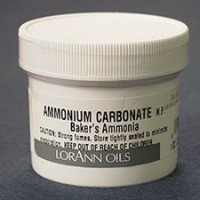 Hearts Horn is actually spelled Hartshorn. It is also called bakers’ ammonia (ammonium carbonate). It is an ammonia compound and not harmful after baking. However, don’t eat the raw dough. Your kitchen will stink of ammonia while the cookies bake – but once baked, the cookies will not taste of it.
Hartshorn can be substituted for equal amount of baking powder in any cookies recipe. It is an old-time leavening favored for cookies, such as German Springerle. It is said to give a “fluffiness” of texture baking powder can’t. Its leavening is only activated by heat, not moisture (such as baking powder).
STORING: Not affected by age, but will evaporate it not kept in an airtight container.
According to the Dictionary of American Food & Drink by John F. Mariani:
“Hartshorn – A source of ammonia used in baking cookes or, as “salt of hartshorn,” as smelling salts. Once the word meant literally the ground horn of a hart’s (male deer’s) antlers, but ammonium carbonate was later used as a substitute, which also went by the name of “salt of hartshorn.” This is still available in American pharmacies and used occasionally in making cookies.”
Categories:
Baking Hints & Tips