
Risotto Hints and Tips – Risotto Etiquette – How To Make Risotto Ahead of Time
Risotto is the classic rice dish of Northern Italy. In Italy, risotto, like pasta, is considered the first course of a typical meal that includes several courses brought to the table at paced intervals. It is a rice dish that is simple to prepare, but it does take some time in the basic preparation. Once you become familiar with the basic technique for preparing risotto, you will discover that making risotto is not an exact science and you will quickly develop a feel for the exact amoun of liquid you will need.
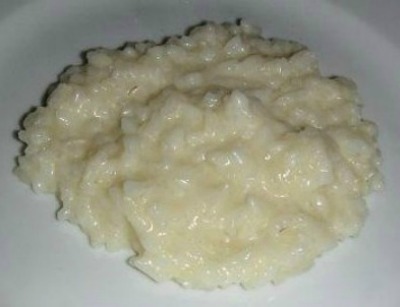
Read all the ingredients of your recipe for risotto, and measure, prepare, and assemble all ingredients in advance of cooking. Place them close to the stove before you begin.
Always serve risotto in preheated plates or in warm shallow bowls.
Types of Rice Used in Making Risotto:
Use only Italian short-grain rice varieties such as Aroborio, Carnaroli, Vialone, Nano, and Baldo (Arborio is the most commonly found short-grain rice). Short-grain rice has a high starch content and tends to absorb less liquid, resulting in a stickier, more compact risotto.
Arborio (are-BORE-ee-oh) – is a pearly, round medium grain rice that is readily available in the United States. Its outer coating contains the highest starch level of any Italian variety, which ensures creamy texture in risottos.
Carnaroli (car-noh-ROE-lee) – often referred to as the caviar of rice. It is the variety most preferred by chefs. It is known for superior flavor and distinctive creaminess, but its window for achieving perfect doneness is smaller than with the other varieties.
Vialone Nano (vee-ah-LOW-nah-no) – This rice is grown in the Veneto region of Italy and is required to be produced without chemical treatments of any kind. It is small (nano means “dwarf”), fine, and pearly. This variety is less sticky and less forgiving than other varieties.
NEVER wash the rice. Every bit of the rice starch helps make risotto creamy.
Toasting the Rice:
Cooking the rice in hot butter or oil before adding liquid helps the rice to absorb the liquids slowly with becoming soggy. This is called “Toasting the Rice.” Toasting the rice quickly heats up the grain’s exterior (toast until the rice is hot to the touch and the color should remain pearly white, not turn brown.
Cooking Liquid (Broth, Stock and/or Water):
The quantity of liquid suggested in the recipes is always approximate. In actual cooking, you should be prepared to use more, or sometimes less, as the risotto itself requires.
All the flavors that the cooking liquid starts out with become more concentrated and intense as it evaporates. Bearing that in mind, when the recipe requires broth, you will use a fine, mild beef or chicken broth. It is always better to use homemade broth or stock, but if you do not have the time (like most of us), do not worry! Swanson’s Organic Chicken and Beef broths are great for making risotto.
It is important to add hot stock, not cold, to the rice during the cooking process. Adding cold broth to hot rice results in a hard, uncooked kernel in the center of the grain.
Have broth ready, at a low simmer in a covered saucepan before beginning to make your risotto.
Add approximately 1/2 cup to 3/4 cup, at the beginning, and decreasing the amount to 1/2 to 1/4 cup toward the end of the cooking process. Adding too much broth at the end can result in overcooked risotto. Keep the broth simmering slowly while you add it to the rice. This helps maintain a constant cooking temperature.
Run your wooden spoon across the bottom of the pot to determine when each addition of broth is almost completely absorbed.
When cooking with broth, if you have used up the broth before the rice is fully cooked, continue with simmering water.
Water is the best choice for seafood risotto. Liquids that come from the ingredients in the flavor base should be retained, such as the juices released by clams or mussels.
The water used to reconstitute dried mushrooms, and the vegetable flavored liquid left from the preliminary blanching of asparagus and other greens can also be used.
Wines:
Wine may be added, but it must not be the sole liquid used.
Wines should always be a drinkable quality.
Cooking the Risotto:
Begin tasting the rice about 14 to 16 minutes after the first cup of broth is added.
Cook the rice until it is “al dente,” or the tooth still finds a little bit of resistance when it bites in when you chew. It shouldn’t be rock hard in the center and mushy on the outside.
The total amount of cooking time may vary within 2 to 3 minutes. Perfectly cooked risotto should not be hard and stick to the serving spoon, nor should it be so liquid that it runs off your plate. The texture should be supple and fluid, with a creamy, slightly soupy consistency, but with body.
Vegetables, Seafoods and/or Meats:
Add any vegetables, seafood, or meat, which cook quickly, when the risotto is only a few minutes away from al dente.
Risotto Etiquette:
In Italy, risotto is serve mounded, steaming hot, in the center of warmed individual shallow bowls.
Among the myths associated with risotto, there is the one that you must eat it piping hot, as it comes from the pot!
Unlike pasta, risotto tastes better when it has rested on your plate a minute or so. When Italians are served risotto, they often spread it on their plate from the center toward the rim, to dissipate some of the steam.
Using a fork or a spoon, push the grains of cooked rice out slightly toward the edge of the bowl, eating only from the pulled out ring of rice.
Continue spreading from the center and eating around the edges in a circle. This will keep the risotto hot as you enjoy your risotto.
How To Make Risotto Ahead of Time – Chef’s Secret Risotto Technique
With this technique, that is used by restaurant chefs, you never have to stand at the stove, stirring, for 20 minutes while your guests wonder where you have gone. You can make any kind of risotto you want using the below method.
A standard recipe of 4 servings uses 5 cups liquid (wine, broth, water, etc.) to 1 1/2 cups arborio rice.
Prepare your risotto according to your recipe, but use only 3 1/4 cups liquid (reserving the remaining 1 3/4 cups for when you are ready to finish the risotto). Cook on medium-low heat for 16 minutes only according to your recipe.
After 16 minutes, remove the rice from the heat. If you are going to use it within the hour, just slid it to the back of the stove, no heat, and let it sit. If you are making well in advance, place in a shallow baking pan and cover. Refrigerate until ready to serve. The rice can be prepared to this point up to 3 days in advance.
When Ready To Serve:
Remove chilled rice from refrigerator and bring to room temperature.
Place the remaining 1 3/4 cups liquid in a wide pot or saute pan; heat to a simmer over medium-high heat.
Reduce heat to medium and add the partially cooked risotto. Stir with a wooden spoon until the liquid is absorbed and the rice is done cooking, approximately 4 to 5 minutes or until rice is tender but still firm (the rice is done when it is tender, but firm to the bite).
Turn off the heat and immediately add the remaining butter and Parmesan cheese, stirring vigorously to combine with the rice. Add salt and pepper to taste.
NOTE: To test the risotto for proper consistency, spoon a little into a bowl and shake it lightly from side to side. The risotto should spread out very gently of its own accord. If the rice just stands still, it’s too dry, so add a little more stock. If a puddle of liquid forms around the rice, you’ve added too much stock. Spoon some liquid off, or just let the risotto sit for a few more seconds off the heat to absorb the excess stock.
Transfer risotto to warmed serving bowls and serve immediately with additional freshly-grated parmesan cheese on the side.
Try What’s Cooking America’s great risotto recipes:
Risotto with Chives and Truffle Oil
Risotto with Corn, Tomatoes, and Basil
2 Responses to “How To Make Perfect Risotto”
Rebecca
In your detailed of the method for cool-ahead risotto, you give a measurement for the liquid, but what about the amount of grain?
Nancy
Under the heading of Make-ahead risotto, it has the measurements listed:
How To Make Risotto Ahead of Time – Chef’s Secret Risotto Technique
With this technique, that is used by restaurant chefs, you never have to stand at the stove, stirring, for 20 minutes while your guests wonder where you have gone. You can make any kind of risotto you want using the below method.
A standard recipe of 4 servings uses 5 cups liquid (wine, broth, water, etc.) to 1 1/2 cups arborio rice.