
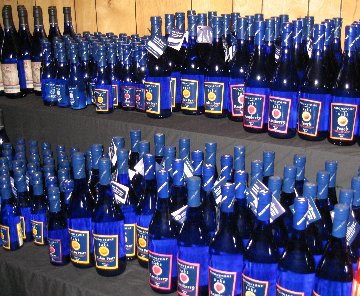
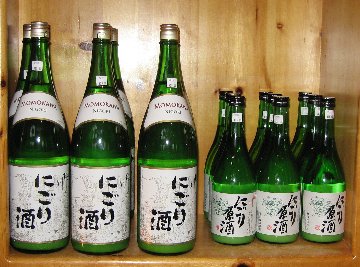
Photos from the SakeOne (producer of Momokawa and Moonstone), tasting room in Forest Grove, OR. The home of the only American owned and produced sake. My tour of their sake making facilities is what inspired me to write the following article.
Check out my day at the Sakery – Learn how sake is made. Also check out Chocolate Pearl Sake Cake Recipe.
What is Sake:
Good sake is not served hot! It is brewed like beer but is actually a wine that is tasted and served like a white wine.
Sake is something of a hybrid between beer and wine, with its production and shelf life resembling beer brewing and its taste and body more similar to wine. Sake is an all-natural rice-based fermented alcoholic beverage, which is made from four main ingredients: rice, water, yeast, and koji (an enzyme). With so many varieties of white rice alone, of which only about 50 are suitable, the taste rests on, above all, the quality of the rice and water.
Sake are not bottled with a vintage. The vast majority are not aged past six months and are designed to be consumed quickly, not cellared like wine. It does not age like wine and is best when fresh. It has a shelf life of approximately 2 years. Once opened, sake will stay fresh for approximately 1 week in the refrigerator. It is recommended that sake be served at 45 degrees F. (7 degrees C). Sake should also be store in a cool place, out of strong light.
How To Taste Sake:
Top quality sake (Ginjo grade or higher) are best if drunk at room temperature to chilled. Good sake is most often served chilled, while mediocre sake is generally served hot to mask flavors. Think of sake like it is a fine chardonnay wine, which is very nice if served at room temperature, still quite nice and maybe a bit more refreshing if served chilled, but then loses all its flavor if served ice cold.
For years, most Americans identified sake with the teapots used to warm it up and the small ceramic glasses into which the steaming liquid was poured. But this step was not just aesthetic, it was to cover up the poor quality of sake being served. So put away that sake warmer, and serve your sake in your best wine glasses, as many upscale Japanese restaurants do today), and experience one of the most interesting traditions in the world of potables.
The tasting technique for sake is essentially the same as you would a wine, swishing the sake around your mouth to make sure it reaches the taste buds on the underside of the tongue as well.
The following is from a presentation by Steve Boone, President of Momokawa (SakeOne) in Forest Grove, OR., from a presentation offered by the Wineries of Washington County.
Tasting sake is an easy lesson in anatomy, legs, nose, mouth:
Look at those legs. Swirl the sake. If rich legs form on the glass, the sake will have more body (more anatomy), generally rich flavors, and feel more full or round in the mouth. It should be clear, but occasionally may be slightly yellow.
The nose knows. Swirling releases tiny droplets in the glass allowing us to more easily smell the sake. Try smelling sake before you swirl, then swirl and smell again. The difference in intensity should be significant. What do you smell? Think in terms of familiar aromas. Common sake aromas include honeydew, cantaloupes, peach, tropical fruits, mineral, earth, green apple, coconut, and anise. If these aromas would enhance your meal (think tropical fruit salsa on grilled chicken), then the sake and the food should work well together.
Time to drink it. You will taste flavors equivalent to some, but not necessarily all, of the aromas you noticed. The basic tastes your tongue recognizes are sweet, sour, salt, and bitter. Of course sake does not have salt and should not be bitter. But tropical spices, mineral, coconut, an earthiness, and, of course, rich creamy sake rice is often noticed on the palette. Fruit-infused sakes should have aromas and flavors true to their particular infusion. Ideally, the flavors will linger. A long finish is a sign of good sake.
How To Cook With Sake:
Today, sake is used as an aperitif, mixing it in cocktails, pairing it with all kinds of food at the dinner table, and even using it as a cooking ingredient. Cooking with sake can be a pleasure and an enhancement to good food and a fine meal!
The first and most important rule: Use only sakes in your cooking that you would drink. Never, never use any sake that you WOULD NOT DRINK! If your do not like the taste of a sake, you will not like the dish you choose to use it in. The process of cooking/reducing will bring out the worst in an inferior sake. Please promise yourself never, never to stoop to such a product! Linda’s rule of thumb is: I do not cook with something I will not drink.
An expensive sake is not necessary, although a cheap sake will not bring out the best characteristics of your dish. A good quality sake that you enjoy, will provide the same flavor to a dish as a good quality wine. Save the premium sake to serve with the meal. For best results, sake just like wine, should not be added to a dish just before serving. It should simmer with the food, or sauce, to enhance the flavor of the dish. If added late in the preparation, it could impart a harsh quality.
The function of any alcoholic drink in cooking is to intensify, enhance and accent the flavor and aroma of food – not to mask the flavor of what you are cooking but rather to fortify it. As with any seasoning used in cooking, care should be taken in the amount of sake used – too little is inconsequential and too much will be overpowering. Neither extreme is desirable. A small quantity of sake will enhance the flavor of the dish. The alcohol in the sake evaporates while the food is cooking, and only the flavor remains.
View sake as a white wine! Select foods to go with it just as you would pair a chardonnay, pinot gris, riesling, or other white wine with food. As with wine, sake will work well with some food, less well with others. The object of the game is to enhance the food, the sake and/or hopefully both. Either match a sake with a dish that has similar or complementary flavors, or pair the sake and food for their contrast. Perhaps most importantly, realize that sake is not limited to Japanese (or even Asian food), and sake is definitely no longer just for sushi!
There are several styles of sake from dry to sweet, from delicate to robust, just as there are different styles of white grape based wines. Sake pairs well with fish, chicken, pasta, and pork. Sweeter sake is great for spicy food and wonderful with desserts, especially berries and chocolate.
Saketinis Recipes:
An entirely new class of cocktails, saketinis, has been developed that takes advantage of sake’s ability to blend with other flavors. SakeOne (producer of Momokawa and Moonstone), tasting room in Forest Grove, OR. These recipes use their different types of sake.
Sake Martini:
2 1/2 ounces Gin or Vodka
1/4 ounce sake
1/4 ounce orange liqueur
Chill Martini glass with ice about 3 minutes. Pour gin or vodka, sake and orange liqueur into an iced mixing glass or tumbler; stir 30 times with a bar spoon, or shake ten times. Pour the ice out of your Martini glass. Strain into glass and serve.
Wasabi Bloody Mary:
3 oz. Momokawa Silver sake
4 oz. Tomato Juice
2 Drops Tabasco Sauce
Dash of Wasabi
Squeeze of Lime
Salt and Pepper to Taste
Serve on the rocks. Stuffed olives and celery garnish.
Orange Creamsicle:
Muddle Two Sugar Cubes with Fresh Orange Juice
3 oz. Momokawa Pearl sake
1 oz. Cream.
Shake with ice and strain into a martini glass. Garnish with orange slice.
The Geisha:
3 oz.Momokawa Silver sake
1 oz. Cranberry Juice
Lemon Slice
Serve on the rocks.