
B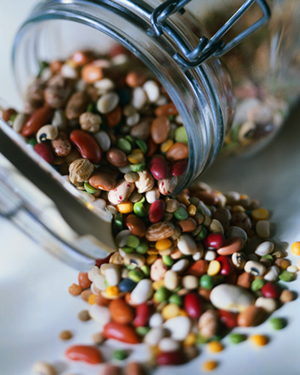 eans have been given a bad reputation over the years.
Beans have been often considered food for the “poor”, but that may be because they are so inexpensive. Many years in the past, beans were the perfect traveling food for Native Americans and Pioneers alike.
They do not require refrigeration, and can be cooked in nothing more than water, if that is all available. Beans are also versatile in the fact they can be made different ways and incorporated into other dishes after cooking – such as refried beans, bean dip, charro beans, and even bean pie!
Don’t let those simple little legumes fool you – they are amazing!
Check out the large collection of Recipes Using Dried Beans (includes Heirloom beans)
Shelf Life of Dried Beans – Storage of Dried Beans:
Legume (Bean) varieties such as: Adzuki, Black, Black-eyed, Black Turtle, Garbanzo, Great Northern, Kidney, Lentils, Lima, Mung, Navy, Pink, Pinto, Small Red, Soy, and Split-pea can all be dried and stored. The shelf life of dry beans depends on their storage condition. Dry beans are good for at least 2 years if stored properly.
Beans will last longer when stored in dark, cool places and in sealed containers than they will in the plastic bags in which they are sold. Do not freeze or refrigerate uncooked dried beans, though, because they can absorb moisture and lose flavor.
Long-Term Storage of Dried Beans – According to The New Survivalist web site:
All foods have a limited shelf-life, no matter how they are stored or preserved. It is imperative that you have a plan for rotating your food stash to keep it fresh. Even if your food doesn’t spoil, through time it will lose much of its nutritional value and flavor.
Dried foods are stored in airtight containers made out of plastic or glass. Survivalists prefer plastic because glass can can be easily broken during a disaster such as an earthquake. Glass containers should be protected from breakage and light. You can put them in a brown paper bag to protect from light.
The best way that I have found to store whole dried foods, like whole wheat berries and dried beans, is to seal them in completely Airtight Mylar Bags made specially for the purpose of long-term food storage. Other plastic bags will work but the mylar bags work the best. First you must start with foods that contain very little moisture, or you must remove the moisture by placing the food in a low temperature oven for complete drying. The oxygen is removed from the bag and the mylar bag is sealed completely airtight with a hot iron. Mylar bags are strong but they are not puncture proof. They must therefore be enclosed in a strong, preferably airtight, container such as a 5- or 6- gallon plastic bucket with an airtight lid, such as the ones that you can purchase at hardware stores.
There are two good ways for removing the oxygen from the airtight mylar bags. The easiest way is to throw in a couple of Oxygen Absorbing Packets just before you seal the bag. The other way to remove the oxygen is to use carbon dioxide to replace the oxygen in the bags.
Preparing Dried Beans:
Before preparing dried beans, place them in a colander, sort through them thoroughly and remove any tiny pebbles or other debris, and then rinse under cold water. NOTE: Split peas and lentils don’t need to be soaked. They take about 30 minutes to cook.
How To Soak Dried Beans:
In general, the larger the bean, the longer they need to soak: and the longer you soak beans, the faster they cook.
Soaking beans allows the dried beans to absorb water, which begins to dissolve the starches that cause intestinal discomfort. While beans are soaking they are also double to tripling in their size. You can cook beans without soaking, but it takes longer, and some people think the beans taste better when soaked.
Soak most beans in three times their volume of cold water for six hours before cooking. Dried beans are often soaked too long. Most recipes say overnight. The best way is to put them in cold water; bring them gently to a boil and then with saucepan off the heat, allow them to remain in the water for 1 to 2 hours only.
If soaked too long, they may ferment, which affects their flavor and makes them difficult to digest.
To help in the digestion of beans, always discard the water in which they were soaked.
Do not add salt or acidic ingredients, like vinegar, tomatoes or tomato juice, as this will slow the cooking process. Instead, add these ingredients when the beans are just tender.
Dried Bean Guide
Use this guide to gauge how much dried beans to cook.
| 1/3 cup dried beans = | 1 cup cooked beans |
|---|---|
| 1/2 cup dried beans = | 1 1/2 cup cooked beans |
| 2/3 cups dried beans = | 2 cups cooked beans |
| 1 cup dried beans = | 3 cups cooked beans |
| 2 cups (one pund) dried beans = | 6 cups cooked beans |
How To Cook Dried Beans:
Check out Basic Bean Recipe for Cooking Beans courtesy of Cynthia Detterick-Pineda of Andrews, TX. Cynthia says, “Every one cooks beans in their own way, and though some of the ingredients may overlap from recipe to recipe, very seldom are they two recipes the same. So this is the way I make my beans, although even the way I do it may vary from pot to pot simply because of what I feel like adding to the dish on that day.”
The best cookware for beans is a heavy metal pot or saucepan. Stainless steel, cast aluminum, or cast iron are all excellent.
After soaking, drain the beans and add fresh water to the cooking pot.
Bring the beans to a boil, and then lower the heat and simmer for 60 to 90 minutes, or until the beans are tender. (Check your package of beans, as cooking times vary for different varieties. But also check the beans occasionally, because sometimes the beans will cook more quickly than the package says.) NOTE: When cooking beans, always simmer. Boiling can cause the cooking liquid to overflow, as well as the beans to break apart and the skins to separate.
When dried beans boil, a foam forms on the top of the cooking liquid. This foam is water-soluble protein released from the beans and it will be absorbed back into the bean cooking liquid. It is not necessary to remove the foam.
- High Altitude: As altitude increases, dried beans take more time to rehydrate and cook. The difference begins to be noticeable above 3,500 feet.
- Oven Baking: Baking in the hot dry air of the oven is a slow process, but it’s the only way to create the wonderful glazed, crusty top characteristic of baked beans and bean pot casseroles. Traditional containers for baking beans are earthenware bean pots, usually 3 or 3½ quart size. The pot and lid should be glazed at least on the inside and must be lead-free. You can also use glass or ceramic casseroles.
Beans are done when they can be easily mashed between two fingers or with a fork. Always test a few beans in case they have not cooked evenly.
Beans taste better if cooked a day ahead, but they should be refrigerated to avoid becoming sour. When cooked, they can be frozen. Store cooked beans, covered, for up to four days in your refrigerator. Cooked beans can be frozen up to 6 months.
| BEANS (SOAKED) | SAUCEPAN | PRESSURE COOKER AT 15LB. PRESSURE |
|---|---|---|
| Black Beans | 1 to 1 1/2 hours | 5 to 8 Min. |
| Garbanzo Beans | 1 to 1 1/2 hours | 5 to 7 Min. |
| Great Northerns | 1 to 1 1/2 hours | 5 to 7 Min. |
| Lima Beans, Large | 45 to 60 Min. | Not Recommended |
| Lima Beans, Baby | 1 hour | Not Recommended |
| Navy or Small Whites | 1 to 1/2 hours | 5 to 8 Min. |
| Pink Beans | 1 to 1 1/2 hours | 6 to 8 Min. |
| Pinto Beans | 1 to 1 1/2 hours | 5 to 7 Min. |
| Red Beans | 1 to 1 1/2 hours | 6 to 8 Min. |
| Red Kidney Beans | 1 to 1 1/2 hours | 5 to 8 Min. |
| Soybeans | 3 hours | 12 to 15 Min. |
| BEANS (NOT SOAKED) | SAUCEPAN | PRESSURE COOKER* |
| Black-Eyed Peas | 1 to 1 1/2 hours | Not Recommended |
| Lentils | 30 to 45 Min. | Not Recommended |
| Split Peas, Green | 30 to 45 Min. | Not Recommended |
How To Degas Dried Beans and Peas:
Gas and Beans – Oligosaccharides seem to be the culprit. Our bodies lack the enzyme to digest them. Instead they are broken own by the friendly bacteria in the intestinal tract that give off the gas.
Following are different techniques that are suppose to help degas beans (I can not vouch for any of these techniques):
Use the quick soak method – Boil beans in water for 2 minutes, then remove from the heat and let it sit for 2 to 4 hours with the cover on. Or traditionally – soak overnight or 12 hours. Next drain and discard the rinse water, rinse again then cover with fresh cold water.
Be sure to thoroughly cook the beans one to four hours depending on the texture and legume.
Drink adequate fluids.
Try Beano (this is an over-the-counter product that contains the enzyme to break down the oligosaccharides).
Build up tolerance slowly. The more often you eat beans, the less likely you are to have gas.
Cooking tip: Tomatoes should be added only after the beans are thoroughly cooked, the acid toughens beans.
Canned Beans – Drain off the liquid and rinse canned beans.
I read once in a book, do not remember the source, that to further remove the noxious after-effects of beans, after you have boiled them – Freeze them. Freezing them seems to help with the leftover sugars that we cannot assimilate.
4 Responses to “How to Cook Dried Beans – Dried Bean Tips”
Kathleen
I soaked a bag of dried 15 beans over night. Drained the next day. Simmered for ten hours in a crockpot with a ham bone, and 8 cups of water. The beans are still tough. For that many hours of cooking on low in a crock pot, I thought they would be done. Are beans like spaghetti, and need to be cooked on their own first? Do I need to let it simmer for several hours more? This has happened to me once before. I don’t want to waste this food. What am I doing wrong. Any help would be appreciated. Thanks.
Linda Stradley
Your beans were probably old or stale. You need to buy them from a vendor who turns over a lot of beans. Old really dehydrated beans will never successfully soften.
Check out the following article:
Why won’t my beans soften?
Cooking Dried Beans – Peas and Lentils
Lita Watson
Beans can sometimes crack when exposed to heat. One way to avoid this is to add some salt half way through the cooking process
Barbara Mangini
Stale beans? They are already dried. I often have beans for quite awhile before I cook them. No reason to buy them at any special place. I have a feeling your crockpot wasn’t cooking them at a high enough temp. I hope they are done by now. LOL. Your comment was almost 3 1/2 years ago. BTW, when I was a kid, my mom cooked pinto beans in her pressure cooker.