Vegetable Shortening vs. Butter vs. Lard vs. Oil vs. Cream Cheese vs. Vodka Pastry Recipes
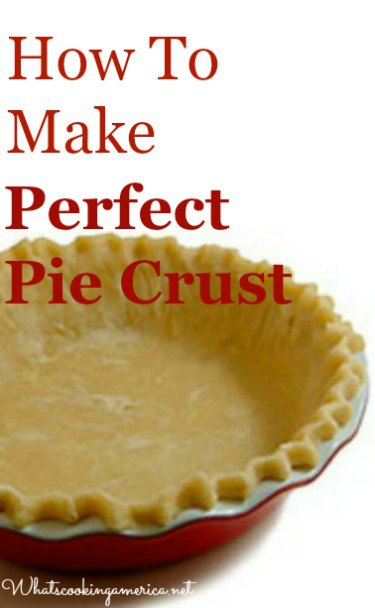
The perfect pie crust is both tender and flaky. It is tender enough to bite easily and it is also flaky so that distinct layers of dough are clearly visible. There are more than one type of pie crust that different bakers swear by. In fact, bakers will swear by their favorite recipes. When you decide to make your own pie crust, there are a dozen methods out there for doing so. Every cook and every cookbook seems to have their own favorite. All butter, all shortening, vegetable oil, olive oil, part butter/part shortening, lard; the list goes on.
Watch our video on how to make perfect pie crust!
Below are five (5) of the most popular pastry recipes. Also check out some wonderful Pie Recipes.
There are three (3) basic ingredients in a pie crust – fat, flour, and liquid. You can come up with numerous variations just by changing your basic ingredients and their ratios.
To make a perfect pie crust, check out Linda’sPie Crust Hints and Tipsfor making the perfect pie crust.
In a large bowl with a pastry blender or two knives, cut vegetable shortening into flour and salt until particles are the size of small peas. Sprinkle in water, 1 tablespoon at a time, tossing with fork until all flour is moistened and pastry dough almost cleans side of bowl (1 to 2 teaspoons additional water can be added if necessary). You want the ingredients to barely bind together.
Pie dough benefits from a rest period after mixing. This will make the dough easier to roll and shape. Once the dough has come together, form it into a disc (approximately 1/2 inch thick) and wrap it tightly in plastic wrap. Place the prepared dough in the refrigerator during this resting time. As long as the dough is kept in the refrigerator, you can keep it there for as long as 24 hours. When ready to use, let the dough sit at room temperature approximately 20 to 30 minutes before rolling.
Flour your hands generously. Tilt the rolling pin and sprinkle it with flour as you rotate the rolling pin. On a lightly floured surface, form pastry into a ball; shape into a flattened round. (For two-crust pie, divide pastry into halves and shape into two rounds.)
Roll pastry 2 inches larger than an inverted pie plate with a floured rolling pin. Try to control the rolling pin and move from the center out. Do not use the rolling pin to go back and forth. Use your rolling pin something like this: Roll North, pick up the pin, roll Northeast, pick up dough and move counter-clockwise, repeat. You want the crust as evenly rolled as you can.
Fold pastry into quarter folds and ease into pie plate, pressing firmly against bottom and sides of pie plate.
All Butter Pastry Recipe
Crusts made with all butter are very flavorful, though they are generally not quite as flaky as crusts made with shortening or lard.
2 1/2 cups unbleached all-purpose flour, plus extra for rolling
1 teaspoon salt
1 teaspoon granulated sugar
1 cup cold unsalted butter, cut into 1/2-inch cubes
3 to 6 tablespoons ice water
Instructions:
In a food processor, process the flour, salt, and sugar until combined. Scatter the butter pieces over the flour mixture and process with 1-second pulses until butter bits are no larger than small peas, about 10 pulses. Turn the mixture into a medium bowl.
Sprinkle 6 tablespoons of ice water over the mixture. Using a rubber spatula, fold to mix. Press down on the dough with the broad side of the spatula until the dough sticks together, adding up to 2 tablespoons more water if the dough does not come together.
Pie dough benefits from a rest period after mixing. This will make the dough easier to roll and shape. Once the dough has come together, form it into a disc (approximately 1/2 inch thick) and wrap it tightly in plastic wrap. Place the prepared dough in the refrigerator during this resting time. As long as the dough is kept in the refrigerator, you can keep it there for as long as 24 hours. When ready to use, let the dough sit at room temperature approximately 20 to 30 minutes before rolling.
Flour your hands generously. Tilt the rolling pin and sprinkle it with flour as you rotate the rolling pin. Divide the dough into two balls and flatten each into a 4-inch dish. Wrap both separately in plastic wrap and refrigerate at least 1 hour before rolling.
On a lightly floured surface, form pastry into a ball; shape into a flattened round. (For two-crust pie, divide pastry into halves and shape into two rounds.) Roll pastry 2 inches larger than an inverted pie plate with a floured rolling pin. Fold pastry into quarter folds and ease into plate, pressing firmly against bottom and side.
Makes 8- or 9-inch two-crust pie.
Combination Vegetable Shortening and Butter Pastry Recipe
Some of the best pie crusts are made with a combination of fats: half butter, for flavor, and half shortening, for flakiness.
2 1/2 cup all-purpose unbleached flour, plus extra for rolling
1 teaspoon salt
1 tablespoon granulated sugar
1/2 cup chilled vegetable shortening
1/2 cup cold unsalted butter, cut into 1/4-inch pieces
6 to 8 tablespoons ice water
Instructions:
In a food processor, process the flour, salt, and sugar until combined. Add the vegetable shortening and process until the mixture has the texture of coarse sane, about 10 seconds. Scatter the butter pieces over the flour mixture and process with 1-second pulses until butter bits are no larger than small peas, about 10 pulses. Turn the mixture into a medium bowl.
Sprinkle 6 tablespoons of ice water over the mixture. Using a rubber spatula, fold to mix. Press down on the dough with the broad side of the spatula until the dough sticks together, adding up to 2 tablespoons more water if the dough does not come together.
Pie dough benefits from a rest period after mixing. This will make the dough easier to roll and shape. Once the dough has come together, form it into a disc (approximately 1/2 inch thick) and wrap it tightly in plastic wrap. Place the prepared dough in the refrigerator during this resting time. As long as the dough is kept in the refrigerator, you can keep it there for as long as 24 hours. When ready to use, let the dough sit at room temperature approximately 20 to 30 minutes before rolling.
Flour your hands generously. Tilt the rolling pin and sprinkle it with flour as you rotate the rolling pin. Divide the dough into two balls and flatten each into a 4-inch dish. Wrap both separately in plastic wrap and refrigerate at least 1 hour before rolling. On a lightly floured surface, form pastry into a ball; shape into a flattened round.
(For two-crust pie, divide pastry into halves and shape into two rounds.) Roll pastry 2 inches larger than an inverted pie plate with a floured rolling pin. Fold pastry into quarter folds and ease into plate, pressing firmly against bottom and side.
Makes 8- or 9-inch two-crust pie.
Combination Vegetable Shortening and Butter Pastry Recipe (with Vodka)
Vodka is essential to the texture of this pie crust. Amazingly, the vodka imparts no flavor in the pie crust, so do not substitute. This dough will be moister and more supple than most standard pie doughs and will require more flour to roll out (up to 1/4 cup).
3/4 cup cold unsalted butter, cut into 1/4-inch pieces
1/2 cup cold vegetable shortening, cut into 4 pieces
1/4 cup cold vodka (chill in the refrigerator)1/4 cup ice water
Instructions:
In a food processor, process 1 1/2 cups flour, salt, and sugar until combined, about two (2) one-second pulses. Add butter and shortening and process until homogeneous dough just starts to collect in uneven clumps, about 15 seconds (dough will resemble cottage cheese curds and there should be no uncoated flour).
Scrape bowl with rubber spatula and redistribute dough evenly around processor blade. Add remaining 1 cup flour and pulse until mixture is evenly distributed around bowl and mass of dough has been broken up, 4 to 6 quick pulses. Empty mixture from processor into a medium bowl.
Sprinkle vodka and water over mixture. With rubber spatula, use folding motion to mix, presing down on dough until dough is slightly tacky and sticks together.
Pie dough benefits from a rest period after mixing. This will make the dough easier to roll and shape. Once the dough has come together, form it into a disc (approximately 1/2 inch thick) and wrap it tightly in plastic wrap. Place the prepared dough in the refrigerator during this resting time. As long as the dough is kept in the refrigerator, you can keep it there for as long as 24 hours. When ready to use, let the dough sit at room temperature approximately 20 to 30 minutes before rolling.
Divide dough into two (2) even balls and flatten each into a 4-inch disk. Wrap each in plastic wrap and refrigerate at least 45 minutes or up to 2 days before using.
On a lightly floured surface, form pastry into a ball; shape into a flattened round. (For two-crust pie, divide pastry into halves and shape into two rounds.) Roll pastry 2 inches larger than an inverted pie plate with a floured rolling pin. Fold pastry into quarter folds and ease into plate, pressing firmly against bottom and side.
Makes 8- or 9-inch two-crust pie.
Source: Recipe from Cook’s Illustrated Magazine, September 2010.
Cream Cheese Pastry Dough
This very easy-to-make pastry dough was originally created for savory pies (such as meat or vegetable pies), but it works well with any type of pie you want to make. Using your food processor makes it hard to mess up and it can be made in minutes. Just remember – do not over process the dough.
In the bowl of the food processor fitted with a metal blade, place the butter, cream cheese, and cream; process until thoroughly combined and smooth.
Add the flour and salt and pulse until just combined and dough just will come together in a ball.
Generously flour a work surface and place the prepared ball of dough on it. Divide the dough into two (2) equal portions. Flatten the dough into disc shape and wrap with plastic wrap. Place dough into the refrigerator for at least 30 minutes before rolling out.
If the dough has been refrigerated longer than 1 hour, take it out of the refrigerator approximately 15 minutes before rolling.
Flour your hands generously. Tilt the rolling pin and sprinkle it with flour as you rotate the rolling pin. On a lightly floured surface, form pastry into a ball; shape into a flattened round. (For two-crust pie, divide pastry into halves and shape into two rounds.) Roll pastry 2 inches larger than an inverted pie plate with a floured rolling pin. T ry to control the rolling pin and move from the center out. Do not use the rolling pin to go back and forth. Use your rolling pin something like this: Roll North, pick up the pin, roll Northeast, pick up dough and move counter-clockwise, repeat. You want the crust as evenly rolled as you can.
Fold pastry into quarter folds and ease into pie plate, pressing firmly against bottom and sides of pie plate.
Lard Pastry Recipe
Lard produces the flakiest crust, but processed lard can have a chemical aftertaste. Our grandmothers swore by their lard pie pastry.
* Find natural lard (unhydrogenated or leaf lard) at your local meat market or Mexican market.
Instructions:
In a large bowl with a pastry blender or two knives, cut lard into flour and salt until particles are the size of small peas.
In a small bowl, combine remaining 1/4 cup flour and the water; whisk until smooth. Pour into lard/flour mixture; stir with a fork just until the ingredients are combined.
Divide dough in half and shape both halves into thick disk. Wrap in wax paper or plastic wrap, and chill for at least 1 hour or overnight before using rolling out.
Flour your hands generously. Tilt the rolling pin and sprinkle it with flour as you rotate the rolling pin. On a lightly floured surface, roll one of the pastry disks 2 inches larger than an inverted pie plate with a floured rolling pin. Try to control the rolling pin and move from the center out. Do not use the rolling pin to go back and forth. Use your rolling pin something like this: Roll North, pick up the pin, roll Northeast, pick up dough and move counter-clockwise, repeat. You want the crust as evenly rolled as you can.
Fold pastry into quarter folds and ease into pie plate, pressing firmly against bottom and sides of pie plate.
Makes 8- or 9-inch two-crust pie.
Oil Pastry Recipe
Probably the easiest pie pastry to make. As you are using a liquid fat, you don’t need as much fat in this reipe. You can roll and re-roll oil crusts with no ill effects.
In a large bowl, combine the flour and salt. Measure the vegetable oil and the milk into the same liquid measuring cup but do not stir. Add to the flour/salt mixture; mix briskly to combine until the dough comes together into a ball.
Divide the dough in half. Roll out each half to 1/8 inch thick between 2 sheets of wax paper. Gently remove the top waxed paper, working from the edges to the center. Set the pie pan near you. In one steady motion, pick up the paper under the dough and quickly flip it over into the pie pan. Gently remove the remaining waxed paper sheet, working from the edges to the center.
NOTE: Because this pastry dough is made with oil, it must be used right away. After a day in the refrigerator, the oil will start to separate and seep out.
Makes 8- or 9-inch two-crust pie.
One-Crust Pie:
Trim overhanging edge of pastry one (1) inch from rim of pie plate. Fold and roll pastry
under, even with pie plate; flute. Fill and bake as directed in recipe.
Two-Crust Pie:
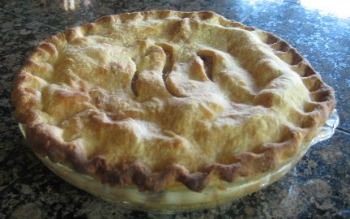
Turn desired filling into pastry-lined pie plate. Trim overhanging edge of pastry 1/2 inch from rim of plate. Roll other round of pastry. Fold into quarters. Place over filling and unfold. Trim overhanging edge of pastry 1 inch from rim of plate. Fold and roll top edge under lower edge, pressing on rim to seal; flute. Cut slits so steam can escape. Cover edge with strip of aluminum foil to prevent excessive browning; remove foil during last 15 minutes of baking. Bake as directed in recipe.
Baked Pie Shell:
Also known as blind baking. Prick bottom and sides thoroughly with a fork. Bake in oven at 475 degrees F. approximately 8 to 10 minutes or until light brown; cool.
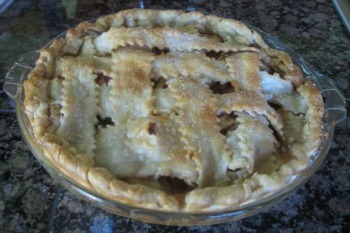
Lattice Top Crust:
See the double pie crust recipe for instructions on preparing the pie crust. Follow the double pie crust recipe through placing the bottom crust in the pie plate. Trim so there is approximately 1/2 inch overhang around the edge of the pie plate. Refrigerate the pie crust for the top until ready to use.
Roll out the top crust and cut into 1/2-inch strips. You can use a sharp knife, pizza cutter, or scallop-edged pastry wheel. If you’re worried about cutting straight, use a ruler as a guide. Cover the pastry strips with plastic wrap and place the pan of dough in the refrigerator while you prepare the pie filling and transfer it to the pastry-lined pie plate.
When you are ready to weave, moisten the rim of the pie with a small amount of water. Place approximately 6 strips across the top of the filling. To weave the cross strips into the first 6 strips, fold every other one about half ways back on the pie. Place a strip across the pieces that are not folded back and then unfold the folded strips.
Fold back the strips that were left unfolded before and place another strip across the strips that are not folded back. Unfold the strips and continue on in this manner, alternating the folded strips. Repeat the same procedure on the other half of the pie.
Lift each strip and moisten the edge of the crust in that area with water and then press the strip back down to seal it at the edge. When the strips are all placed across the filling, trim the ends 1/8 inch shorter than the overhang of the bottom crust.
Moisten the entire edge of the crust and then turn the overhang from the bottom crust up over the ends of the strips so the edge of the crust is flush with the edge of the pie plate. Seal the bottom crust and strips by fluting the edges in a desired manner.
Place the pie in an oven preheated to 375F and bake for approximately 45 minutes or until the crust is golden brown.
Egg Wash Recipe:
My mother, Dorothy Hagerman, taught me this trick for achieving a nice golden brown top crust. This easy-to-make Egg Wash makes a the difference in your pie’s final appearance. The difference between having a nice golden brown pie crust or one that looks dull and under-baked. Please don’t skip this step!
1 tablespoon heavy cream, half and half, or milk*
1 large egg yolk
* My mother sometimes uses just cream or milk on the top crust.
Instructions:
In a small bowl, beat cream and egg yolk together.
Do not put the egg wash on too soon. Always apply washes to cold, rested dough, just before it is time to bake the pie.
Before applying the Egg Wash, be sure to brush off any excess flour on the top crust. Using a pastry brush with soft bristles, brush the surface of the top pie crust with a thin coating of the mixture. Be careful not to brush it on too thickly, or it can dribble down between your crust and the pie pan.
5 Responses to “How to Make Perfect Pie Crust – Pie Crust Recipes”
Rose
“Oil Pastry Recipe
Probably the easiest pie pastry to make. As you are using a liquid fat, you don’t need as much fat in this reipe. You can roll and re-roll oil crusts with no ill effects.
2 cups all-purpose flour
1 teaspoon salt
1/2 cup vegetable oil
1/4 cup cold milk” – EXCELLENT! Experienced pastry-maker here and can say this is definitely one for those who find pastry a challenge, and for those wishing to try something simpler with amazingly fine results. The dough is very crumbly in the working and in the eating…light and very good. I used Used Sunflower Oil and high fat content milk. I used this as a savoury, flan/tart type thing in a glass dish. Easy work the pastry into the dish even though it breaks and crumbles, it’s very easily ‘repaired’ with pressing more dough into those areas and smoothing. Re-rolling several times for using up trim to finish with ‘leaves’ worked well. Can imagine this would be tricky for anything like ‘turnovers/pasties’ because of its tendency to crumble rather than stretch, but certainly worth a go. I will place this method in my no.1 slot for ease, speed, economy (veg oil is cheaper than butter – I don’t use lard) & finish result (looked good without any egg/milk wash) and tasted great. Thank you.
I used to make a dough for pot pies using cottage cheese and lard. Don’t remember amounts of lard flour & etc. Came with my dough maker from Oster. Can you help me?.
I have made this Olive Oil Pastry recipe in Canada and All Purpose makes quite a tough crust. This recipe needs to use Pastry flour and then it’s the BEST pastry with no trans fat! Light Olive oil is best for fruit pies and Virgin Olive Oil and be used for a meat pie. Try only making the bottom crust until your technique is perfected. A crumb topping for a pie works well using this as a bottom crust.

 Trim overhanging edge of pastry one (1) inch from rim of pie plate. Fold and roll pastry
 See the double pie crust recipe for instructions on preparing the pie crust. Follow the double pie crust recipe through placing the bottom crust in the pie plate. Trim so there is approximately 1/2 inch overhang around the edge of the pie plate. Refrigerate the pie crust for the top until ready to use.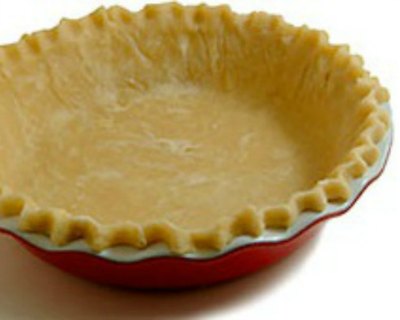
5 Responses to “How to Make Perfect Pie Crust – Pie Crust Recipes”
Rose
“Oil Pastry Recipe
Probably the easiest pie pastry to make. As you are using a liquid fat, you don’t need as much fat in this reipe. You can roll and re-roll oil crusts with no ill effects.
2 cups all-purpose flour
1 teaspoon salt
1/2 cup vegetable oil
1/4 cup cold milk” – EXCELLENT! Experienced pastry-maker here and can say this is definitely one for those who find pastry a challenge, and for those wishing to try something simpler with amazingly fine results. The dough is very crumbly in the working and in the eating…light and very good. I used Used Sunflower Oil and high fat content milk. I used this as a savoury, flan/tart type thing in a glass dish. Easy work the pastry into the dish even though it breaks and crumbles, it’s very easily ‘repaired’ with pressing more dough into those areas and smoothing. Re-rolling several times for using up trim to finish with ‘leaves’ worked well. Can imagine this would be tricky for anything like ‘turnovers/pasties’ because of its tendency to crumble rather than stretch, but certainly worth a go. I will place this method in my no.1 slot for ease, speed, economy (veg oil is cheaper than butter – I don’t use lard) & finish result (looked good without any egg/milk wash) and tasted great. Thank you.
Pat clark
I used to make a dough for pot pies using cottage cheese and lard. Don’t remember amounts of lard flour & etc. Came with my dough maker from Oster. Can you help me?.
Thanks,
Pat
Gloria Bowie
My question was:
What do I put in my pie pan before I put the pie crust?
Do I grease the pan or what?
Linda Stradley
I never grease my pie pan before putting in the crust.
Ruth
I have made this Olive Oil Pastry recipe in Canada and All Purpose makes quite a tough crust. This recipe needs to use Pastry flour and then it’s the BEST pastry with no trans fat! Light Olive oil is best for fruit pies and Virgin Olive Oil and be used for a meat pie. Try only making the bottom crust until your technique is perfected. A crumb topping for a pie works well using this as a bottom crust.