
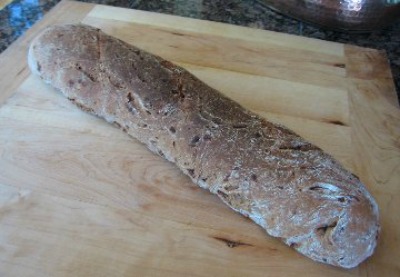
This dark, dense Raisin Pumpernickel Bread gets its color and intense flavor from the molasses, cocoa, and coffee. The wonderful flavor in this bread comes from the subtle flavors of cocoa, coffee, molasses, and rye.
According to my husband, this Raisin Pumpernickel Bread is delicious anytime of day!
Check out Linda’s Bread Making Hints: Secrets to using the bread machine, About yeast in bread making, Sourdough Starter, and Quick Breads.
More great Bread Recipes, Sourdough Bread Recipes, and Quick Bread Recipes for all your bread making.
- 1/2 cup strong coffee, lukewarm (110 degrees F.)
- 1/2 cup water or milk, lukewarm (110 degrees F.)
- 1 tablespoon olive oil
- 1 tablespoon molasses
- 1 teaspoon salt
- 1 tablespoon Dutch process cocoa
- 1 tablespoon caraway seeds
- 1/2 cup bread flour or unbleached all-purpose flour*
- 1/2 cup light rye flour*
- 1 1/2 cups whole wheat flour
- 1 tablespoon instant active dry yeast
- 1/2 cup raisins
-
Bread Machine Instructions:
-
Add all the ingredients except the raisins in the bread pan of bread machine. Process according to manufacturer's instructions for a dough setting. Do not be afraid to open the lid and check the dough. It should form a nice elastic ball. If you think the dough is too moist, add additional flour (a tablespoon at a time). The same is true if the dough is looking dry and gnarly. Add warm water (a tablespoon at a time).
-
If you can not judge your dough by looking, stick your finger in and feel the dough. It should be slightly tacky to the touch. When the bread machine has completed the dough cycle, remove the dough from the pan to a lightly floured surface. Knead the dough several times and form the dough into an oval; cover with plastic wrap and let rest for 10 to 15 minutes.
-
Stand Up Mixer Instructions:
-
In a large bowl or in the bowl of a 5-quart stand mixer, add all the ingredients except the raisins. Using a dough hook, mix all the ingredients together into a uniform dough. It should form a nice elastic ball. If you think the dough is too moist, add additional flour (a tablespoon at a time). The same is true if the dough is looking dry and gnarly. Add warm water (a tablespoon at a time).
-
Turn the dough out onto a floured surface and knead until elastic, about 15 minutes. Cover the bowl with plastic wrap and let rest for 10 to 15 minutes.
-
After dough has rested, remove from bowl, and place on a lightly floured board. Add the raisins to the dough. Knead the dough with the raisins to mix the raisins in and form the dough into an oval; cover with plastic wrap and let rest for 10 minutes. Shape dough either into a loaf shape or a 10-inch disk; place on a jelly roll pan or cookie sheet that is dusted with cornmeal (I use the new silpads instead of cornmeal). Cover with plastic wrap and place in a warm spot to rise until doubled in size, approximately 1 hour.
-
Oven Rising: Sometimes I use my oven for the rising. Turn the oven on for a minute or so, then turn it off again. This will warm the oven and make it a great environment for rising bread. If you can nott comfortably press your hand against the inside of the oven door, the oven is too hot. Let it stand open to cool a bit.
-
Cool or Refrigerator Rise: If I don't have the time to wait for the rise to finish or I know that I will be interrupted before the completed rise, I do a cool rise. A cool rise is when the dough is place in the refrigerator and left to rise slowly over night approximately 8 to 12 hours. I usually do this after the first rise and the dough has been shaped into a loaf.
-
Preheat oven to 400 degrees F.
-
After dough has risen, slash the bread with a very sharp knife making three 1/2-inch deep diagonal slashes. Brush the top of the bread with cold water and bake for 20 to 25 minutes or until nicely browned. A good check is to use an instant digital thermometer to test your bread. The internal temperature should be between 200 and 210 degrees F.
-
Remove from oven and let cool on a wire rack.
-
Makes 1 1/2-pound loaf.
* For a denser bread, substitute all pumpernickel flour.
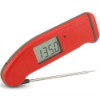 I get many readers asking what cooking/meat thermometer that I prefer and use in my cooking and baking. I, personally, use the Thermapen Thermometer. Originally designed for professional use, the Super-Fast Thermapen Thermometer is used by chefs all over the world. I only endorse a few products, on my web site, that I like and use regularly.
You can learn more or buy yours at: Super-Fast Thermapen Thermometer.
Sponsored Content
Categories:
Sweet Yeast Breads