
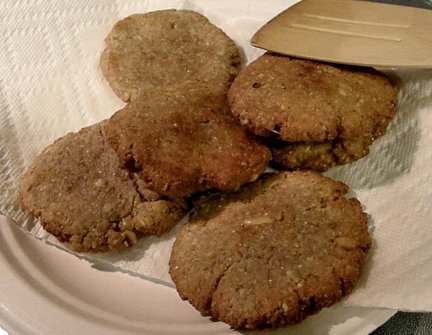
The simplicity of Pinon Cakes or Pine Nut Cakes allows certain base flavors to shine. Pinion, however, is a delicate flavor that can be overpowered by many other foods, so they are not a good side dish for more boldly flavored dishes or even salsas. Sweet fruit-based salsas are an excellent choice to pair with these small cakes when served as an appetizer and lighter entrees such as fish, are also a good pairing.
Native American cooking can often be seen as plain, even boring to some. Perhaps that is because many of these recipes have so few ingredients. But that perception is not correct in my opinion.
This recipe also incorporates powdered milk which is one of the base ingredients of many recipes developed during the “long walk”, which is a sorrowful and sacred remembrance of the relocation of thousands of Native Americans to the reservations in the 1800’s. Not unlike Indian Fry Bread, it is often served along with a lesson in history about the conditions imposed during the relocation, and why such foods were a staple among the peoples.
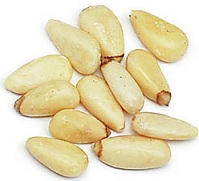
- 1 cup pinon nuts (pine nuts)*
- 1/3 cup powdered milk
- 1 cup whole wheat flour
- 1/2 teaspoon salt
- 1/2 cup water
- Vegetable oil for shallow frying
-
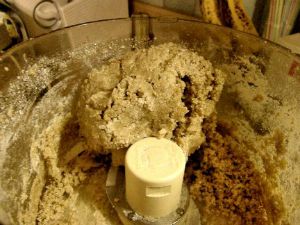
Place the pine nuts, powdered milk, wheat flour, and salt into a food processor with a chopping blade. Pulse 5 to 6 times and scrape down the sides. Continue this until the mixture resembles a coarse sand. Once the nut and flour mix is well blended, begin streaming the water slowing in while the processor is running. Once a ball of dough has formed, stop and scrape down the sides, and blend until the ball is again formed.
-
-
-
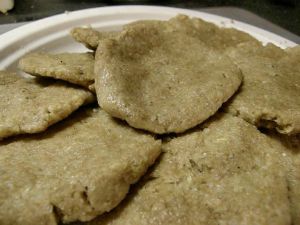
Remove the dough from the processor bowl and pinch off small amounts to form balls about the size of a golf ball. Roll the ball in your hand to make sure it is well formed and then press it into a flat disc about 1/4-to 1/2-inch thick.
-
-
-
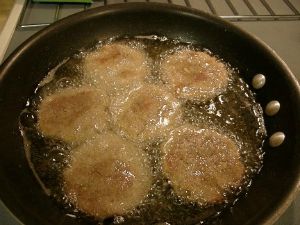
Heat about 1/2 inch of vegetable oil in a large skillet (cast-iron skillets also work) over medium-high heat until a small amount of the dough begins to bubble when dropped into the oil. Add the dough patties carefully and allow these to fry until they are brown on one side. Flip to fry the second side.
-
NOTE: You may have to reduce the heat to keep the outside from becoming brown with the center remaining uncooked. Cut open the first cooked cake to make certain the inside is cooking completely, then adjust the heat as needed. Do not add too many cakes into the hot oil at once. This will drop the heat significantly and will affect the cooking, also it makes turning difficult.
-
-
-
Once the Pinon cakes are done, remove from the hot oil, and drain on a wire rack or a paper towel. Serve immediately while still hot. If needed these can be kept in a warm oven for a while before serving.
-
Makes 4 to 6 servings.
* Also known as Indian nut, pinon, pignoli, pignolia, and pine nut. This nut comes from several varieties of pine trees. The nuts are actually inside the pine cone, which generally must be heated to facilitate their removal. This labor-intensive process is what makes these nuts so expensive. Pine nuts grow in Mexico, southwestern United States, China, Italy, Mexico, and North Africa.
Source: This recipe, comments, and photos are courtesy of Cynthia Detterick-Pineda of Andrews, TX. More of Cynthia’s Southwest Recipes.