
Organizing Your Buffet Supper
Planning Ahead Creates a Great Gathering
Standing in line, holding a plate, seems to be a welcome holiday ritual. From Thanksgiving to the company potluck and from the family Christmas Eve to the New Year’s Eve gathering, buffets are a timeless tradition.
As a host or hostess, giving some thought to how-to organize your buffet makes all the difference in the world. A good flow, to and from the food and drinks, makes the gathering more pleasant for everyone
 Organize your buffet with these easy steps:
 Organize your buffet with these easy steps:
Decide on a traffic flow
Is there a logical entrance and exit from the room with the food? If not, create one. Nearly every room has more than one doorway. If possible, plan your flow so that guests enter one and depart by another.
Consider your crowd:
If you are having a large number of people, such as an office or church buffet, reduce the waiting in line by either creating more than one line or arranging for guests to form a line on both sides of the table.
Begin with the plates:
Stacks of plates indicate to your guests that the line starts here. Often, a hostess will also place the silverware there as well. It is difficult to hold your plate, serve yourself from the many dishes and hold a bundle of silverware. Consider placing that at the end of the line so it is easy to grab with a free hand.
Set the table with the basics:
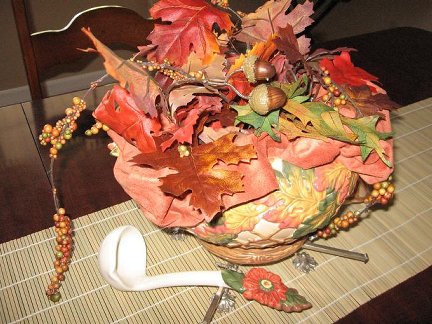
Begin your table layout with the plates at the point of entry. Add your centerpiece or table decoration. End the table with the silverware for them to pick up. Not only is it pretty to bundle your silverware and napkins, but it is easier to carry. Beginning with the basics on the table allows you to see the space left for food.
Plan ahead:
Prior to the day of the party, gather your serving dishes. Place them out on the buffet line, taking the time to figure out how they will fit in that space.
During this planning, think ahead to how you will keep hot foods hot. Do you need to be able to safely plug in warming trays or Crock-Pots? If so, it needs to be done in a way that keeps guests from tripping over cords.
Traditionally, cold foods are offered first. Hot foods are offered last. This way, the hot food will still be hot when the guest sits down to eat.
Do not forget utensils:
Match the appropriate serving utensil to each dish, laying out a fork, spoon, salad tong or spreader as needed.
Label:
If you intend to leave the serving dishes on the table until they are filled, label each with a sticky note so that it reminds you what goes in each container. If friends or family is helping with the buffet, it is easier for them to assist you.
If you are removing the dishes to the kitchen to be filled, then you will need two labels. Place a label in each dish and place a matching label on the table so that the dish gets returned to the designated spot.
Work ahead:
There is a lot of work involved in setting out a buffet. Try to accomplish some of the related tasks well ahead of time. This includes wrapping and tying silverware, creating a centerpiece, polishing silver and pressing linens.
Sometimes, it is easier on the hostess for food to have an identifying card. It keeps the guests from repeatedly asking about a dish. If you wish to set out small tags naming each dish, those may also be made ahead.
Finish Organizing:
The last step to buffet organization is to create a checklist. You will not want to realize after the party is over that the salad was plain and that the dressing is still in the fridge. Make a checklist of everything that goes out on the buffet, right down to those very important little details such as ice, butter, dressing, salt and pepper.
More great holiday entertaining ideas:
Christmas Kitchen Secrets of the Organized
Quick! Make Your Kitchen Welcoming
Thanksgiving Organizer
 Author Lea Schneider, a columnist for What’s Cooking America, is a freelance writer and organizational expert whose organizing ideas have been published in many magazines including Woman’s Day, Better Homes and Gardens Kitchen and Bath Ideas, Family Circle, Parents Magazine, as well as numerous newspapers and websites. She is a member of the Association of Food Journalists.
Getting organized is all about living simpler and making things easier. The bonus is it often leads to saving money. Lea Schneider’s kitchen organizing columns tell you how to organize the many things that relate to kitchens, menus, meals, and special food events.
Check out all of Lea Schneider’s helpful home and kitchen columns at Organizing Kitchens, Pantries, Menus and Meals.
Categories:
Kitchen Organization