
Learn How to Select, Store, Prepare and Cook with Garlic
“Tomatoes and oregano make it Italian; wine and tarragon make it French.
Sour cream makes it Russian; lemon and cinnamon make it Greek.
Soy sauce makes it Chinese; garlic makes it good!”
– Alice May Brock
“A nickel will get you on the subway, but garlic will get you a seat.”
– Old New York Yiddish Saying
Garlic Hints and Tips – All About Garlic
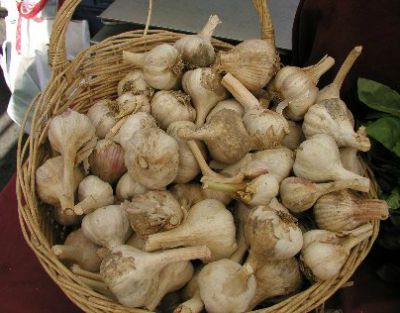
Garlic (Allium sativum L.), a member of the onion family, has been cultivated for thousands of years and is widely used for both its culinary and medicinal attributes. As Americans have become more accustomed to garlic flavor and knowledgeable about the many health benefits of eating garlic, popularity of this crop has increased.
Most garlic in the U.S. is grown in the mild climate of northern California. Varieties adapted to mild climates and then grown in cold climates often do not perform well and usually develop a very “hot” flavor. Garlic is an adaptable species, however, and over thousands of years, varieties have been selected that grow well in cold climates, often with better garlic flavor than the varieties grown in mild climates.
Garlic is available year round, but is freshest between March and August. Garlic is available in forms other than fresh, such as powder, flakes, oil, and puree.
Did you know – the elephant garlic is not a true garlic and is actually much milder than white garlic.
Selecting Garlic:
When selecting garlic, it should be big, plump and firm, tight silky skins with its paper-like covering intact, not spongy, soft, or shriveled. Why buy small ones that are a pain to peel? As with all ingredients for cooking, buy the best garlic you can afford.
Also remember that a single bulb of garlic usually contains between ten and twenty individual cloves of garlic. The individual cloves are covered with a fine pinkish/purple skin, and the head of cloves is then covered with white papery outer skin.
When preparing garlic for cooking, check for and remove any green sprouts from the center of the garlic clove, as the sprouts add an unpleasant bitterness. To remove the green sprouts, cut the garlic in half, pull out the sprout from each side, and discard.
Garlic Equivalents:
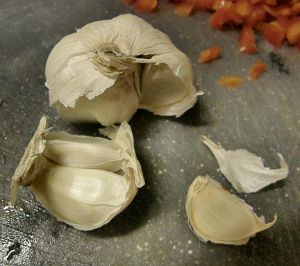 1 head or bulb of garlic = (about) 10 to 15 cloves.
1 small garlic clove = 1/2 teaspoon minced garlic = 1/8 teaspoon garlic powder = 1/4 teaspoon garlic juice = 1/2 teaspoon garlic salt
1 medium garlic clove = 1 teaspoon minced garlic = 1/4 teaspoon garlic powder
1 large garlic clove = 2 teaspoons minced garlic = 1/2 teaspoon garlic powder
1 extra-large garlic clove = 1 tablespoon minced garlic
Storing Garlic:
Unbroken garlic bulbs will keep for up to 3 to 4 months. Individual cloves will keep from 5 to 10 days. Store in a cool, dark, and dry location (dampness is the enemy of garlic, so store away from stove and sink). If the cloves sprout, the garlic is still usable and the sprouts can be used for salads.
Freezing Garlic:
Fresh garlic can be frozen in several forms:
- You can freeze whole, unpeeled heads and remove cloves as you need them.
- You can wrap chopped or crushed garlic tightly in plastic wrap and freeze, then grate or break off what you need.
- Or you can peel whole cloves of garlic and purée them in a blender or mini food processor, using 2 parts oil to 1 part garlic, and freeze.
- Finally, fresh peeled garlic cloves can be covered with oil and stored in the freezer.
Cooking With Garlic:
Be careful not to overcook or brown garlic when sautng in oil. If overcooked, it will become bitter and unpleasant tasting. Minced garlic usually cooks in less than 1 minute. Do not have the cooking oil too hot.
When sauteing onions and garlic in a recipe, add the onions first. When the onions are just about done, add the garlic.
How size affects flavor (By Cook’s Illustrated Magazine, Issue 46, September/October 2000) – The intensity of garlic flavor in your dish depends on how finely you have chopped, minced, or pureed the garlic. If you want a bold garlic flavor, you should puree or mince your garlic, but if you want a more subtle essence, try slivering the clove. If you are not a true fan of garlic’s bold flavors, you may want to roast or toast your garlic, as the heat breaks down the allicin (an enzyme that is released when garlic is cut). How To Roast Garlic.
Sauteing Garlic – Sautng is the most common method used for cooking garlic. It will bring out the nutty but savory flavor of the garlic. Garlic can be sautd in oil or butter but be careful is using butter because is will burn much faster than oil.
Select a pan or skillet with a heavy bottom that will provide for even heating.
Heat the oil or butter over medium heat and then add the garlic.
The garlic should be stirred often to prevent burning.
If cooking with other ingredients that take longer to cook, such as onions, start cooking the other ingredients and allow them to start to cook before adding the garlic.
Preparing garlic for cooking – Photo Tutorial:
This photo tutorial on preparing garlic for cooking is courtesy of Cynthia Detterick-Pineda of Andrews, TX.
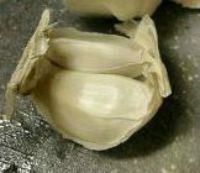
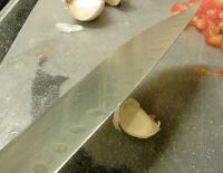
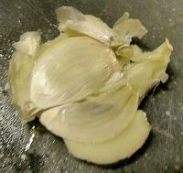
Pull off cloves required for your recipe. Using the flat side of a large knife, carefully hit the clove with the knife using the palm of your hand. This will crush the clove partially and break loose the paper like skin around it.
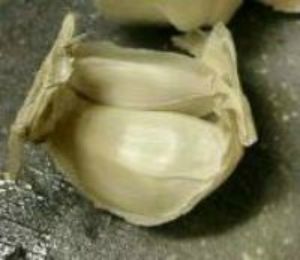
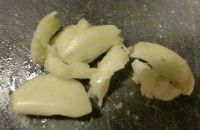
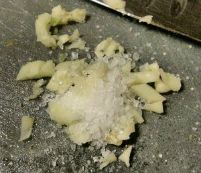
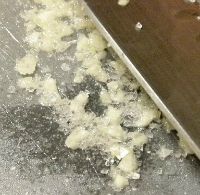
You can now easily peel off the skin. Coarsely chop the garlic. Add the salt, using the amount required in the recipe or a part of that amount. If you are not adding the entire amount of salt, do not forget to add the rest later.
Using your palm against the flat blade again, press down forcing the salt to rub into the garlic. This will grind the garlic into a fine almost paste. The resulting garlic and salt mix will be finely chopped, easier to distribute through-out the recipe.
Garlic Health Benefits and Uses:
Garlic health benefits and medicinal properties have long been known. Garlic has long been considered a herbal “wonder drug” with a reputation for preventing everything from the common cold and flu to the Plague! It has been used extensively in herbal medicine (phytotherapy, sometimes spelt phitotherapy)
Raw garlic is used by some to treat the symptoms of acne and there is some evidence that it can assist in managing high cholesterol levels. It can even be effective as a natural mosquito repellent.
In general, a stronger tasting clove of garlic has more sulphur content and hence more medicinal value.
Additional Garlic Information:
Freezing Garlic – Learn how easy it is to freeze garlic.
How To Roast Garlic – Oven roasted garlic is milder than raw garlic as garlic becomes very mellow and easy to spread after cooking. In fact, raw garlic is two to four times stronger in flavor. Roasted garlic makes a delicious appetizer. Squeeze the pulp out of the cloves and spread on the bread of your liking or serve with bruschetta and/or tapenade. Roasted garlic is also excellent used in your baking.
Blue or Green Garlic – Did you know that garlic is known to contain sulfur compounds which can react with minute traces of copper to form copper sulfate, a blue or blue-green compound. Learn why some garlic turns color.
3 Responses to “Garlic Hints and Tips”
Lita Watson
Another important think you should take note that we should avoid buying garlic in the refrigerator section of your supermarket since these have started getting moist and mold.
Alicia Byrne
It’s very helpful of you to point out the garlic equivalents — I am always very confused about these. I am recently thinking of buying garlic seasoning in place of fresh garlic because I use only very little garlic in my cooking. With your help in comparing garlic seasoning with fresh garlic, I can now have more options for my cooking.
witclcik
Thankx a lot