
The juice squeezed from a fresh lemon, orange, lime, and grapefruit are the best form of flavor, specially in lemon juice.
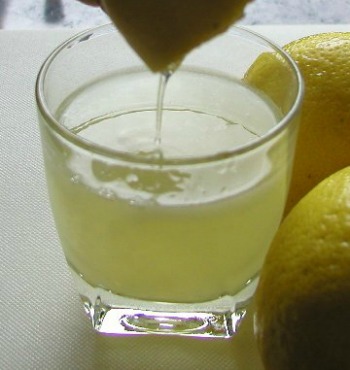
Squeeze your own lemon juice!
Bottled lemon juice should be substituted only if fresh lemons are not available:
Room-temperature lemons, limes and orange will yield more juice than those that are refrigerated. Use your palm to roll lemon, lime, or orange around on the counter top a few times before squeezing. When I am in a hurry, I cut the lemon in half, and then cup one hand under the lemon as squeeze the lemon with the other hand. The cupped hand is to catch the seeds.
Microwaving the fruit for 15 to 20 seconds before squeezing will help extract more juice. Don’t overdo it. You do not want to boil the juice.
If just a few drops of juice are needed, pierce the skin with a toothpick and squeeze out what you need. To store it, reinsert the toothpick, put the lemon or lime into a plastic bag, and refrigerate.
Store fresh lemon juice in the refrigerator for a week or so. If I have a large amount of juice to store, I put the juice in ice cube trays and freeze for later use.
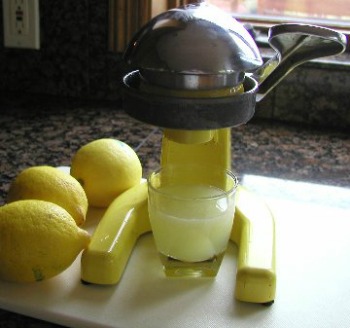 Manual Citrus Juicer/Press
The world’s largest-selling mechanical juicer. Capable of leveraging up to 600 pounds of pressure.
This home juicer can thoroughly extracts juice all citrus fruits.
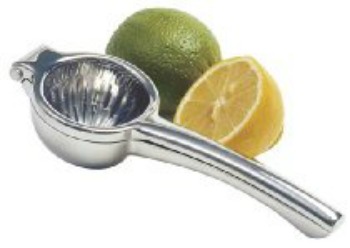 Hand Citrus Juicer
Extra long handles give you more leverage. Maximum juice extraction with minimal effort.
Enjoy fresh-squeezed lemon juice without electricity, batteries, or hard-to-operate juice squeezers.
Freezing Whole Lemons:
The next time you see lemons or limes on sale at your local grocery or produce store, buy an extra amount of lemons and freeze them whole.
First wash the skins well and then dry.
Place the whole lemons in a freezer bag and store in your refrigerator.
Zesting the frozen lemon: Grate the zest off the lemon while still frozen.
Juicing the frozen lemon: Place lemon in the microwave for a few second (or submerge in cold water for approximately 15 minutes). After defrosting, the lemon will be softer (or more mushy) and much easier to juice.
Selecting Fresh Citrus Fruits:
When looking for citrus fruit (such as lemons, limes, oranges, an grapefruit) for juicing, avoid ones with bruises, wrinkled, or discolored skin. Choose lemons that have smooth skins and are heavy for their size. Lemons contain 30 to 45 percent juice depending on variety, climate, maturity when harvested, and storage conditions.
1 medium lemon = approximately 2 to 3 tablespoons of lemon juice = 1 tablespoon of lemon zest (peel)
1 medium lime = approximately 2 tablespoons lime juice = 1 teaspoon lime zest (peel)
1 medium orange = approximately 1/3 to 1/2 cup juice = 2 tablespoons orange zest (peel)
Learn about Lemon Zest and using Lemon Zesters.
Lots of delicious Lemon Recipes.
5 Responses to “How To Juice Lemons and Other Citrus Fruits”
Ricky Shearer
I have heard if you cut a lemon a certain way you will get a lot more juice out of it. Anyone know how to cut it?
Juicrebase
Yes but if you do it using your hands. If you do with citrus juicer then you need to cut in middle.
https://www.youtube.com/watch?v=d6_p2e8LEP0
HomePlix
If you cut the limes into smaller pieces then it will be easy to squish them.
ThehomeDigs
Just followed your tips and additionally cutted the limes into small pieces finally the Lemons Juice is ready. Drinking homemade Juice and posting a comment on you site.
Lily Maravilla
Great tips. great result. Thanks