
Read all of our helpful lemon hints and tips and unlock the potential of fresh lemons.
Lots of delicious Lemon Recipes.
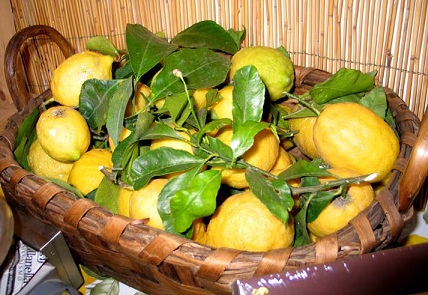
Fun Facts About Lemons:
The ladies of Louis XIV’s court used lemons to redden their lips.
Because of their high content of Vitamin C, the British Royal Navy loaded their ships’ stores with lemon to help sailors combat scurvy which is caused by Vitamin C deficiency.
Lemonade is thought to be an Egyptian original-at least according to the earliest documentary evidence. Sources say that lemon juice mixed with sugar was sold around the year 1104 in a Jewish community in the Egyptian city of Cairo.
The demand for lemons and their scurvy-preventing properties hit a peak during the California Gold Rush of 1849. Miners were willing to pay huge sums for a single lemon. As a result, lemon trees were planted in abundance throughout California.
Although early U.S. lemon production centered in Florida, California is now the lemon state, ranking No. 1 in lemon production (Arizona is a distant second.) The fruit came to Sacramento with the 49ers, who relied on lemons for Vitamin C while mining. Soon after, California farmers adopted lemons as a crop.
Next time you have a sore throat, reach for a lemon! Add the juice of one lemon to an equal amount of hot water for an anti-bacterial gargle.
Lemon Equivalents:
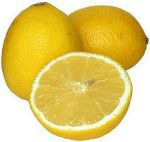 1 medium-size lemon = approximately 1 tablespoon of lemon zest = 2 to 3 tablespoons of lemon juice.
One (1) cup of lemon juice has only 61 calories (that’s less than 4 calories per tablespoon) and no fat. The juice is 5 to 6 percent citric acid. Lemons are extremely high in Vitamin C and also are a good source for foliate and potassium.
How To Purchase and Store Lemons:
Choose smooth-skinned lemons that are heavy for their size. The skin should have a fine grain and bright yellow color. Streaks of green on the skin of the lemon usually indicate more acidity. Avoid lemons that feel soft or spongy with skin that looks or feels wrinkled, bumpy, rough or hard. Coarse, thick-skinned and light lemons have less juice.
Lemons can be kept indoors at room temperature for about a week before they tend to become soft or wrinkled. For longer storage, store lemons in the refrigerator or freeze.
Freezing Whole Lemons: The next time you see lemons or limes on sale at your local grocery or produce store, buy an extra amount of lemons and freeze them whole. First wash the skins well and then dry. Place the whole lemons in a zipper-lock freezer bag and store in your freezer. Generally, the lemons will stay in perfect condition for up to four weeks or even more.
Zesting Frozen Lemons: Grate the zest off the lemon while still frozen.
Juicing Frozen Lemons: Place lemon in the microwave for a few second (or submerge in cold water for approximately 15 minutes). After defrosting, the lemon will be softer (or more mushy) and much easier to juice.
Freezing Lemon Juice: Instead of keeping whole lemons, store the juice. Squeeze lemons, pour juice into an ice cube tray and freeze. Once they are solid, transfer the lemon cubes into a freezer bag, where they will keep for several months. Each cube equals the juice of one medium lemon.
Lemons also can be preserved whole or quartered with salt. Preserved lemons are popular in Middle Eastern and Moroccan recipes. Learn how to preserve lemons in salt, click HERE.
Science of Cooked Lemon Flavor:
Some information form Cook’s Illustrated Magazine, May and June, 2016.
Lemon Juice: The aroma compounds in lemon juice, which are suspended in water, are highly volatile and readily evaporate when heated. But its acidic compounds are unaffected by heat, so juice added during cooking will contribute bright tanginess but little fruity flavor.
Lemon Zest: The zest of the lemon has an intense lemon flavor as the oils from the lemon are released, therefore it will taste more lemony. The aroma compounds in zest are less volatile than those in juice when exposed to heat because they are trapped in oil glands within the peel’s cell walls. Zest added during cooking will thus lend noticeable lemony taste to food; we add more at the end of cooking for a final hit of fruity flavor.
How To Juice Lemons:
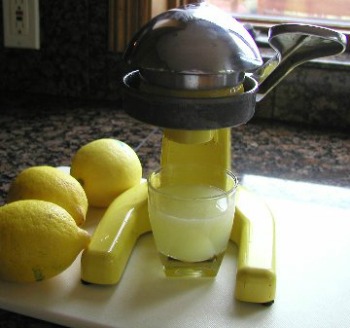
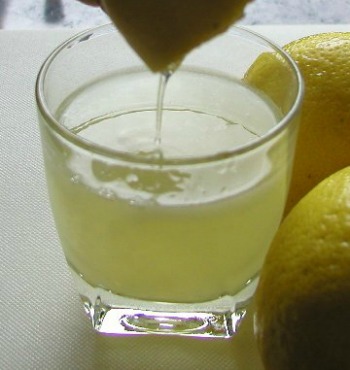
Room-temperature lemons, limes, and orange will yield more juice than those that are refrigerated.
Microwaving the fruit for 15 to 20 seconds before squeezing will help extract more juice. Do not overdo it. You do not want to boil the juice. Use your palm to roll lemon, lime, or orange around on the counter top a few times before squeezing. If just a few drops of juice are needed, pierce the skin with a toothpick and squeeze out what you need. To store it, reinsert the toothpick, put the lemon or lime into a plastic bag, and refrigerate.
Store fresh lemon juice in the refrigerator for a week or so. NOTE: If I have a large amount of juice to store, I put the juice in ice cube trays and freeze for later use.
When I am in a hurry, I cut the lemon in half, and then cup one hand under the lemon as squeeze the lemon with the other hand. The cupped hand is to catch the seeds.
How To Zest Lemons:
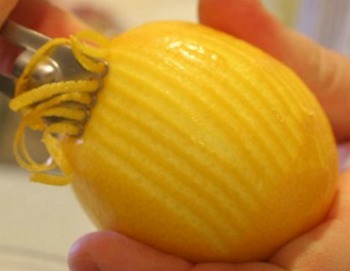
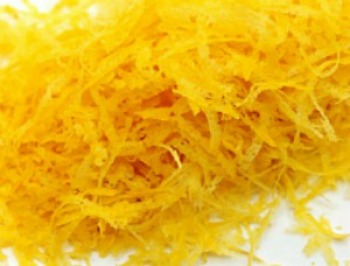
Zest is the outer colored portion of the citrus peel. Freshly-grated orange, lime or lemon zest packs a flavor wallop no bottles dried zest can match. When removing the skin from lemons or other citrus fruits, be sure to take only the thin outer zest or colored portion. The white pith will give your dish a bitter under taste.
Use a citrus zester (available in the kitchen specialty shops) to obtain long, thin strands of citrus zest. A zester has five tiny cutting holes that create threadlike strips of peel. Press firmly as you draw the zester down along the skin of the fruit. For continuous strips of zest, begin at one end of the fruit, and cut in a spiral around and down.
When grating the zest of a lemon or other citrus fruits, grate the whole fruit, even if you only need a small amount. Place the extra grated zest in small airtight pouches made of plastic wrap, and store in the freezer.
Zesting and Grating Tips:
- If you are using a lemon for zest and juice, grate the zest first and then squeeze the juice.
- When grating lemon peel, use this fast and easy trick. Cover the zest side of your grater with plastic wrap and grate the lemon over the plastic wrap (remember don’t grate the bitter white pith that’s under the peel). Most of the zest will remain on the plastic wrap and thus can not stick in the holes of the grater. Just pull the plastic wrap off and shake the zest onto a plate.
How To Use A Zester:
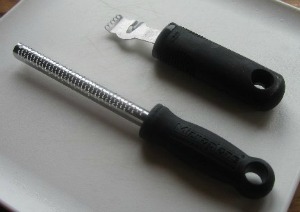 Lemon Zester (top of photo) – Traditional zester, which makes long, thin strands of zest, or a knife. Be sure to finely chop the strands with a knife. A zester allows one to remove the zest (and only the zest) in long strips. A zester has tiny cutting holes that create threadlike strips of peel.
Lemon Grater (such as the Microplane version – bottom of photo) – You will also note that many recipes call for grated zest or peel. In this case, use a fine grater to remove the peel.
To zest with the Microplane, just rub the lemon in one direction against the little blades. Turn the lemon as you go so you remove only the yellow part.

Vegetable Peeler or Knife – If you do not have a zester or grater, use a vegetable peeler or a small, sharp knife.
Carefully peel off a strip of the lemon skin, working top to bottom. Peel only the topmost layers of the skin.
If there is any white showing on the underside (the pith), you have peeled too deep.
2 Responses to “Lemon Hints and Tips”
Donald Heath
How do you wrap or slice lemon so that when you squeeze it, the seeds will not come out?
Linda Stradley
Below are a few easy methods for juicing a lemon without seeds:
1. Use a citrus squeezer: It gets most much of the juice out with NO seeds.
2. Use you hands: Cut your lemon in half crosswise. Hold one lemon half in your hand, cut side facing down. Cup your other hand below the lemon and squeeze. The juice will run through your fingers; the seeds will not.
3. Use mesh netting: Cut a lemon in half and enclose it in some mesh netting. Tie the netting at the top to form a little bag and squeeze away. The netting should capture all of the seeds, depending on how fine the netting is.