
Stove Top – Slow Cooker – Pressure Cooker (Instant Pot) Instructions
I do not think there are many people out there who have children that haven’t heard the crude rhyme they come home repeating at some point during their elementary school years. “Beans, beans are good for your heart, the more that you eat the more that you _____”. I will let you fill in that blank for yourself! At least I know that rhyme runs rampant in the elementary school in this part of the country. I do not know who started it, but at least they had one thing correct – beans are good for your heart! Beans are good for your body in more ways than you might realize.
This Basic Bean Recipe for Cooking Dried Beans is courtesy of Cynthia Detterick-Pineda of Andrews, TX. Instructions have been provided to cook on the stove top, slow cooker and manual and electric pressure cookers like the Instant Pot.
Lots of Recipes Using Dried Beans and more Dried Bean Hints and Tips.
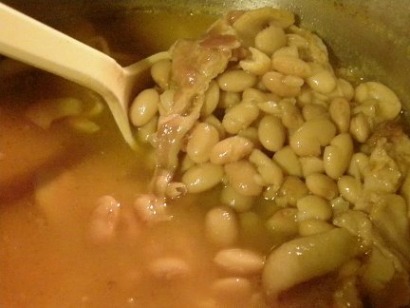
Dried beans and other pulses/legumes are relatively inexpensive yet offer a healthful way to include nutrient-rich foods in the daily diet. According to the United Stated Department of Agriculture, analyses show that people who eat beans consume more vitamins and minerals than individuals who don’t eat beans
- One serving of beans (1/2 cup of dried beans) supplies about 120 calories and lots of complex carbohydrates.
- Beans offer a low-glycemic index value. In other words, the carbohydrates in beans do not cause as quick or as steep a rise in blood sugar as do many other carbohydrate-rich foods.
- Beans are a good source of B vitamins including folic acid. Beans also provide the minerals iron, potassium, selenium, magnesium and even some calcium.
- Dried beans and their cousins also are a good source of insoluble fiber, which promotes digestive health and relieves constipation. Beans also provide soluble fiber, which can help reduce fat levels in the blood.
- Beans provide little fat and absolutely no cholesterol.
- Beans however do not supply complete protein, yet researchers believe that the particular amino acids in dry beans may help prevent various diseases.
Every one cooks beans in their own way, and though some of the ingredients may overlap from recipe to recipe, very seldom are they two recipes the same. So this is the way I make my beans, although even the way I do it may vary from pot to pot simply because of what I feel like adding to the dish on that day.
Slow Cooker time: 12 hours low heat |
Pressure Cooker time: 1 hour 30 minutes
- 2 cups beans, dried, picked and sorted, then washed (yes, beans can have rocks and such in them)
- 2 to 3 quarts of water
- 2 garlic cloves, peeled and crushed
- 3 to 4 jalapeno chile peppers, seeds and membranes removed and sliced into 1/8-inch pieces
- Salt and freshly-ground black pepper to taste
- Bacon slices, fat back, or other fatty meat to cook with the beans is optional - 1/4 pound fatback or 5 slices of bacon is a good amount to use
- 1/8 teaspoon ground cumin
- 1 tablespoon chile powder
- 2 teaspoons paprika
-
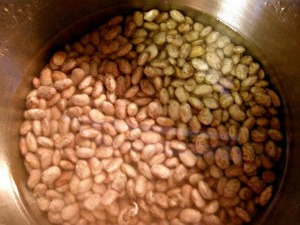
 Place the dried beans into a large pot. Soak the beans overnight in warm water. This will help to soften them. In the morning drain off the water, and cover with clean water.
 -
Add the crushed garlic cloves and jalapeno chile peppers; bring the water just to a boil. Turn down the heat to medium low and cook until the beans are soft and just almost done, approximately 2 hours.
-
At this time, you can also add the optional additions of bacon, cumin, chile powder, and/or paprika. You can use whatever of these you like, or whatever combination you prefer. You might want to consider what you will be serving the beans with, and let that help you determine your additions. You don’t want to overpower the taste of the beans. After adding any of these Optional Ingredients, cook for another hour.
-
Once the beans are done, add the salt and pepper. Do not add salt until after the beans are at least 80% cooked, as this will make the outer hull of the beans tough.
-
If you prefer to use a slow cooker, follow the same procedure for soaking the beans overnight, and then place the beans in your cooker and cover with water. As with the previous recipe, do not add the spices or salt until after the beans are almost done. Cooking bean in the slow cooker will take a minimum of 12 hours on low to cook to done.
-
You can leave them on low for a day or more (up to three days), by simply adding water when needed. This way you have a continuous pot of beans going that people can serve themselves from, or you can dip into to use in other recipes or in your meal menu.
-
You will also follow the same procedure of soaking beans overnight. Once the beans are rinsed, cover with 3 - 3 1/2 cups water, making sure not to go over your pressure cookers recommendation for the depth of water and food. Place the pressure cooker over medium high heat, and bring it up so that it is steaming. Reduce to medium and allow to cook 20 to 30 minutes. Remove from heat, and release steam according to the manufacturer's instructions.
-
For Electric Pressure Cookers like the Instant Pot: Press the Manual (Pressure Cook) button with a high pressure setting. Set the cooking time for 25 -30 minutes. When the cooking time is completed, allow the pressure to naturally release. (This can take about 20 minutes.)
-
Add the spices and other optional choices, replace the lid securely and once again bring up to pressure over medium high heat. T his time only let the beans cook 10 minutes. Remove from heat and let the temperature come down on its own without releasing the steam. Check carefully to make certain all the pressure is off before releasing the valve or opening the top.
-
For Electric Pressure Cooker (Instant Pot): Add the spices and additional ingredients, cover with the lid and seal to close. Press the Manual (Pressure Cook) button at high pressure setting and set cooking time for 10 minutes. When the time is up, quick release the pressure.
-
You can now place the cooked beans in a bowl and serve, or use them in whatever other recipe you desire.
-
Makes about 8 servings.
Categories:
Cooking Lessons - Cooking 101 Dried and Canned Bean Recipes Slow Cooker Vegetables Southwest Vegetables Vegetable Hints & Tips
2 Responses to “Basic Bean Recipe for Cooking Dried Beans”
Yvonne Calhoun
The slow cooker (crock pot) recipe turns into a pressure cooker? What happened?
Whats Cooking America
Thanks for the catch! I have fixed the pressure cooker section.