
How To Microwave Eggs
Some of the following information is from the The American Egg Board website.
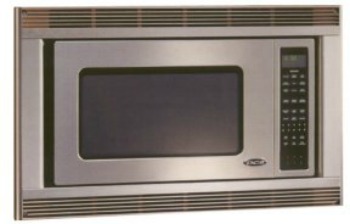 For successful cooking of eggs in your microwave, keep these following points in mind:
Microwave Eggs cooked in their shells will explode!
Even out of the shell, eggs can and may explode in the microwave because rapid heating causes a buildup of steam. Always use a wooden pick or tip of a knife to break the yolk membrane of an unbeaten egg before micro-cooking to allow the steam to escape.
Covering cooking containers with a lid, plastic wrap, or wax paper encourages more even cooking and (if you forgot to prick the yolks) helps to confine the explosion!
Microwave Fried Eggs:
Break and slip one (1) egg into each of two lightly-greased 10-ounce custard cups or a pie plate.
Gently prick yolks with tip of knife or wooden pick.
Cover with plastic wrap.
Cook on 50% power just until eggs are almost desired doneness, about 2 to 3 minutes.
Let stand, covered until whites are completely set and yolks begin to thicken but are not hard.
Microwave Hard-Cooked (Boiled) Eggs:
Separate yolks and whites of eggs into two (2) lightly-greased liquid measures or small bowls.
Stir yolks with fork.
Cover each container with plastic wrap.
Cook separately on 50% or 30% power, stirring once or twice, allowing about 20 to 30 seconds per yolk, about 30 seconds to 1 minute per white.
Remove when slightly underdone.
Let stand, covered, about 2 minutes. Cool long enough to handle comfortably, then chop or chill until ready to chop.
Microwave Poached Eggs:
Pour 1/3 cup water into 10-ounce custard cup or small deep bowl. Break and slip in two eggs.
Gently prick yolks with tip of knife or wooden pick.
Cover with plastic wrap.
Cook on full power about 1 1/2 to 2 minutes. If necessary, let stand, covered, until whites are completely set and yolks begin to thicken but are not hard, about 1 to 2 minutes.
Pour off water to serve in custard cup or lift out with slotted spoon.
NOTE: For 4 eggs, use 2/3 cup water in 1-quart bowl or baking dish. Cook 1 1/2 to 3 minutes and let stand as above.
Microwave Scrambled Eggs:
In a 10-ounce custard cup, beat together 2 eggs, and 2 tablespoons milk with salt and pepper to taste, if desired, until blended.
Cook on full power, stirring once or twice, until almost set, about 1 to 1 1/2 minutes. Stir. If necessary, cover with plastic wrap and let stand until eggs are thickened and no visible liquid egg remains, about 1 minute.
NOTE: All microwave cooking times are based on a full power output of 600 to 700 watts. For a lower wattage oven, allow more time.
1 egg: 30 to 45 seconds
2 eggs: 1 to 1-1/2 minutes
4 eggs: 2-1/2 to 3 minutes
6 eggs: 3-1/2 to 4-1/2 minutes
8 eggs: 4-1/2 to 5-1/2 minutes
Additional Egg Cooking Techniques:
In France, this basic methods of baked eggs is called oeufs en cocotte. People love this dish. Baked eggs are both comforting and sophisticated. The eggs come out looking beautiful in their individual ramekins and are easy to serve.
Coddled Eggs
Coddled eggs are made by very briefly immersing an egg in the shell in boiling water (to cook in water just below the boiling point) to slightly cook or coddle them.
Deviled eggs have their roots in ancient Roman recipes. In the 17th century, this was a common way to prepare eggs. they were not called “deviled” until the 18th Century, in England.
Fried Eggs – Perfect Fried Eggs
Here are the absolute best fried eggs. This method is adapted from the ultra-meticulous French chef Fernand Point (1897-1955). This technique makes one spectacular fried egg and demonstrates that simplicity and purity often yield the best dishes of all.
Poached Eggs
The best eggs for poaching are the freshest eggs you can find. If eggs are more than a week old, the whites thin out. Whites of fresh eggs will gather compactly around the yolk, making a rounder, neater shape.
Scrambled Eggs and Omelettes
Scrambled eggs make a delicious and quick meal, but there is a little science to getting them just right. The secret to successfully scrambling eggs is slow cooking.
One Response to “How To Microwave Eggs”
Tony Hedrick
Over the years, I have had mixed results fixing scrambled eggs in the microwave. Besides milk, I have almost always used a couple tablespoons of butter, this usually resulted in them being runny and almost unedible!! Thanks for posting these tips.