
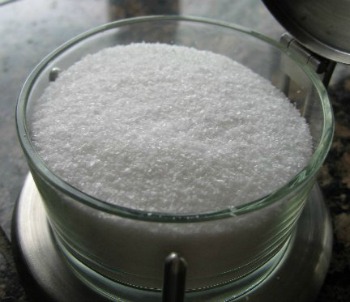
For every meal there is one thing people generally reach for before they even take a bite – the salt shaker. Cooking with salt is one of the oldest uses for the spice. It is also a key life component in humans, animals, and plants.
Its flavor is unique and versatile, salt has been a staple throughout time. Cooking with salt enhances almost every dish, salt is added to breads, meats, fruits and vegetables to sauces and desserts.
Cooking with salt enhances food in a variety of ways:
Preservation – helps protect against microorganisms, bacteria through dehydration and preventing growth of bacteria, which slows or prevents spoilage.
Texture Aid – in bread making, allows the dough to rise by giving helping the gluten hold more water and carbon dioxide. In meats it improves tenderness and in cheeses it aids in consistency of the cheese and the hardness of the rind.
Binder – in processed meats it helps retain water which reduces the loss of meat when cooking.
Color Developer – in ham, bacon, and other processed meats it helps obtain the desired color. It also helps create a golden crust for breads.
Fermentation Control – slows and controls the fermentation process in:
Pickling
Cheese production
Sauerkraut production
Summer sausage production
Types of Salt
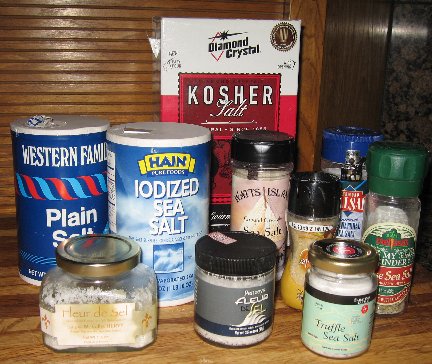
When cooking with salt do you know what type of salt are you getting? While salt is gained from two sources, salt deposits on land or from the sea, once harvested it is essentially processed in the same way, through the creation of brine and evaporation.
Salts, like so many other foods, has become trendy with the multitude of seas salts now available to the home cook. Is the trend overrated or are these salts really worth their weight in salt!
The main difference between salts is in their texture. Each salt has its own distinctive flavor, color, and texture. Experiment with different salt when cooking with salt. Salt is like money! You get what you pay for. You can put the best ingredients into making your dish, but if you blow it on the wrong salt, the dish will not be as good.
What are the three basic types of salt?
What is Table Salt?
Table salt the salt found in most salt shakers. It is mined from salt deposits and has most of the minerals removed. Most salt in the United States is sold with iodine added making it iodized salt. This salt is harvested by forcing water into a mine to create brine (salt/water mix). The brine is then evaporated leaving cubes of salt.
What are the varieties of table salt?
Pickling salt – Canning salt, Coarse salt, Gos sel – fine grained without iodine or anti-caking preservatives. This is similar to table salt, but lacks the iodine and anti-caking additives that turn pickles dark and the pickling liquid cloudy. Pickles made with table salt would still be good to eat, but they wouldn’t look as appetizing.
Pretzel salt – large grained, does not melt quickly.
Rock salt – large crystal salt with a gray color, due to minerals not removed from normal table salt. This form of salt is available in most grocery stores, and also through hardware stores.
Popcorn salt – very fine grained salt which is flakier version of table salt.
Iodized salt – contains a small amount of potassium iodide and dextrose as a dietary supplement to prevent thyroid disease. (see Salt Composition and Medical Uses below).
Seasoned salt – table salt with herbs added like onion, hickory smoke or garlic.
What is Kosher salt?
Kosher salt is an additive-free coarse-grained salt. This salt was developed for the preparation of kosher meats in accordance with Jewish dietary laws. The salt itself is not kosher, but this is where the name comes from. The difference between table and Kosher salt is that during the evaporation process it is raked to give it a block-like structure which allows the salt to draw the blood out of meats. The raking makes Kosher salt coarser and flakier than table salt so it disperses more easily. This makes it lighter and less dense than table salt. It is also recommended to use Kosher salt for cocktail glasses for drinks like margaritas. Since it is a lighter salt, there is less after taste with it.
Today many cooks and chefs prefer it over table salt when cooking with salt, as it dissolves fast and its flavor disperses quickly. Kosher salt weighs less by volume than table salt, so you must increase the amount of salt used in a recipe when substituting for table salt. This is a great all-purpose salt.
What is Sea Salt?
Sea Salt is just that – salt made from ocean or sea water, which contains trace minerals not in the mined salts. The process is more costly then the mining process. Sea salt is typically less refined than other salts. Depending on the seawater used, you also get a variety of minerals in the sea salt resulting in numerous types of sea salts. Here are a few:
Black Salt, Kala Namak, Sanchal – Significant for its strong sulfur odor (India) this salt is a pearly pink gray. It is used in Indian cooking.
Grey salt, Celtic salt, Sel Gris – Harvested from the light film of salt which forms during the evaporation process. The gray or light purple color comes from the clay in the region of France where it is harvested. Collected using traditional Celtic hand methods.
Hawaiian sea salt – Has a distinctive pink hue from the Alaea added to it. The Alaea is volcanic red clay with a high content of iron oxide. This salt is used in many traditional Hawaiian dishes like Kahlua Pig and Hawaiian Jerky.
Coarse salt, Gos Sel, Gale Grosso – Is a larger grain salt which resists moisture and is intended to be ground. Uses include flavoring for soups and salt crusts on meats.
Flake salt– Shaped like snowflakes, the brine is made using the sun and wind for evaporation. Then the brine is slowly heated to create the flakes.
Fleur de Sel, Flower of Salt, Flor De Sal – Skimmed from the top of salt ponds early in the process of evaporation, this is considered a great condiment salt; also good on grilled meats, in salads and on vegetables. The flavor, like wines, varies depending on the region it is harvested from. Typically it is from France though some is produced in Portugal.
French Sea Salt – Processed less than American salt, retains more of the mineral content gained from the Atlantic seawater it is harvested from. This usually includes natural iodine. A coarse salt, this is good for salads, vegetables and grilled meats.
Grinder salt– Large dry salt crystal which can easily be put through a grinder. With a salt grinder you want to avoid metal as the salt will corrode the grinding mechanism.
Italian Sea Salt, Sicilian Sea Salt, Sale Marino – Harvested from the lower Mediterranean sea by hand using traditional methods of natural evaporation, this salt is high in iodine, fluorine, magnesium and potassium. A delicate salt which is good on salads and in sauces.
Smoked Sea Salt – One other derivative of sea salt is a smoked sea salt. The salt is smoked over real wood fires to add the flavor to the crystals. These can be used in soups, salads, pasta and also in grilling foods like salmon.
Organic Salt: Organic salt has different standards than organic livestock or botanicals. Some organizations have started to set up guidelines to ensure the quality of water and production process.
Lite (light) salt and salt substitutes: These generally do not have a great flavor. Lite salt uses potassium chloride to reduce the sodium level in the salt. Salt substitutes have little or no sodium in them. Typically only people who have a medical reason use these because the flavor is not as good when cooking with salt.
Sour Salt: There is a product called sour salt which is not made up of salt at all, instead it is citric acid. This is used to prevent browning when canning fruit. It can also be added to rye or sour dough bread to make it more tart.
What can be used as a salt substitution?
When cooking with salt, you may not have available some of those listed above or a recipe may call for one type you do not like. Substitution may become necessary. Here are a few suggested substitutions:
Kosher salt – a non-iodized coarse table salt or a coarse pickling salt but make sure you read the label and there are no additives. When making this substitution use about half the salt called for in the recipe.
Pickling salt – substitute Kosher salt which is free of additives that can turn your pickle brine cloudy.
Pretzel salt – Kosher salt or a coarse sea salt.
Table salt – Kosher salt but use twice the salt called for.
Hints on using different types of salt
Different salts offer different qualities based on how they are used. Here are a few hints on cooking with salt types.
Fine salts – use for baking unless a recipe calls for something different. The texture and size of a fine salt is smaller and more dense than a more coarsely ground salt.
Kosher salt – is great to use while cooking as the size of the salt is easier to see how much is being added.
Hand-harvested salts – avoid using during a cooking process unless it is a very quick process like with salmon. If used during the cooking process the flavor and texture can be lost.
What is the Composition of salt?
How is salt used medicinally?
Since most salt is produced in relatively the same way, there is little difference when it comes to health benefits in which type is used. Salt is plentiful in most foods even fruits and vegetables. Processed foods have an alarmingly high level of sodium so it might be best to avoid those if on a salt restricted diet.
Typically salt is made up of sodium and chloride. Sodium cannot be produced within the human body so it is important to the diet. Sodium helps regulate water balance ph and osmotic pressure. Chloride is equally important in the human diet for it helps the blood to carry carbon dioxide; potassium absorption; helps in digestion; and conserves acid-base balance. Iodine is added to most North American salt in an effort to reduce Iodine Deficiency Disorder (IDD), which causes mental retardation, miscarriage, goiters, brain damage in infants and can impair growth and development. This effort has been highly successful in North American nearly wiping out the problems associated with IDD. All of these benefits are received from the common salt shaker almost everyone has on their table.
The recommended salt intake varies on the individual and their genetics. In general though, a minimum of 500 mg per day with a maximum of 2400 mg is a good guideline. This is difficult to regulate because so many foods do contain salt naturally.
Having the right level of salt assists the body with many functions including:
Nerve conduction.
Easy and active absorption of other nutrients in the small intestines.
Maintains electrolyte balance.
Key to hydration during exercise and outside activities.
Combats hyperthermia.
Increasing salt intake can combat chronic fatigue syndrome.
Helps regulate the water levels in cells, nutrient levels, and waste matter.
Salt is considered one of the first antibiotics, which is probably where the term rubbing salt in a wound comes from. Human blood actually contains 0.9% salt and a solution of water and salt in that proportion is commonly used to irrigate wounds.
As with anything, too much salt may cause problems. Some of the problems include the following:
Hypertension or high blood pressure.
High acidity, which may cause cancer.
In healthy people, too much salt is typically discarded by the kidneys. However, a genetic abnormality preventing the absorption of chloride may cause cystic fibrosis which can be detected by testing the saltiness of a person’s sweat.
Since Americans tend to over indulge in salt much focus has been placed on the effect salt has on hypertension. Many studies have been done and debate continues as to whether salt adversely affects blood pressure. Listed below are some of the general conclusions from the vast array of studies
Minority of population can lower their blood pressure by limiting salt.
Hypertension may be caused by too much salt in a diet.
Hypertension may lead to heart attacks and strokes.
Life style changes may have more affect on blood pressure / hypertension than salt.
Low sodium intake can be just as dangerous as high sodium intake.
The group who benefits the most from reducing salt intake is overweight men.
While the debate continues in the medical community, the regular person can only attempt to reduce salt in their diet to see if it affects their blood pressure. If the craving for salt continues, it may stems from a lack of zinc in the diet. An increase in foods rich in zinc may reduce the desire for salt. Foods rich in zinc include:
Oysters
Endive
Alfalfa sprouts
Seaweed
Brown rice
Asparagus
Mushrooms
Turkey
Radishes
Balance is the key when it comes to cooking with salt and the health. So many foods are rich in salt that adding it to a meal is probably not needed. If someone is at risk with high blood pressure, simply remove the salt shaker from the table in an effort to wean them off the habit. One thing which was clear in most studies is that the affect salt had varied greatly among individuals based on genetic make up.
Alternative Uses – Cooking Tips
Being so widely used, salt has many alternative uses besides the traditional food additive. There is an abundance of alternative uses which are separated into categories below. Be cautious when using all of these, remember to start small to determine if there will be any adverse reactions to any of these procedures and uses.
General tips for problems when cooking with salt in the kitchen:
Over salted soup – add a cut up potato or two to absorb the extra salt.
Rub a griddle with a bag of salt to prevent sticking and smoking.
Before frying fish sprinkle the skillet with salt to prevent the fish from sticking.
To prevent food from sticking to skillets, waffle irons or griddles, sprinkle with salt and heat in warm oven, dust off salt and return to cupboard. Next usage, foods won’t stick.
A pinch of salt goes a long way. Here are some hints that utilize a pinch of salt or perhaps a bit more while you are cooking with salt:
Add a pinch of salt:
When whipping eggs to create fluffier eggs.
To enhance the flavor of coffee and in overcooked coffee helps remove the bitterness.
To whipping cream or egg whites to get them to whip faster.
To milk to have it stay fresh longer.
To icing prevents them from sugaring.
To improve boiled potatoes, salt after draining – this gives them a fine mealy texture.
Keep salads crisp by salting immediately before serving.
Poultry – has multiple uses:
Rub the chicken skin with salt to remove pinfeathers more easily.
Improve the flavor by rubbing salt inside and out before roasting.
Tips for cooking with salt:
Salt makes water boil at a higher temperature which reduces cooking time.
Boil eggs in salt water to ease the peeling process.
To set the whites of poached eggs, boil over saltwater.
Place an egg in a cup of water with 2 teaspoon of salt, a fresh egg will sink, a floating egg may be spoiled.
Washing spinach, lettuce and other greens in saltwater will keep them crisp.
Lightly salted cold water helps maintain the color of apples, pears and potatoes.
Soak in saltwater for hours to make shelling pecans easy.
Dampen a cloth with saltwater and wrap around cheese to prevent molding.
Sprinkle ice with salt, place gelatin salads or desserts on ice to get them to set more quickly.
Sources:
Salt Institute
Salt Traders
Maharajh, Christina “20 Amazing Ways to Use Salt”
Bardey, Catherine, Secrets of the Spas, Black Dog & Leventhal Publishers, 1999
Breedlove, Greta, The Herbal Home Spa, Storey Books, 1998
Edgson, Vicki and Ian Marber, The Food Doctor, Collins & Brown Ltd, 1999
What is the History of Salt?
Across the board, salt has played a key role in most cultures. Economically it’s been important throughout the ages. Salt has been referenced and utilized in nearly all time periods and cultures from before recorded history. It’s been used as money and for trade in many early cultures. Some examples of the key roles include:
Salt was paid to soldiers in Rome.
The Dutch foiled Phillip II of Spain’s plans in the 16th century by blockading an Iberian salt works. Salts key role economically led to Spain’s bankruptcy with the loss of this key product during the blockade; thus preventing a war.
Salt tax in France became a major contributing factor to the French revolution.
China published, somewhere between 2700 BC to 4700 BC, a treatise concerning the medical uses of salt.
“Not worth his salt” stems from an ancient Greek practice of trading salt for slaves.
British crown issued the first patent to an American settler, giving Samuel Winslow exclusive rights to produce salt using his own procedures.
Erie Canal, known as the ditch that salt built, was initially used to transport salt.
The importance of salt has evoked many fairy tales and myths. The early Chinese had a folklore describing the discovery of salt. Egyptians used salt in the mummification process. Some of the earliest Egyptian writings have a description of how to extract salt. Salt extraction and processing crosses many cultures from Egyptian, Chinese to French, Persian and Italian.
Salt has been a part of religion as well. Some cultures ascribe magical powers to salt from protection to cleansing. The bible and the Talmud have numerous references to salt.
Health and Beauty Tips
Use Saltwater:
To ease a sore throat by gargling (make it warm).
A mixture of teaspoon of salt in a pint of water to reduce tired and puffy eyes.
To soak sore feet (keep the water warm).
To ease mosquitoes and chigger bites, soak in saltwater, then mix lard with salt to rub on the affected area. Additionally for bee stings – immediately moisten area and rub salt on the sting.
To help heal poison ivy (make this hot water).
Combine sea salt and oil:
To create a scrub. Rosemary oil is good to inhale if there is nasal congestion. Salt is slightly abrasive to help with exfoliating the skin and helps stimulate the lymph production which helps eliminate toxins. Caution – do not apply to face or broken skin areas.
Or water to create a paste. Rub on body starting with arms and working down Add essential oils to create your favorite scent. Caution – test this on a small area to make sure your body can tolerate the scent and product. Natural oils you can use include Grapeseed Oil, Almond Oil, Apricot Kernel Oil, and Olive Oil. Soak in a tub with sea salt to relax and refresh yourself.
Mix sea salt with your favorite essential oils to create custom bath salts. Two ounces of sea salt to about three eye droppers full of oil combinations.
Suggestion – mix multiple oils in a container before adding to salt. This gives the oil a chance to blend scents before adding to salt. Uplifting blend add equal parts of lime, grapefruit, sweet orange, tangerine, and lemongrass.
Natural decongestant – blend equal parts of eucalyptus, lavender, and rosemary. If this is too strong you can also add a few drops of peppermint to the mixture. Be careful when working with peppermint as it can overwhelm the senses very easily.
Besides cooking with salt, what are other uses for salt?
Salt has a variety of uses both in the out of the kitchen. Its versatility, from medical to household uses is one of the reasons it has been so sought out throughout time. The varieties may seem confusing at first but break down into three simple categories. So next time you pick up a salt shaker, you will be picking up a bit of history, health and flavor.
Outdoor and garden tips:
Add a pinch of salt to the water of fresh cut flowers to lengthen life.
Remove poison ivy with a salt and soapy water mix, three pounds of salt to a gallon of soapy water.
Deodorize canvas shoes by sprinkling with salt.
Spread salt between bricks or blocks on your patio to keep unwanted weeds from growing up. Sprinkle gently with water so the salt hardens.
Lightly sprinkle rock salt on walks and driveways to assist with snow removal.
Play tips:
Make a salt dough for children.
Make a mini volcano out of salt.
Cleaning tips:
Salt can be used in almost any room of the house to assist in cleaning, sanitizing and deodorizing the home. Combined with other substances like lemon juice, vinegar, and baking soda it is a strong and versatile cleaner. Caution – always test the mixtures on a small area to ensure safe usage.
Following is a list of cleaning tasks salt can make easier: Use a paste of salad oil and salt to remove rings from tables. Apply and let stand for an hour or two before wiping off.
Rub salt:
Into cups or pitchers to remove tea or coffee stains.
On the sides of vases to remove water deposits, if unreachable soak in a salt brine.
In thermos and jugs to deodorize.
On tarnished silver before washing.
Plain, not iodized salt on the sides of an empty fish tank to remove water deposits. Rinse thoroughly before placing fish back in the tank.
On cutting boards (after washing thoroughly) with a damp cloth to brighten up the board.
Sprinkle salt:
On a piece of paper and run a hot iron over it to remove rough spots from an iron.
On wine stains after blotting the excess, covering the stain. Let dry, if a table cloth rinse with cold water; if carpet then scrape up the salt and vacuum.
Into a greasy pan and wipe with paper to degrease.
On eggy dishes right after breakfast for an easy clean up.
In the oven and use lots of elbow grease for a clean and shiny oven.
Or pour salt to smother grease fires.
Occasionally use a handful or two on the flames of a fire in a fireplace to turn the flames yellow and loosen soot in the chimney.
Combine vinegar and salt:
And flour (using equal parts) into a paste. Apply paste to any brass and let sit for an hour, before cleaning with a soft cloth.
As a scrub to remove stains on copper pans.
To scrub grease spots out of carpets – be careful not to scrub too hard and damage the nap of the carpet (use one part salt to four parts vinegar).
To remove onion odor from your hands.
Combine salt and water:
To cleanse perspiration stains, combine 4 tablespoons of salt to 1 quart of hot water, then use a sponge to dab at the stains.
To remove blood stains in natural fibers like cotton. Soak stained clothing in cold saltwater, then wash in warm soapy water, then boil.
To wash and brighten curtains and washable rugs.
To soak toothbrushes before using to extend life.
To soak a new broom before using to extend the life (make sure to use hot water).
And send it down the sink drain to eliminate grease and odors.
To remove bitterness and stains from coffee pots (use four tablespoons of salt to a pot of water).
To scrub wicker and set in sun to clean and prevent yellowing.
Combine lemon juice and salt to:
Make a paste to scrub the bathroom to get rid of mildew.
To remove mildew or rust stains, soak item and place in the sun for bleaching.
Create a paste to rub on piano keys to prevent yellowing.
Combine baking soda and salt:
To make a refrigerator deodorizer.
Combine with water to clean and freshen the refrigerator without scratching.
To create a tooth cleanser. Use moistened toothbrush to dip into the mixture and brush your teeth and rinse your mouth.
With boiling water to clean and brighten yellowed cottons or linens.
Other uses:
Using strong saltwater, soak your candles for a few hours. Take out and let dry, then your candles will not drip.
Have artificial flowers to arrange? Pour salt in the vase, add a little cold water, and then arrange the flowers. The water/salt mixture will harden to hold them in place.
Saltwater – use a sponge to wipe down windows and then wipe dry to prevent windows from frosting over. Similarly using moistened salt over the car windshield will keep it free of snow and ice.
Why buy expensive exfoliates and other beauty products when you can create your own from an inexpensive product available in everyone’s cupboards.
Use dry salt as a scrub after a shower or bath to exfoliate dry skin.
One Response to “Cooking With Salt – The Spice of Life”
Jane Pressman
VERY interesting. I learned a few new things.
Do you know how much granulated sour salt is equal to about 6 crystals of sour salt? I think I used too much of the granulated in my sweet and sour stuffed cabbage.. I can “fix” it by adding more brown sugar – but I’d love to know for next time. Thanks – Jane