
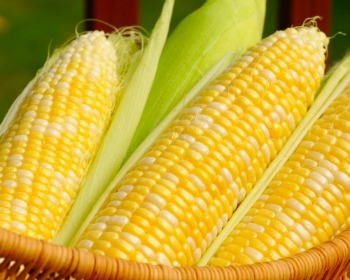
How To Boil Corn On The Cob
Boiling is the quickest, easiest, and tastiest way to prepare fresh corn. Too many people do not know how to correctly boil fresh corn on the cob. It is a very easy technique and produces the most delicious corn on the cob. Corn should be cooked quickly and not left to sit in the boiling water very long. Fresh corn is at its best when it is very milky inside. If overcooked, it will dry out quickly. Please, never over cook your corn!
How To Grill Corn On The Cob
Grilled Corn on the Cob is a popular menu item for barbecues and clambakes, and it is easy to do. Grilled corn on the cob is not only tasty, but grilling your corn never fails to impress your guests. Grilled Corn is especially delicious when you add herbs and spices to the ear of corn before grilling it. The herbs and spices liven up the flavors and add an interesting spin on basic roasted corn. Plus it’s easy to do!
Check out Linda’s favorite Corn Recipes.
History of Corn in America
In American regional cooking, corn is important in many recipes, such as corn chowder, creamed corn, succotash, and cornbread. But no preparation can come close to the timeless appeal of simple buttered corn on the cob. All over the Midwest and Great Plains, small towns celebrate the harvest with sweet corn festivals. Settlers adapted the Indian style of roasting corn with the husks removed, and to this day, street vendors around the world sell husked corn.
In Iowa, the heart of the Corn Belt, almost half of all cultivated land is devoted to corn, making it first in the nation for corn production. Corn is the largest crop in the United States, in terms of acres planted and the value of the crop produced. It is also the most widely distributed crop in the world.
In Native American usage, the word for corn means “our life,” or “our mother,” or “she who sustains us.” It was the cultivation of corn that turned Native American tribes from nomadic to agrarian communities.
It was from the Native Americans that the first European settlers learned about corn. Native Americans had spent hundreds of years developing what we now know as corn from seed-bearing grass. Long before Christopher Columbus sailed from Spain in 1492, Native Americans were cultivating this grass in North, Central, and South America. Native American farmers in the Ohio River Valley had been growing corn for more than 1,700 years before the first white men crossed the Appalachian Mountains, and there is evidence that they used corn to brew beer before Europeans arrived in the Americas.
The Pawtuxet Indian tribe in Massachusetts was cultivating corn when the first settler arrived, and corn was on the first Thanksgiving table in 1621. If it had not been for corn, the Pilgrims of Plymouth Colony might have starved to death during their first year in America. The Indians taught settlers how to grown corn, pound corn into meal, and how to cook with it. The words of Governor William Bradford, first governor of the Plymouth Colony, now inscribed on a brass plaque at Truto (Corn Hill) on Cape Cod, Massachusetts, reflect the settler’s gratitude:
“And sure it was God’s good providence that we found this corne for we know not how else we should have done.”
How To Choose Corn – How To Choose Corn On the Cob:
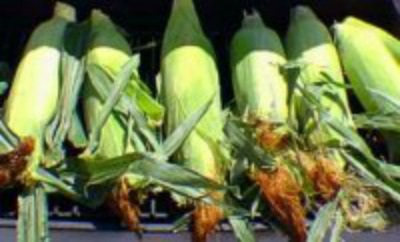
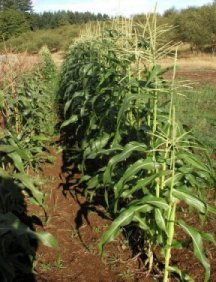 Fully ripe sweet corn has bright green, moist husks. The silk should be stiff, dark and moist. You should be able to feel individual kernels by pressing gently against the husk.
As soon as corn is picked, its sugar begins is gradual conversion to starch, which reduces the corn’s natural sweetness. Corn will lose 25% or more of its sugar within 25 hours after harvesting it. Fresh corn, if possible, should be cooked and served the day it is picked or purchased.
Between purchasing and cooking, keep the corn moist and cool. Pack in a cooler for the trip home from farm or market and refrigerate corn immediately after taking it home. By refrigerating the corn it helps the corn stay sweet by not letting the sugars turn to starch.
If for some reason corn is not being used immediately or has been purchased from the supermarket, add sugar to replace that which has been lost. Add one teaspoon sugar for each quart of water.
Use within 2 or 3 days.
How To Cook Perfect Corn – The Right Way!
Check out Linda’s favorite Corn Recipes.
Corn Equivalents:
One medium ear of corn = about 3/4 cup of corn kernels
Two medium ears of corn = 1 cup corn kernels
One (10-ounce) package frozen corn kernels = 1 3/4 cups corn kernels
 IN BOILING WATER:
Choose a pot large enough to hold the amount of corn you want to cook, with room for water to cover the corn. Cover pot and bring water to a boil on high heat. Add husked corn ears and continue to cook on high heat (covered or not) three to four minutes or until kernels are very hot.
Grandma Myers’ Corn Tip – Put a pot of water on the stove, and while it comes to a boil, pick your corn and husk it. Drop the corn into the boiling water, when the water starts to boil again, remove the corn. IT’S DONE!
Jeffrey Coles’ Corn Tip – I learned this from an Indian man in Copper Canyon, Mexico. Leave the husk on when you boil corn on the cob. As soon as the water boils, turn the heat off. The husk holds the flavor (vitamins and minerals) in. Not overcooking helps, too. Serve ASAP, but you can keep the corn in warm water for a while. Remove the husk only when serving.
IN THE HUSK – GRILLED OR BAKED:
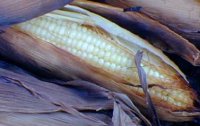 Corn cooked this way is steamed and does not taste very different from boiled corn. It is handy to serve in the husk because you can season or butter the corn before it is cooked. To prepare, pull husk back from each ear of corn, but leave attached at base of cob. Pull off and discard silk; trim off any insect damage, and rinse ears. If you want to butter them pat ears dry and rub with soft butter. Pull husks back up around corn.
If you want the husk to stay snugly against the ear, pull off one or two of the outer husk layers, tear length wide into thin strips, and tie them around ear in several places. Just before cooking, immerse the ears in cool water (this keeps husks from burning). Just as soon as the husk picks up the dark silhouette of the corn kernels underneath and begins to pull away from the tip of the ear, the corn is ready to remove from the grill.
TO GRILL: Check out How To Grill Corn On The Cob:
TO BAKE: Preheat oven to 375 degrees F. Prepare corn as directed for grilling, but put ears in a single layer, separating them slightly, directly onto the oven rack or onto a baking pan. Bake 20 to 25 minutes or until corn is tender when pierced and very hot.
MICROWAVING: Perfect for cooking just one ear of corn. Husk corn and discard silk. Rinse and wrap each ear loosely in a paper towel. Cook on full power one to two minutes or until ears are very hot to touch.