
Purchasing and Storing Potatoes
Purchasing Potatoes:
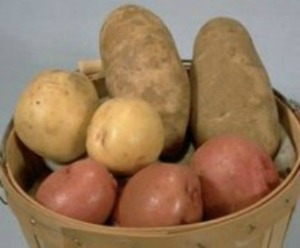 When shopping for potatoes, look for potatoes that are firm and smooth. Avoid potatoes with wrinkled or wilted skins, soft dark areas, cut surfaces, and those that are green in appearance.
If you need several potatoes for your recipe that you are making, choose ones that are similar in size for even cooking.
When selecting potatoes, choose new potatoes for boiling and salads. They have thinner skins and are firmer.
Storing Potatoes:
Potatoes should be kept in a cool, dark place with good ventilation. The ideal storage temperature is 45 to 50 degrees F. At these temperature, the potatoes will keep for several weeks. Do not store potatoes in the refrigerator, as a temperature below 40 degrees F. will cause the potatoes to develop a sweet taste. This is due to the conversion of starch to sugar, which causes potatoes to darken when cooked.
If you store potatoes at room temperature, use them within a week or so.
It is not recommended that you freeze cooked potato dishes, as they tend to become watery after reheating. As the potato is 80% water, this water separates from the starch causing the reheated potato dish to be watery.
Potato Sprouts are toxic (poisonous):
A sprout of any size can be toxic, but you would have to eat many sprouts to get sick. Do not buy if they have sprouted or have a green tint to the skin. There is no problem with the potato; just cut off the sprouts, and it is fine for eating.
The same is true for potatoes that turn a greenish hue. A potato in this condition is “light-struck” which causes a build-up of a chemical called Solanine. This is a natural reaction to the potato being exposed to too much light. The green part, if eaten in large quantity, can cause illness. If there is slight greening, cut away the green portions of the potato skin before cooking and eating.
Preparing Potatoes
1 1/4 pounds (3 medium potatoes) = 3 cups chopped or sliced raw potatoes = 2 to 3 cups cooked mashed potatoes
Potatoes are easier to prepare and healthier for you when cooked with their skins on. Always rinse and scrub the potatoes thoroughly before using.
When you are using cut up potatoes in your cooking, preserve the color by place them in cold water. Limit the water soaking time to two (2) hours to retain the water-soluble vitamins.
Color discoloration (pinkish or brownish) happens from the carbohydrates in the potato reacting with oxygen in the air. Potatoes that do become discolored in this way are safe to eat and do not need to be thrown. Usually the color discoloration will disappear with cooking.
Cooking Potatoes
Boiled Potatoes:
Boiled potatoes should be started in cold water rather than in hot water. This allows for a more even cooking and heat penetration from outside to inside during the relatively long cooking time required. Potatoes are never COOLED in cold water, unlike most vegetables. This would make them soggy.
Tip: For fluffier boil potatoes, simply pour off all the water after they are boiled and cover the pot with a double thickness of paper towels, then cover with the saucepan lid. In ten minutes, steam will be absorbed by the towels and your potatoes will be dry and fluffy.
Baked Potatoes:
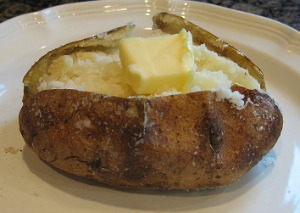
Check out my web page on baking the Perfect Baked Potato.
Scrub well and pierce the ends with a fork or skewer so steam can escape. Never attempt to bake a mature potato without puncturing the skin – it might explode.
For crisp skins, rub lightly with oil or butter (to prevent skin from cracking and to improve the taste). For more tender skins, leave dry.
Place onto an oven rack in a preheated 400 degree F. oven and bake until done, approximately one hour. To test doneness, squeeze gently. Done potatoes will yield to gentle pressure.
Aluminum-foil wrapped potatoes are not baked but steamed in their own moisture. The texture of a steamed potato is entirely different from that of a baked potato. Save yourself the trouble and expense of wrapping in aluminum foil and serve a better product.
Mashed Potatoes:
Check out my web page on Making Perfect Mashed Potatoes.
Russet potatoes make the best mashed potatoes.
Peel them and cut into equal-sized pieces. Boil and cook the potatoes until they are just tender. Remove from heat and drain. Overcooking can cause the potatoes to become gummy.
Dry over low heat for a few minutes. Mash with a old-fashion potato masher or potato ricer (you can use electric mixer, but it is easy to over mix and get a gluey potato). Mash very quickly so the potatoes will remain hot.
Add one tablespoon butter (more or less if you like) for each two potatoes, and salt to your taste. Beat until the butter is melted. Then add milk or light cream that has been heated but not brought to a boil (if you add cold liquid, the potatoes will be cold and gummy).
Beat the liquid into the potatoes to make a smooth, fluffy mixture. Add only enough liquid to make the mixture smooth, about one tablespoon for each potato. Do not over beat. they should be soft and moist, but firm enough to hold their shape.
All this should be done as quickly as possible so the potatoes never have a chance to get cold – that is the secret of delicious mashed potatoes!
Potatoes are healthy and potatoes are not fattening!
Following information is from the National Potato Council and the Washington State Potato Commission.
Fat free, cholesterol free and low in calories – A medium-sized potato has no fat, no cholesterol and contains only 110 calories!
Sodium Free – Low sodium diets help to reduce the risk of high blood pressure and stroke.
Vitamin C – Do not just think of oranges anymore. By eating one medium sized potato, you will receive 45% of the recommended daily value of Vitamin C — a great antioxidant.
More potassium than bananas! – Potatoes contain 21% of the recommended daily value of potassium — a great way to build stronger bones.
Good Source of Fiber – The 3g of fiber in one medium-sized potato is 12% of the recommended daily value. Diets high in fiber are beneficial for a healthy digestive system and may reduce the risk of cancer and heart disease. Consuming adequate fiber also makes you feel fuller, helping to reduce snacking between meals.
Less than 10% of the daily value of carbohydrates – Potatoes contain 26g of carbohydrates, only 9% of the recommended daily value. Complex carbohydrates are a great source of energy for the body.
A Great Antioxidant – Potatoes have one of the highest overall antioxidant activity among vegetables. Antioxidants protect key cell components by neutralizing the damaging effects of “free radicals.” Potatoes also contain glutathione, an antioxidant that may help protect against some cancers.
Sources:
National Potato Council, http://www.nationalpotatocouncil.org/
United States Potato Board, http://www.uspotatoes.com/
Washington State Potato Commission, http://www.potatoes.com/Nutrition.cfm
2 Responses to “Potato Hints and Tips”
Caroline
Help. Bought potatoes at the store and store them as they should be but now have seen something is eating holes in them. What is it and what can we do? Thank you for a quick response. Note, did not ever have this problem before until just last 2 months.
Wendy Dodds
I cooked potatoes from 2 different bags one turned grey when cooked the other stayed white
What can I do to stop from turning grey.
Would red potatoes do the same?