
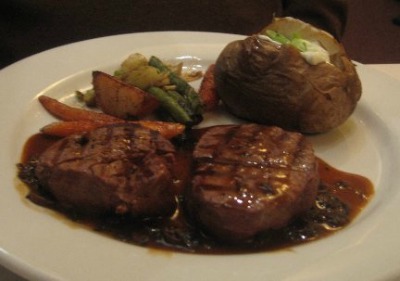
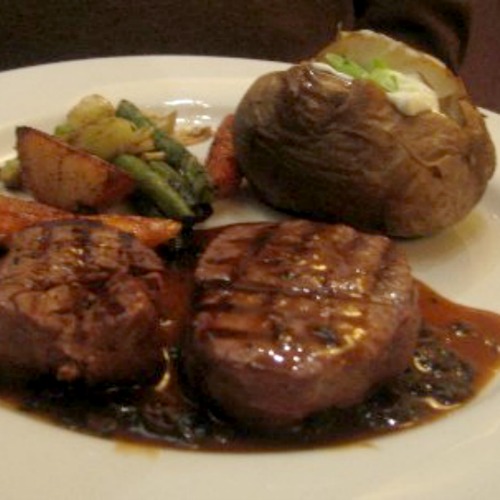
Cooking the Perfect Steak – Learn how to cook the perfect steak. Check out all of Linda’s Beef Recipes using various cuts of beef.
- 6 (7-ounce) Beef Filet Mignon (beef tenderloin) or T-bone steaks, trimmed*
- 2 tablespoons balsamic vinegar
- 2 cloves garlic, crushed
- 4 sprigs rosemary, bruised
- 1/4 cup olive oil
- 1 teaspoon black peppercorns, coarsely cracked
- 2 tablespoons chive batons, cut 1-inch in length (for garnish)
- 1 cup onion, chopped into 1-inch pieces
- 1/2 cup carrot, chopped into 1-inch pieces
- 1/2 cup celery, chopped into 1-inch pieces
- 1/4 cup olive oil
- 6 cloves garlic, crushed
- 2 bay leaves
- 2 tablespoons tomato paste
- 1/4 cup Balsamic Vinegar
- 1/4 cup red wine vinegar
- 2 cups red wine (preferably Cabernet wine)
- 1 1/2 quarts chicken stock or veal stock
- Salt and black pepper to taste
-
In a bowl or large resealable plastic bag, combine balsamic vinegar, garlic, rosemary, olive oil, and peppercorns; place steaks in the plastic bag or covered dish. Refrigerate 3 to 4 hours or overnight.
-
Prepare Cabernet Sauce; set aside.
-
Remove steaks from refrigeration 1 hour before cooking and wipe excess marinade off the steaks. When you are ready to grill, preheat barbecue grill. Place steaks onto hot grill and grill to the desired degree of doneness, about 3 to 4 minutes on each side for medium rare. Your steak is done when the internal temperature registers 120 to 130 degrees F. on your instant-read meat thermometer:
-
Rare - 120 degrees F
-
Medium Rare - 125 degrees F
-
Medium - 130 degrees F
-
What constitutes rare and medium-rare cooked meat? To satisfy government home economists, the Beef Council says rare beef means an internal temperature of 140 degrees F. Well, that is ok if you like well-done and dry meat. If you like moist, rosy meat (like I do), rare begins when the internal temperature registers 120 degrees F. and starts to become medium rare at 125 or 130 degrees F. To cook your meat properly, you must purchase and use a good instant-read digital meat thermometer.
-
When the steaks are crusty-charred and done to your liking, remove from the grill and let sit 15 minutes before serving (meat temperature will rise 5 to 10 degrees after it is removed from the oven).
-
Pour any juices from the steaks into the prepared Cabernet Sauce; spoon the sauce over and around the steaks on individual serving plates. Sprinkle with chive batons and serve immediately.
-
Makes 6 servings.
-
In a heavy-bottomed pot, cook the onions, carrots, and celery in olive oil over medium heat until well browned. Add the garlic, bay leaves, and tomato paste; cook 1 minute, stirring. Add the vinegars and wine, bring to a boil, and simmer until reduced by two-thirds. Add the veal or chicken stock, bring to a boil, and simmer, skimming occasionally, until reduced by two-thirds. Strain through a fine-mesh strainer. Cool and refrigerate if not using immediately.
-
Return the sauce to the heat and simmer until it lightly coats the back of a spoon. Season with salt and pepper and keep warm.
* Check out Types of Steaks and Cooking Techniques for the Perfect Steak.
Source: Grilled Beef Tenderloin Steak Recipe from Not Afraid of Flavor, Recipes From Magnolia Grill, by Ben and Karen Barker (University of North Carolina Press).
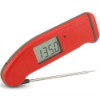 I get many readers asking what cooking/meat thermometer that I prefer and use in my cooking and baking. I, personally, use the Thermapen Thermometer. Originally designed for professional use, the Super-Fast Thermapen Thermometer is used by chefs all over the world. I only endorse a few products, on my web site, that I like and use regularly.
You can learn more or buy yours at: Super-Fast Thermapen Thermometer.
Sponsored Content
Additional Outstanding Steak Recipes:
Beef Tenderloin Steaks Stuffed with Morels
Cabernet-Cherry Filet Mignon
Cabernet Filet Mignon
Chipotle Grilled Filets
Grilled Filet Mignon or T-Bone Steaks
Peppered Top Sirloin Steak
Steak Diane
Individual Beef Wellingtons witn Peppercorn Sauce
Categories:
Balsamic Vinegar Dinner Father's Day Filet Mignon/Beef Tenderloin Steak Grilled Steak Summer
One Response to “Grilled Beef Tenderloin Steaks in Cabernet Sauce Recipe”
Angela Francis
The steak marinade is fantastic. I loved the flavor of the meat. The sauce… Oh, this sauce! I want to put it on everything I eat. After the first bite of steak we tasted, my husband and I reached for the bowl and spooned more of it on our potatoes and veggies. I will never try another recipe again because this one is absolute perfection.
Tip: use good Cabernet. It doesn’t have to be fancy, but definitely upgrade from the $5 bottom shelf. The flavor of the wine really comes through.
Question: Can this be frozen for later use?