
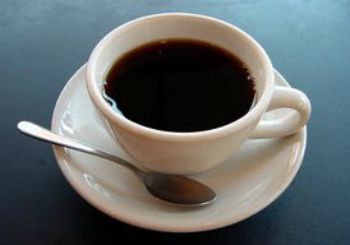
 The Pacific Northwest is noted for its great coffee. In fact, Oregonians love and crave their coffee. An entire coffee culture has sprung up to answer this craving. Espresso stands and carts have sprung up in every major northwest city. You can find espresso or coffee places on street corners, in grocery stores, gas stations, hardware stores, department stores, stadiums, and even in the fast food outlets. There are even drive-through espresso stands for coffee drinkers who don’t have time to get out of their cars. It is more than just a trend; it is a new institution of the busy lifestyle.
As to why coffee is so popular in the Northwest, some people laughingly argue it is because people can not function in the cold, gray, and drizzly climate without it. Whatever the reason, this craving has spread through out the United States and the world. Coffee is the second largest commodity in the world.
Coffee House History: The boom of coffee houses is not new, as the roots of coffee houses go back to the 15th century Arabia, 16th century Europe, and 17th century North America. Coffee drinking began in the American colonies as early as 1689 in Boston, New York, and Philadelphia. In fact, the Green Dragon Coffee House of Boston was where the idea for the famous Boston Tea Party was conceived in 1773. Americans revolted against England’s tea tax, and the Continental Congress declared coffee the “Official National Beverage.” What better way to protest the unfair tea taxes imposed than to enjoy an alternate coffee beverage?
Facts and Trivia about Coffee: The coffee bean is a fruit. It is actually the seeds of a cherry-like fruit. Coffee trees produce berries, called coffee cherries. These fruits are first green before turning red, and each fruit usually contains two beans. The coffee cherries turn bright red when they are ripe and ready to pick.
These seeds or beans of the fruit are then fermented, much as grapes are fermented when making wine, but the end result is different. After the coffee bean has been separated from the fruit, it remains covered in a mucilaginous layer. Fermentation breaks down the mucilage that surrounds the coffee bean. This mucilage, if not removed, will retard the taste of your coffee and create an undesirable taste.
Like the grapes of fine wines, coffee acquires unique taste characteristics from its local geography and climate. This depends on such factors as altitude, rainfall, type of soil, and how it is processed.
How to Make the Perfect Cup of Coffee
A great dining experience deserves great coffee – A few simple rules to follow for that perfect cup of coffee
Clean Coffee Pot – A clean coffee pot is essential and can make a substantial difference in the taste of your coffee. The type of coffee pot that you use is also very important (buy the best one that you can afford).
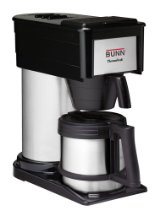 My Favorite Coffee Maker – I am always being asked what type of drip coffee pot is the best to use to make perfect coffee. After many years of purchasing and trying different pots myself, I complained to my favorite local coffee roaster that my coffee was never as good as theirs. They told me to purchase and use the Bunn ThermoFresh 10-Cup Thermal-Carafe Home Coffee Brewer. I now use this coffee maker and my husband and I are now in “coffee heaven.”
Coffee Beans – Purchase coffee beans as soon after they have been roasted as possible. Fresh roasted coffee beans are essential to a superb cup of coffee. Also purchase your coffee beans in small amounts, only as much as you can use in a given period of time. Remember that coffee is a perishable produce that is less than spectacular when it has staled.
Ideally you should purchase your coffee fresh every 1 to 2 weeks. I suggest you contact your local coffee roaster and select from their fresh-roasted coffee beans. It does not cost more money to purchase good coffee beans. Your local specialty coffee roasters are solely in the business to sell coffee beans. You can be confident that their beans are fresher, and thus the coffee that you serve in your restaurant will taste better.
Water – The quality of your coffee is heavily dependent upon the quality of the water that you use. Use only fresh cold filtered water. If you are using tap water let it run a few seconds before filling your coffee pot. Depending on your tap water, your coffee can turn out tasting sulfurous, metallic, tinny, flat, or worse. An alternative is to buy Artesian water (do not use distilled water). For optimal extraction, maintain a water temperature between 195 degrees F. and 205 degrees F
French Press – Use very hot water, but not boiling, in your French Press Coffee Maker. Learn How To Use a French Press.
Moka Pots – Use very hot water, but not boiling, in your Moka Pot Coffee Maker. Learn How To Use A Moka Pot.
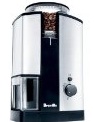
Coffee Grinders – There are basically two different kinds of grinders: Blade Coffee Grinders or Burr Coffee Grinders (preferred):
Burr Coffee Grinders: The best coffee grinders are the Burr Coffee Grinders. The Burr grinders crush the beans between a moving grinding wheel and a non-moving surface. The positioning on the burr is what regulates the ground size, which allows for a more consistent grind. This style of grinder provides a much more consistent particle size than the blade grinders that most people are familiar with. Consistent grounds yield a sweeter, more enjoyable cup of coffee. I, personally, use the Burr Coffee Grinder shown in the upper left photo.
Blade Coffee Grinders: Very inexpensive coffee grinders that uses a metal blade to chop up the beans. The blade cuts up the beans, and you control the fineness by how long you let the grinder run. Unfortunately, the resulting coffee grounds can be uneven in size, leading to inconsistent brew quality.
Grinding Coffee Beans – Always grind your beans as close to the brew time as possible. Coffee deteriorates quickly after grinding and you should grind only the amount you are going to use at one time. If your coffee is too strong, try adjusting the grind of the coffee coarser rather than using less coffee.
Coarse Grind: 5 to 10 seconds – used for percolators and the cold water brewing method. This is the least popular grind used today.
Medium Grind: 10 seconds – used for electric drip/manual drip and French press methods. Should be about the size of medium coarse sea salt. The drip method is the most popular in the United States.
Fine Grind: 15 seconds – used for vacuum and Neapolitan flip methods. Vacuum method equipment is not easy to locate in the United States.
Extra Fine Grind: 25 to 30 seconds – used for espresso machines.
Coffee Filters – Always use a coffee filter if your coffee pot requires one to keep the grounds from blocking the drip and making the coffee overflow the basket. Use an unbleached (brown) paper filter or a gold filter. The bleached (white) ones affect the flavor of the coffee, so avoid them.
Amount of Coffee – Using the right ratio of ground coffee to water is one of the most important things you can do to ensure a good cup of coffee. Use enough coffee, and don’t use too much or too little! If the below measurements sound like a lot, then you have probably been making less than full strength coffee. Make sure to spread the grounds evenly in the coffee filter so full brewing is achieved.
Professional coffee tasters use: exactly two (2) tablespoons (7 to 9 grams or 2 scoop of a standard coffee measure) of ground coffee beans for each six (6) ounces of water
How To Store Coffee Beans – Coffee bean’s two greatest enemies are air and moisture. Ideally, coffee should be ground, brewed, and consumed quickly to obtain the best flavor.
Drinking Coffee – Brewed coffee should be enjoyed immediately! Pour the fresh-brewed coffee into a warmed mug or coffee cup so that it will maintain its temperature as long as possible. It begins to lose its optimal taste moments after brewing, so only brew as much coffee as will be consumed immediately. If the coffee is not to be served immediately after brewing (and your coffee pot doesn’t have an insulated coffee carafe), it should be poured into a warmed, insulated coffee carafe thermos and used within the next 45 minutes.
If you are displeased with the taste of your coffee, there are a number of things you can do like change the water to coffee ratio and/or use different coffee beans. It ends up being a matter of your own personal taste!
Favorite recipes using coffee as an ingredient:
Coffee and Armagnac Parfait – Parfait au Cafet L’Armagnac
Coffee and Spice-Rubbed Lamb with Coffee-Vanilla Sauce
Coffee Baked Alaska with Mocha Sauce
Coffee Panna Cotta with Chocolate Cream
Coffee Spiced Lamb with Minted Coffee Sauce
Italian Affogato – Affogato al Cafe
Additional Coffee Articles:
Coffee Drink Calories – How much damage can your favorite coffee drink do in additional calories added to your diet? The fancier the drink, the fancier the calories – especially when you opt for the whipped topping. An extra 200 calories a day can add up to 21 extra pounds added to your body per year!
Espresso Machines – Learn about the different Styles for Different Homes.
How to Make the Perfect Cup of Coffee – A great dining experience deserves great coffee!
How To Use a French Press – The most popular coffee maker in Europe and Australia is the classy French Press. Also known as the plunger pot, coffee press, or press-pot. This stylish coffee maker is making in-roads in America, and coffee addicts swear by it.
How To Use A Moka Pot – A Moka Pot is an Italian steam-based stove top espresso maker that produces a dark coffee almost as strong as that from a conventional espresso maker. Sometimes called the poor man’s espresso and also known as stove-top espresso.
Irish Coffee – It might sound like an ancient recipe, but Irish coffee was a 20th Century invention. Learn the history of this spirited coffee and how it’s made. Also check out the easy-to-make authentic recipe.
Italian Coffee – Can’t I Just Find a Cup of Joe? – My daughter, when visiting Italy, wrote this interesting story on Italian coffee.
Organic Coffee – Organic Coffee for Your Health and the Environment. To gain a better understanding of what the term “Organic Coffee” really means, we have put together this guide to how it relates to your health, and that of our planet!
Below is a list of the most popular coffee beverages:
caffe (espresso) – a small cup of very strong coffee, i.e., espresso
caffe Americano – American-style coffee, but stronger; weaker than espresso and served in a large cup
caffe doppio – double espresso
caffe freddo – iced coffee
caffe Hag – decaffeinated coffee
caffe latte – hot milk mixed with coffee and served in a glass for breakfast
caffe macchiato – espresso “stained” with a drop of steamed milk: small version of a cappuccino
caffe marocchino – espresso with a dash of hot milk and cacao powder
cappuccino – espresso infused with steamed milk and drunk in the morning, but never after lunch or dinner
granita di caffe con panna – frozen, iced beverage (similar to a slush, but ice shavings make it authentic) and topped with whipped cream.