Tea Travels!™…Tea and Health – Exploring Herbal Teas and Infusions
Article and Photos by Ellen Easton ©2020 – All Rights Reserved
Check out more of Ellen Easton’s Tea Travels™ articles and recipes.
Learn about the History of English High Tea and more delicious Afternoon Tea Recipes.
Have fun exploring the many wonderful benefits that herbs and teas have to offer; use them for brewing, baking or seasoning your savories and sweets.
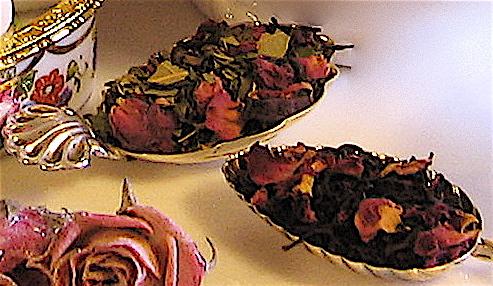 For thousands of years, much has been written and said about the health benefits of tea. The historic benefits of herbal remedies goes as far back as 6,000 years ago in Mesopotamia where archeologists believe people utilized herbs for healing. The Chinese perfected the medicinal uses as early as 2737 BC. Dioscorides, the Greek physician, wrote De Materia Medica in the first century AD, documenting the use of herbs and spices.
The dictionary describes herbs as any plant with a succulent stem which dies to the root every year. A decoction is any root, seed, bark, or course leaf that is prepared by boiling water to release the flavors of consumption. While an infusion or tisane includes leaves, flowers, fruits, berries, and spices that are not boiled, as the essential oils would be destroyed by evaporation. Infusions are prepared with just boiled water poured over the herbs in a teapot that has been warmed. One steeps the infusion until the desired taste is reached.
Caution Note:
Herbs and spices are not regulated by the FDA, nor are they approved by the medical authorities. Only lab controlled studies, built on scientific evidence, can determine the measured outcome of a substance. Herbal medical uses have always been experimental and thus not regulated.
In our modern times as the current baby boomers are coming of age, combined with our awareness of good health in our society, herbs and teas are in the forefront of the news. It is important, not only to understand the basic principles and components of teas and herbs, but to respect the power they contain, both good and bad.
It is important to consider the source of information before embracing it. It is equally important never to begin any new dietary or supplementary regime without consulting with your personal physician.
It is, therefore, wise to proceed with awareness and caution before using any herbal infusions. Do not rely on the knowledge or perhaps lack of knowledge of a salesperson. Educate yourself before you make any purchases. Know about the hazards, allergic reactions, and possible drug and other food interactions involved with your choices. As an example, ginkgo biloba or ginseng, in and alone, are not necessarily harmful; however, if one is taking aspirin or other medications, fatal bleeding or stroke can occur.
Just because a product is labeled natural or organic does not necessarily mean it is safe. Know your sources from whom you are buying, especially if you are using the internet. Do not hesitate to call a licensed professional for advise.
Herbal teas may or may not be an oxymoron, depending on what has been prepared. A true herbal tea would have to include a blend of either red, black, green, oolong, yellow, or white tea in conjunction with one or more herbs, spices, or tisanes. An herbal infusion would, in fact, contain no tea at all.
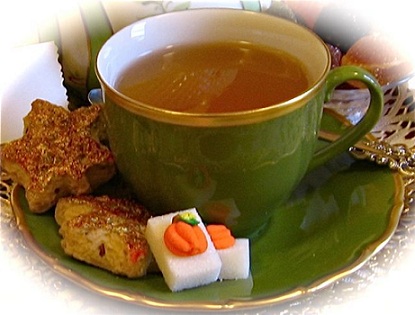 There are thousands of varieties of teas and herbs from which to choose:
Each tea blend will require different brewing instructions. Follow the methods best described for each. Check out How To Brew Perfect Tea and also A Tea Tasting to better understand about different tea blends.
For brewing, I prefer a glass, ceramic, or porcelain teapot. To avoid a metallic taste, do not brew herbals in an aluminum, metal, or silver teapot. A silver teapot is best used for hot water, not brewing.
The good benefits of herbal teas have been widely publicized. When the minerals magnesium and potassium, vitamins B complexes and C, chemicals and enzymes, polyphenols, flavonoids, amino acids, and catechins that are contained in tea are released upon brewing, it is said they reduce the risk of some cancers, heart and gum disease, protect against viruses, bacteria, hardening of the arteries and blood clots, improve circulation, fight infection and migraine headaches, strengthen bone density, may help to promote weight loss, and deflect the carcinogens in grilled or fried foods.
The Harvard Medical School states that due to the anti oxidants in tea preventing and repairing the free radicals attacking ones cells, if one drinks only a cup of tea per day, they reduce their rate of a heart attack by forty-four per cent.
The bad effects are not as well known. No herbs, spices, or medications should be given to children, especially under the age of six, without the consent of a doctor. Honey should never be given to a child under the age of six without the written consent of a doctor as well.
Teas can produce negative side effects. Too much tea or the consumption of very strong tea blends can induce symptoms of insomnia, irritable stomach membranes, gall bladder attacks, cause kidney stones, constipation, and yellowed-stained teeth.
Herbs to Avoid:
The following herbs should be avoided entirely. They are dangerous and some have been banned. Read all labels carefully for hidden ingredients in products. If you do not understand or know of an ingredient – ASK!
Chaparral – Used to prevent cancer, but the FDA says to avoid, as it causes liver damage.
Coltsfoot – Used for respiratory infections-it has been linked to cancerous tumors, liver damage and is banned in Canada.
Ephedra (also known as MA HUANG) – Used as an energy booster and diet aid. FDA attributes it to over 165 deaths thus far and counting. It causes liver damage, heart palpations.elevated blood pressure and stroke. Ephedra is banned in New York and Florida.
Lobelia – Used as an expectorant. Causes severe nausea and vomiting. Depresses breathing and causes rapid heart rate-leading to coma and death.
Pennyroyal – Used for coughs and menstrual problems. Can cause miscarriage and is highly toxic. NO ONE should ever use the oil.
Sassafras – Used in root beer and cooking. The FDA has banned it as a food additive in 1970. It causes liver damage and cancer.
Senna – Used as a laxative. It strips the body of vital electrolytes, which leads to heart problems.
Yohimbe Bark – Bark of a tree-Used to enhance male sexual performance and for fatigue. The FDA says it raises blood pressure and can cause seizures. Deaths have occurred.
Popular herbs such as St. Generate (hypericum perfoatum), Ginseng (panax schinseng), Ginkgo (ginkgo biloba), Echinacea (encinacea angustifolia), and Valerian (valerianacease) should all be used with great caution.
When used with aspirin or grape fruit juice, violent reactions can occur. Some cause excessive bleeding, while others cause blood clotting. If you plan on having any medical procedures or operations, be certain to let your doctor know what herbs you have been taking and for how long. It could be a matter of life or death.
The Don’t of Tea Drinking:
Children under the age of two should never drink tea, as they are too young. The body will not to absorb the iron and anemia can occur.
Tea contains oscillate acid which may interfere with the absorption of calcium.
Do not drink tea one hour before or one after you take medications to avoid interference and absorption issues.
Tea is acidic. Those with ulcers should avoid drinking tea.
People with intestinal or stomach ailments should not drink tea on an empty stomach.
Tea is a diuretic. People with kidney problems should seek their doctor’s permission before drinking. Too much tea can cause dehydration.
Diabetics, and older or sick people should not drink tea before bedtime.
If you have high blood pressure, again, check with your doctor before you become a tea drinker, due to the increase in heart rate, kidney pressure and medication interactions.
Have fun exploring the many wonderful benefits that herbs and teas have to offer; use them for brewing, baking or seasoning your savories and sweets.
TEA TRAVELS™ – Wishing You Happy TEA TRAVELS!™ Tea is the luxury everyone can afford!™ and Good $ense for $uccess are the trademarked property of Ellen Easton/ RED WAGON PRESS
Ellen Easton, author of Afternoon Tea~Tips, Terms and Traditions (RED WAGON PRESS), a lifestyle and etiquette industry leader, keynote speaker and product spokesperson, is a hospitality, design, and retail consultant whose clients have included The Waldorf=Astoria, Plaza Hotels, and Bergdorf Goodman. Easton’s family traces their tea roots to the early 1800s, when ancestors first introduced tea plants from India and China to the Colony of Ceylon, thus building one of the largest and best cultivated tea estates on the island.
Purchase Ellen Easton’s Tea Books:
Each 5 x 7 book is $20 postpaid Continental USA only. Wholesale and fundraising accounts welcome. Include name, address, zip code, and phone number for shipping. All Sales Final. Check or MO order payable to: RED WAGON PRESS, 45 East 89th Street, STE. 20A, New York, NY 10128-1256. All inquires to teatravels@aol.com
AFTERNOON TEA…TIPS, TERMS and TRADITIONS
72 pages of how to’s, 27 photos, history, etiquette and FAQ about afternoon tea, serving styles and more.
TEA TRAVELS™ – FOR THE HOLIDAYS
64 pages, 21 color photos. A complete holiday menu includes 25 easy to prepare recipes; theme teas, decorating & gift ideas; invitation template and secret sources.
Categories:
Coffee & Tea Information Diet & Nutrition Articles Ellen Easton's Tea Travels™ Articles Herbs, Spices and Seasoning Hints & Tips
One Response to “Tea and Health – Exploring Herbal Teas and Infusions”
Kimberly Greenlee
What book or what do I need to get to tell me what Herbs and Spices i can Safely mix together AND take with my Medications?
This Article saved my life.
I have been mixing up my own concoction and never knew the serious side affects of herbs with certain medications. Thank You!
I boil 4 gr.tea bags, 1tsp of turmeric, 1tsp, of THYME, 1 tsp. of ginger root TOGETHER And let it sit 5 minutes. I pour it in a cup, add Cinnamon, a few drops of lemon and half a tsp. of ACV. IS THIS GOOD OR BAD??? MIXING ALL OF THESE.HELP PLEASE