
What is a Recipe?
A recipe is a set of instruction used for preparing and producing a certain food, dish, or drink. The purpose of a recipe is to have a precise record of the ingredients used, the amounts needed, and the way they are combined.
(1) The Recipe Name tells you what you will be making. Sometimes the author will include personal information on the recipe.
(2) There are three components to a recipe. The first is the List of Ingredients, and the second is the Amount of the Ingredients.
(3) The third is the Preparation Instructions. A well-written recipe will list all ingredients in the order they will be added in the Preparation Instructions. Most well-written recipes will spell out pan size, cooking temperature, and how much of each ingredient to use. However, you will find some poorly written recipes that use abbreviations.
(4) Some recipe will include Variations for the recipe and also how to Store your prepared dish.
Check out a sample of a well-written recipe below:
(1) Recipe Name:
Lemon Curd
A British teatime favorite. This sweet, yet tart, velvety spread is heavenly on freshly baked scones, muffins, and tea breads. Another favorite is serving lemon curd on gingerbread or used as a filling for tarts and cakes. Lemon curd is so easy-to-make as all it contains is eggs, sugar, lemon juice, lemon zest, and butter.
(2) List of Ingredients and amount used:
3 to 4 tablespoons lemon zest (rind)*
1/2 cup fresh-squeezed lemon juice (4 to 6 lemons)**
1 1/2 cups granulated sugar
6 tablespoons salted butter, cut into pieces
3 eggs, lightly beaten
* Cold lemons are much easier to grate. Always grate your lemons first, and then juice them.
** Do not use the bottled lemon juice – only use fresh-squeezed lemon juice. Room temperature lemons produce more juice. When choosing lemons, look for ones that are firm, plump, and heavy for their size. Always use fresh lemons when making lemon curd.
(3) Preparation Instructions:
Remove the zest (rind) from the lemons using a zester or a peeler (be careful to avoid getting any of the white pith). Juice the lemons after removing the zest.
In a medium saucepan over medium-high heat, combine lemon zest, lemon juice, and sugar. Bring just to a boil; reduce heat to medium-low and simmer 5 minutes. Add butter and stir until it has melted. Remove from heat and cool to room temperature. NOTE: Use a heavy-based, non-reactive saucepan (stainless steel, anodized aluminum, and enamel all work well). Aluminum or unlined copper pans will react with the acid in the lemons, discoloring the curd and giving it a metallic flavor.
Beat eggs into cooled lemon mixture until well blended. Return to heat and cook over medium-low heat, stirring constantly, 10 to 15 minutes or until mixture thickens and coats spoon. NOTE: Do not let the lemon curd boil, as it can cause the mixture to curdle. Remove from heat. The lemon curd will continue to thicken as it cools.
(4) Variation and Storing the Dish:
Variation: For a Lime Curd, substitute lime zest and lime juice for the lemon zest and juice.
Storing Lemon Curd: Cover by laying a layer of plastic wrap directly on the surface of the curd (this prevents a skin from forming on the surface). Store in refrigerator for up to 4 weeks or store in the freezer for one year.
Read your recipe carefully before starting: Be sure you have all the ingredients called for and that you understand the recipe clearly. This is the reason most recipe fail. If the recipe says “room temperature,” there is usually a reason.
When preparing a recipe for the first time, it is recommended that you follow the recipe exactly so you have an initial template of how the writer intended it to look and taste. Then you can experiment from there.
Why a recipe does not work.
Yes, there are some recipes that do not work. This is usually because of a misprint, an editing error, and the recipe not being tested properly before printing. No matter how detailed the recipe is written, the recipe can not tell you everything you need to know. Some judgment of your part is actually needed on certain variables, such as:
Kitchens are not stocked with the same equipment. Pots and pans can vary according to the material used to make them. Check out Choosing Cookware and Baking Dish and Pan Sizes.
Ranges and oven have temperature differences.
Ingredients were not measured carefully. This is especially important when baking. Check out Cooking Equivalent Measurements and Basic Rules for Baking.
Cooking times that have been given in the recipe are meant to be used as a guideline only. If a cooking temperature is given as a means of determining doneness, this is usually accurate. Check out Internal Cooking Temperature Chart.
You substituted ingredients improperly. Replacing ingredients may result vastly different taste. Could taste better or worse. Check out Ingredient Substitution Chart. The cook probably substituted an ingredient because they either:
Do not have or could not find one of the ingredients.
Wish to alter a recipe to lower the fat or calories.
Don’t have a particular piece of equipment to cook the recipe as instructed. Some ingredients and cooking steps can be substituted or eliminated and some just cannot.
Ingredients Assumptions:
Unless otherwise noted in the recipe, assume that:
butter is unsalted
eggs are large (about 2 ounces each)
flour is unbleached all-purpose flour
sugar is white granulated
fresh herbs, greens, and lettuces are washed and dried
garlic, onions, and fresh ginger are peeled
What is Mise en Place?
Mise en Place (MEEZ-ahn-plahs) – French culinary term that means “everything in its place.” This culinary term refers to purchasing, preparing, and pre-measuring all the ingredients necessary for a dish before you start cooking.
Mise en place makes the actual process of cooking more efficient and helps prevent the cook from making mistakes or discovering missing ingredients at a crucial moment.
This simply means that before you can even start preparing the ingredients for cooking your recipe, you want to make sure you have all the ingredients and equipment needed (the gathering and preparation of all the tools and food you need to complete the task at hand). This means pulling out your pots and pans, and every single ingredient before you even think about turning the burners on.
This practice (Mise en Place) is especially beneficial when preparing a new recipe that you have not tried before and also when preparing more than one recipe.
When you are preparing foods that you’ve made before, you only have to prepare ingredients first that you know you won’t have time to ready while cooking.
Besides for making your life easier by having all your ingredients in one place, you can check that you have everything you need before you start cooking.
If you practice this easy technique and “put everything in place” before you get started cooking, your dishes will come out better, and you will actually enjoy the act of cooking more than ever.
Using this technique is probably the single biggest difference between gourmet chefs and regular, once-in-a-while cooks.
Advantages of using Mise en Place:
Less stress when preparing recipe.
Read the entire recipe in advance of needing to prepare it. Determine which ingredients and equipment you will need and have them nearby. Any missing ingredients that are not in your pantry can be purchased before it is too late for a quick trip to the store or your neighbor next door.
Once you have your ingredients together, prepare them so they are “cooking ready.” This can mean different things depending on what recipe your using.
Examples: Toasting nuts, clean and chop any fruits and vegetables, salads ready-to-dress, letting certain ingredients come to room temperature, premeasuring spices, preheating the oven or grill, desserts ready-to-serve.
Handing or preparing ingredients BEFORE cooking rather than in the midst of another preparation step when time delays may affect food quality.
Have everything measured and ready to be used in separate bowls or cups (or combined if the ingredients are being cooked at the same time).
Purchase a set of 4 or more small “mini” bowls. They come in different sizes and may hold from about 1 to 3 ounces. You can group ingredients or place them in the order used to assure all recipe steps are included.
If I am preparing a meal for a large gathering or a dinner party, I will prepared my ingredients sometimes a day in advance or even more (depending on the ingredient and the dish I will be making). I will always have the ingredients prepared and ready to use at the last minute before cooking. The various dishes are finally cooked, plated, and served. This way, I do not have to spend all my time in the kitchen, but can enjoy my guests.
This technique makes complicated recipes more fun to prepare when you’re no longer doing a juggling act, trying to complete several tasks simultaneously.
You will not overcook foods while trying to prepare the next ingredients for another dish.
Food Safety
Do not forget food safety as you cook:
Prepare your work space by starting with a clean kitchen. There is also time to clean the mixing area as you go along rather than face a counter full of mixing equipment when you’re done.
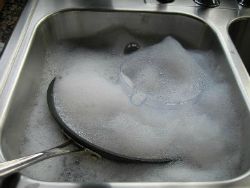
Fill your sink with hot soapy water to put your dirty dishes in as your cook. When preparing food, keep surfaces and utensils clean. Surfaces are not just counter-tops and cutting boards; do not forget to clean your utensils, too. Check out the Golden Rules of Food Safety.
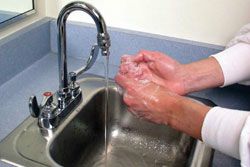
Wash you hands between each cooking task!
A simple trick that I use, is to fill my kitchen sink with hot, sudsy water. This serves two (2) purposes for me.
When preparing food, I can toss the dirty dishes into the hot water as I cook. This make for easier cleanup. As you cook, stick your hands in the water to clean.
Check out all of Linda’s Cooking Hints & Tips Resource Index to help you with your cooking and baking.
Categories:
Cooking Lessons - Cooking 101
4 Responses to “What is a Recipe – What is Mise en Place”
Jeffrey Herdle
Extremely helpful, common sense but so often overlooked.
Windy N
Very helpful, thanks
Stewart brashear
I’m 70 years old and been cooking since I was 10. Always did it this way but never realized it had a fancy name. I call it common sense
Stella Ellison
I’m actually 12 in a culinary class at Windy Hill Middle