
Questions and Answers – What is Pickling Salt
Question:
Many pickle recipes I have call for “coarse” salt. Is coarse salt and canning/pickling salt the same or can be interchangeable? I’m often confused about this. I always try to buy exactly what the recipe lists. I have a dill pickle recipe that requires canning/pickling salt. Then, I have a recipe for sweet pickles that requires “coarse” salt for soaking. Can I use canning/pickling salt for both recipes or different salts? So confused about these terms! Any help is certainly appreciated!
Answer:
pickling salt = canning salt = canning and pickling salt
Pickling salt is similar to table salt, but lacks the iodine and anti-caking additives that turn pickles dark and the pickling liquid cloudy. Pickles made with table salt would still be good to eat, but they wouldn’t look as appetizing.
Pickling salt is available in large bags or boxes in supermarkets, but it is hard to find in cities. In addition to pickling or canning with it, you can also use pickling salt just as you would ordinary table salt, though without the anti-caking agents it may get lumpy if exposed to moisture. To prevent lumps, put a few grains of rice in your salt shaker. To get rid of lumps, spread the salt on a cookie sheet and bake in an oven.
Don’t substitute reduced-sodium salt for pickling salt when making pickles.
Coarse kosher salt – Kosher salt is preferred over table salt for canning and pickling. Like pickling salt, kosher salt is free of iodine, which can react adversely with certain foods. Some brands of kosher salt contain yellow prussiate of soda, an anti-caking agent, but unlike the anti-caking additive in table salt, it does not cloud pickling liquids. The only drawback to using kosher salt for pickling or canning is that the grains are coarser and flakier, and can not be packed as tightly into a measuring cup as pickling salt. This raises the risk that the salt won’t be properly measured. To get around this problem, measure by weight instead of volume. Since it’s not as dense as pickling salt, you’ll need to use more, but how much more varies by brand:
1 cup + 2 tablespoons of Morton Kosher Salt = 1 cup Morton Canning & Pickling Salt. For other brands, it is best to measure by weight rather than volume.
Check out my article on the Different Types of Salt.
Check out these popular pickle recipes:
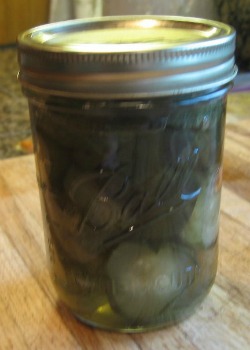 Craven County Sweet Pickles
This fantastic sweet pickle recipe was shared with me by my friend, Andra Cook of Raleigh, North Carolina. The Craven County Sweet Pickle recipes has become a very popular recipe with cooks coming to my web site. Since I get many questions on this recipe, Andra has graciously updated and added some comments on making these wonderful sweet pickles.
Grand Mammy’s Carolina Sharps
This recipe was shared with me by my friend, Andra Cook of Raleigh, North Carolina. The recipe also appears in our cookbook called What’s Cooking America which was co-authored by Andra.
Categories:
Herbs, Spices and Seasoning Hints & Tips