
As a member of the same family as many of our most popular herbs, it is not surprising that lavender is edible and that it’s use in food preparation is also returning. Flowers and leaves can be used fresh, and both buds and stems can be used dried. Culinary Lavender is a member of the mint family and is close to rosemary, sage, and thyme. It is best used with fennel, oregano, rosemary, thyme, sage, and savory.
English Lavender (l. angustifolia and munstead) has the sweetest fragrance of all the lavenders and is the one most commonly used in cooking. The uses of lavender are limited only by your imagination. Culinary Lavender has a sweet, floral flavor, with lemon and citrus notes. The potency of the lavender flowers increases with drying.
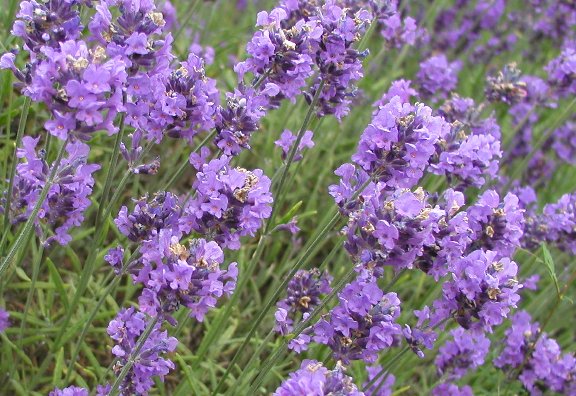
History of Lavender:
Lavender has been a favorite herb for centuries. The historic use and recognition of lavender is almost as old the history of man. As an herb, lavender has been in documented use for over 2,500 years.
In ancient times lavender was used for mummification and perfume by the Egyptian’s, Phoenicians, and peoples of Arabia. The Greeks and the Romans bathed in lavender scented water and it was from the Latin word “lavo” meaning “to wash” that the herb took it’s name. Perhaps first domesticated by the Arabians, lavender spread across Europe from Greece. Around 600 BC lavender may have come from the Greek Hyeres Islands into France and is now common in France, Spain, Italy and England.
The ‘English’ lavender varieties were not locally developed in England but rather introduced in the 1600s right around the time the first lavender plants were making their way to the Americas.
Queen Elizabeth I of England valued lavender as a conserve and a perfume. It has been said that she commanded that the royal table should never be without conserve of lavender and she issued orders to her gardeners that fresh lavender flowers should be available all year round! She also drank an abundance of Lavender tea to help ease her migraines and used it as a body perfume.
Queen Victoria of England is most notable for making Lavender popular across England and it could be found, in one form or another, in every one of her rooms, as she used it to wash floors and furniture, freshen the air, and had it strewn among the linens.
During the First World War, nurses bathed soldiers’ wounds with lavender washes. To this day, the French continue to send baby lamb to graze in fields of lavender, so their meat will be tender and fragrant.
Drying Lavender Flowers:
When drying lavender, lavender stems are bunched together with a rubber band or tie that will allows for shrinkage of the stems as they dry. Group about a dozen lavender stems together in each bunch.
Rubber bands on the stem can be attached to hooks hanging from the ceiling easily. The lavender bunches are hanged upside down (flowers on the bottom).Lavender needs to be dried in a dark, dust-free place with good ventilation to allow for quick and complete drying.
To retain the flavor and fragrance of dried lavender, store them in glass or pottery containers with tight fitting lids so the oils will not escape from the flowers.
Lavender Skin Care:
From Lavender Oil: The new guide to nature’s most versatile remedy, by Julia Lawless.
Lavender is one of the most useful skin care oils. Although it has excellent antiseptic properties, it is also very mild to the skin. Lavender has been used as an ingredient in cosmetics for centuries and its effects have been well tried and tested.
Cleanser/Toner for skin care:
(especially dry or mature skin)
Blend 15 drops each of rose and lavender essential oils with 25 ml of witch hazel and 75 ml distilled water (or another flower water) and apply morning and night before moisturizing the skin.
Moisturizing the skin:
Bland 3 drops of lavender essential oil with 1 teaspoon wheat germ oil (or a moisturizing cream). Apply twice daily.
Sunburn:
Due to its excellent healing and analgesic properties, lavender can provide instant relief from heat rash or red and sore skin. It can also prevent blistering. Make a lotion using 12 drops of lavender essential oil in 1 tablespoon of distilled water. Dab the area gently.
Cooking with Lavender – Culinary Lavender:
In cooking, use 1/3 the quantity of dried lavender flowers to fresh lavender flowers.
The key to cooking with culinary lavender is to experiment; start out with a small amount of flowers, and add more as you go.
NOTE: Adding too much lavender to your recipe can be like eating perfume and will make your dish bitter. Because of the strong flavor of lavender, the secret is that a little goes a long way.
The lavender flowers add a beautiful color to salads. Lavender can also be substituted for rosemary in many bread recipes. The flowers can be put in sugar and sealed tightly for a couple of weeks then the sugar can be substituted for ordinary sugar for a cake, buns or custards. Grind the lavender in a herb or coffee grinder or mash it with mortar and pestle.
The spikes and leaves of culinary lavender can be used in most dishes in place of rosemary in most recipes. Use the spikes or stems for making fruit or shrimp kabobs. Just place your favorite fruit on the stems and grill.
Flowers look beautiful and taste good too in a glass of champagne, with chocolate cake, or as a garnish for sorbets or ice creams. Lavender lends itself to savory dishes also, from hearty stews to wine-reduced sauces. Diminutive blooms add a mysterious scent to custards, flans or sorbets. Dried lavender blossoms used in perfumes and pot pourris.
NOTE: Do not eat flowers from florists, nurseries, or garden centers. In many cases these flowers have been treated with pesticides not labeled for food crops.
Harvesting Fresh Lavender:
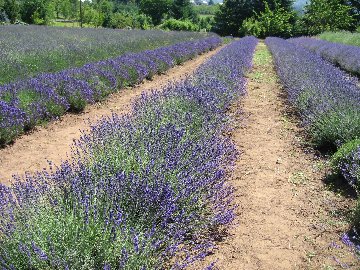
Harvest flowers as you would fruit, selecting those that look most perfectly ready, with the fullest color, and passing over any that seem wilted or less ripe. The fresher the flower, the more flavorful its taste, so pick your flowers as close as possible to food preparation time. Cutting the lavender flowers is best done in the morning when the dew has evaporated and before the heat of the day.
Stem flowers may be put in a glass of water in a cool place until you are ready to use them. All blooms should be thoroughly rinsed. Immerse them in water to remove any insects or soil. Then lay the flowers gently on paper or cloth towels and dab dry, or gently spin dry in a salad spinner. If necessary, layer blooms carefully between moist paper towels in the refrigerator until meal time.
Favorite Recipes Using Culinary Lavender:
Chicken with Herbes de Provence
Crostini with White Truffle & Olive Paste
Cucumber, Lavender, and Mint Infused Water
Grilled Pork Chops with Lavender Flowers
Seared Ahi Tuna with Lavender-Pepper Crust
Categories:
Cooking Articles Culinary Lavender Edible Flowers Herbs, Spices and Seasoning Hints & Tips
15 Responses to “Culinary Lavender”
Emily M. Bettencourt
Dear Linda, I really learned alot about culinary lavender. My Daughter-in -Law, Colleen is very interested in learning to cook with lavender and I’m hoping to find her a cook book. Can you recommend one to me? We have a lavender farm near-by but they just have recipe cards. Thank you, Emily
Nancy
Emily, you can check out our edible flower category pages https://whatscookingamerica.net/category/edible-flowers/ for recipes that include flowers.
Also check the Edible Flower information web page https://whatscookingamerica.net/EdibleFlowers/EdibleFlowersMain.htm for other flowers that you can use in recipes.
Enjoy!
Nancy
Kathy
Since lavender from florist, nurseries, and garden centers isn’t edible because of pesticides, where can you purchase edible/culinary lavender that is safe to eat? How can you be sure it is safe?
Linda Stradley
I grow my own lavender. That way I know it is safe. Check for a local lavender farm in your area.
Jennifer Randall
As garden center Lavender is not safe for eating, may I ask where you got your Lavender with which to start your garden? Thank you 🙂
Whats Cooking America
You need to specifically order “culinary” lavender.
Alexandria Cobb
Can someone please tell me who wrote this article and the publish date so that I can use it as a reference?
Linda Stradley
This article was written by myself, Linda Stradley, many years ago. I have no idea on the date since this web site was founded in 1997. – Linda Stradley
Nancy Bertagnoli
Is any of the current variety’s of lavender edible, or do I need to plant a specific
Ex : Provençal. Or. Phenomel. Or. English. Or?
Thank you for you help. I have phenomel in my garden, looking to plant white ( from Burpees). And ?
Linda Stradley
NOTE: Do not eat flowers from florists, nurseries, or garden centers. In many cases these flowers have been treated with pesticides not labeled for food crops.
Claudette Blais
How much drops of lavender oil replaces 1 tbsp. of culinary lavender?
Nancy
Do not use lavender oil in cooking.
Jennifer
Would my lavender be safe to eat if, I harvest the seeds from a nursery plant and grew my own?
Karen haymond
Where can I get the culinary lavender if not from the nursery.
Deb
Thanks for the article. I just bought dried lavender from the floral area of my grocery store and I was using it in food until I read this. I only used 2 stems so I think I’m ok but definitely won’t use anymore lol.