
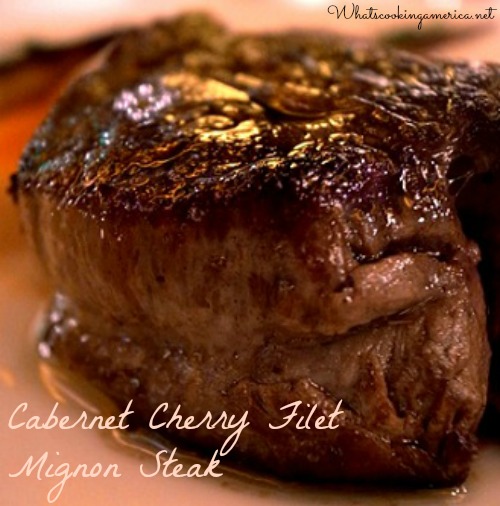
Cabernet Cherry Filet Mignon Steak is very simple, but very delicious with its tangy and savory flavors that are amazing. You can either cook this filet mignon steak by either Pan-Searing or a very easy technique called Sear-Roasting. This is a fantastic steak recipe to use for your next dinner party as it is sure to impress everyone you serve it to.
Get your fork and steak knife ready to cut into this juicy Cabernet Cherry Filet Mignon Steak. Be careful not to look the other way, or someone might try to sneak a bite from your plate!
- 4 (4 to 5 ounce) 1-inch thick Filet Mignon (Beef Tenderloin) steaks*
- Olive oil
- 2 cloves garlic, minced
- 1 1/2 cups Cabernet Sauvignon or burgundy wine
- 3 tablespoons balsamic vinegar (good-quality)
- 4 whole cloves
- 8 whole peppercorns
- 1 bay leaf, torn into small pieces
- 1/2 pound fresh Bing cherries, rinsed
- Coarse salt and freshly-ground black pepper to taste
- 1 to 2 teaspoons granulated sugar (optional)
-
Bring steaks to room temperature. Coat steaks lightly with olive oil. Rub minced garlic evenly over the steak (press in with your hands); set aside until ready to cook.
-
Do not salt your steaks just before cooking. Salt brings moisture (water) to the surface of the steak, and the water sits on the surface as you cook the steak. Thus, you are again basically steaming the steak. I know that some people do salt their steaks before cooking, but trust me and don't salt - the result will be juicy, delicious steaks to serve your family and guests! Salt after the steak is cooked to your liking, has rested the required time, and just before serving.
-
Prepare Cabernet Cherry Sauce: In a large saucepan over medium-high heat, bring the wine and balsamic vinegar to a boil. Tie the cloves, peppercorns, and bay leaf in a bundle with a small piece of cheese cloth. Add the spice bundle to the wine mixture; continue boiling approximately 15 minutes or until mixture is reduced to 1/2 cup.
-
While the wine mixture is reducing, pit the cherries. Cut the cherries into quarters and add to the wine mixture. Cover and cook approximately 10 minutes or until the cherries are tender. Season with salt and pepper. Add the sugar to balance the flavors, if needed. Remove the spice bundle from the sauce and discard. Reduce heat to low to keep Cabernet-Cherry Sauce warm until steak are cooked.
-
Cooking the Filet Mignon Steak: Using the Pan-Searing or Sear-Roasting techniques (see below techniques), proceed to cook your steak to your desired doneness. Your steak is done when the internal temperature registers 120 to 130 degrees F. on your instant-read meat thermometer:
-
Rare - 120 degrees F
-
Medium Rare - 125 degrees F
-
Medium - 130 degrees F
-
What constitutes rare and medium-rare cooked meat? To satisfy government home economists, the Beef Council says rare beef means an internal temperature of 140 degrees F. Well, that is ok if you like well-done and dry meat. If you like moist, rosy meat (like I do), rare begins when the internal temperature registers 120 degrees F. and starts to become medium rare at 125 or 130 degrees F. To cook your meat properly, you must purchase and use a good instant-read digital meat thermometer.
-
Residual Heat or Carry-Over Cooking: Remember, the steak will continue to cook as it sets. The temperature will rise to 125 degrees F. to 130 degrees F. internal temperature (medium rare) at 15 to 20 minutes. So, pay attention to how long you let the cooked steak sit before serving!
-
Residual Heat Definition: Carry-over cooking is caused by residual heat transferring from the hotter exterior of the meat to the cooler center. As a general rule, the larger and thicker the cut of meat, and the higher the cooking temperature, the more residual heat will be in the meat, and the more the internal temperature will rise during resting due to carry-over cooking. This means the meat must be removed from the heat at an internal temperature lower than your desired final internal temperature, allowing the residual heat to finish the cooking.
-
Pour the prepared warm Cabernet-Cherry Sauce over your perfectly cooked steaks just before serving
-
Makes 4 servings.
-
-
In a heavy frying pan (I use my cast iron frying pan) over medium-high heat, heat 2 tablespoons olive oil.
-
Sear the steaks, moving them with tongs a little so they do not stick to the bottom, approximately 5 to 6 minutes per side. Using this Pan-Searing technique, proceed to cook your steak to your desired doneness. Your steak is done when the internal temperature registers 120 to 130 degrees F. on your instant-read meat thermometer:
-
When the steaks are crusty-charred and done to your liking, remove from the pan, cover loosely with aluminum foil, and let rest 5 to 10 minutes before serving. During this time the meat continues to cook (meat temperature will rise 5 to 10 degrees internal temperature after it is removed from the oven) and the juices redistribute.
-
Add any juices that accumulate from the resting steaks to Cabernet-Cherry Sauce. Serve whole or slice thin and fan onto individual serving plates.
-
-
Preheat oven to 500 degrees F (a very hot oven produces a juicy interior). Place a 10- to 12-inch ovenproof skillet or cast-iron skillet in oven. When oven reaches 500 degrees F., remove pan from oven and place on range over high heat (the pan and the handle will be extremely hot - be careful).
-
Immediately place steaks in the middle of hot, dry pan (if cooking more than one piece of meat, add the pieces carefully so that they are not touching each other). Cook 1 to 2 minutes without moving; turn with tongs and cook another 1 to 2 minutes. Remove from heat and put the cast iron skillet with the steaks in it into the oven. Cook an additional 3 to 5 minutes, depending on thickness of steaks and degree of doneness you like. Using the Sear-Roasting technique, proceed to cook your steak to your desired doneness. Use a meat thermometer to test for doneness.
-
When the steaks are crusty-charred and done to your liking, remove from the pan, cover loosely with aluminum foil and let rest 5 to 10 minutes before serving. During this time the meat continues to cook (internal temperature will rise 5 to 10 degrees after it is removed from the oven) and the juices redistribute (add juices that accumulate from resting steaks to the Cabernet-Cherry Sauce).
-
Serve whole or slice thin and fan onto individual serving plates.
* When buying steaks, buy the best grade of meat you can afford. Look for steaks with fine texture and firm to the touch. You want the color to be a light cherry red color, not deep red. Also look for steaks that have marbling, as it is the thin threads of fat running through the meat that make it Prime and gives the wonderful flavor. Check out Types of Steaks and How To Cook the Perfect Steak.
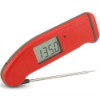 I get many readers asking what cooking/meat thermometer that I prefer and use in my cooking and baking. I, personally, use the Thermapen Thermometer. Originally designed for professional use, the Super-Fast Thermapen Thermometer is used by chefs all over the world. I only endorse a few products, on my web site, that I like and use regularly.
You can learn more or buy yours at: Super-Fast Thermapen Thermometer.
Sponsored Content
Additional Outstanding Steak Recipes:
Beef Tenderloin Steaks Stuffed with Morels
Grilled Beef Tenderloin in Cabernet Sauce