
Anchovy Recipes – Herring Recipes
Anchovies and herring are good for you and they are delicious! Learn how just a little bit of anchovies can perk up a dish. People who claim to dislike these fish, just haven’t tasted them prepared and served right. Give them a try and learn to love cooking with them!
Bagna Cauda Recipe
Bagna Cauda, pronounced [BAHN-yah KOW-dah) is a specialty of Piedmont, Italy. When translated, it means, “warm sauce or hot bath. It was synonymous of good company, delicious food, and the season’s new wine. Now days it is considered a traditional part of the Christmas Eve buffet in homes throughout Italy.
Black and Green Tapenade with Goat Cheese Crostini Recipe
Black and Green Tapenade with Goat Cheese Crostini is the perfect taste combination to serve your family and guests for any occasion that comes up. This is a delicious olive spread or dip that contains chopped green and black olives, slow roasted tomatoes, capers, goat cheese, and an anchovy. You could also serve this tapenade in a bowl and let everyone help themselves.
Braised Lamb Shanks with Anchovy Butter Recipe
Braised Lamb Shanks with Anchovy Butter is flavored with lemon, anchovies, and peppers. In the Fall, when I have an abundant of sweet chile peppers, I like to add anchovies to braised dishes for an unexpected kick of flavor. The addition of anchovies was awesome in the Lamb Shanks, plus they also help thicken the sauce
Classic Caesar Salad Recipe
To many, including myself, this is the “King of Salads”. If a restaurant offers Classic Caesar Salad on the menu, I usually request it when dining out. If you have never experienced “the show” that goes with the table side presentation, you do not know what you have missed. What an opportunity for a waiter to show off his stuff, mixing and whisking to the delight of the patrons.
Absolute Best Light Caesar Salad Recipe
No coddled eggs are used, as mayonnaise contains eggs. I promise you that your guests will never know the difference! I make this delicious version all the time. I also serve this Low-Fat Caesar Salad Dressing with Thanksgiving and Christmas dinners. No one seem to know that I have reduced the fat and calories.
Caesar Arugula Salad Recipe
This Caesar Arugula Salad variation of Caesar salad has always been a big hit whenever I serve it. This is a definite “must try recipe”.
Kale Caesar Salad Recipe
Did you know that kale is considered the new spinach? Raw kale takes the place of the traditional romaine lettuce and partners with my delicious low-fat Caesar Dressing. Raw kale is surprisingly un-bitter, especially if you buy it fresh from the farmers market. This salad tastes healthy and hearty at the same time – plus it is delicious!
Smoky Grilled Caesar Salad Recipe
A salad you can grill! Enjoy Grilled Ceasar Salad. Grilling adds a wonderful smoky flavor variation when the Romaine lettuce is grilled. A fun way to make a favorite salad even better.
Fried Mozzarella with Anchovy Sauce
This recipe uses an anchovy Sauce. The sauce is delicious, really rich and intense – great to make again and again. Try it on pasta, bruchetta, sandwiches, or even give it as a gift! Give this Fried Mozzarella Cheese appetizer a try and you will be pleasantly surprised.
German Herring Salat (Pickled Herring Salad)
I want to share my family’s recipe for making German Herring Salad, known to our family as Herring Salat. This recipe is from my children’s Grandmother, Gertrude Zemp. Their Grandmother recalls that her mother used to make this salat appetizer every Christmas in Germany.
Green Goddess Dressing
This is a slight adaptation, but a very delicious version, of the original version of the Green Goddess Salad Dressing. Today, there are many version of this delicious salad dressing. Green Goddess Salad Dressing also makes an excellent dip to serve with your favorite vegetables and also a spread for your sandwiches. One of my favorite ways to enjoy this fantastic dressing, is to serve with steamed artichokes. I also like to serve this dressing on top of a chilled lettuce wedge. So good!
Italian Panzanella Salad (Bread Salad)
Italian Panzanella Salad is a classic family favorite when vine-ripened tomatoes are over flowing in garden. It is definitely one of those recipes that you will crave and look forward to each year! This is a salad that is really best with fresh vine-ripened tomatoes. The flavor is not as good with hot house tomatoes. So I will not even make it if tomatoes are not in season. The cubes of rustic bread, usually day-old bread, soak up the delicious balsamic vinegar dressing.
New Orleans Muffuletta Sandwich
Muffuletta Sandwiches can be found all over New Orleans from delis to pool halls and also at the corner grocery stores. It is an Sicilian sandwich that consists of a round loaf of bread (about 10 inches across) filled with Italian salami, olive salad, cheese, Italian ham, and freshly minced garlic. The key ingredient is the olive salad which gives the sandwich its special flavor and makes it appealing to the eye.
Pasta with Roasted Cauliflower and Anchovies
Pasta with Roasted Cauliflower and Anchovies recipe features roasted cauliflower and anchovies. This my version of the popular Italian pasta recipe. This pasta is so good that you’ll want to lick the bowl! If you love roasted cauliflower as I do, you will absolutely love this Pasta with Roasted Cauliflower and Anchovies dish. Even if you think you are not an anchovy lover, you probably will not mind them, as once the anchovies are fried, the anchovies melt into the background and provide the dish with rich and savory undertones. This pasta with roasted cauliflower dish will make you an anchovy lover in the future.
Spaghetti alla Puttanesca
It is said that this Spaghetti alla Puttana is a quick pasta preparation made it popular as a fast snack between clients, because in Italian, a puttana is a lady of the night. This pasta is also know as whore’s pasta. The name could also come because this pasta is so delicious that it is downright sinful! What do you think? Today, this Spaghetti alla Puttanesca pasta dish is found throughout Italy, although it is particularly popular in Rome.
Anchovy and Anchovy Paste
An anchovy is good for you and they are delicious! Learn how just a little bit of anchovies can perk up a dish. People who claim to dislike these fish, just have not tasted them prepared and served right. Give them a try and learn to love cooking with them!
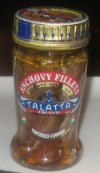 Anchovy:
Anchovy is tiny silver fish that are a member of the herring family, about 3 inches long, native to the Mediterranean and southern European coastlines. They are sold whole, and salt-packed or, more commonly, filleted and packed in oil (olive oil is best). The most popular and tasty are the ones in olive oil and salt.
A filleted anchovy is ready to use, but always taste a newly opened can of anchovies before using in a recipe. If they are too salty, rinse the fillets well in warm water, then pat dry on paper toweling. The oil in which the anchovies were packed should be discarded unless a recipe specifies otherwise (it will be too fishy and salty to use in the majority of recipes). Whole anchovies require more work to remove the heads, tails, and backbones. They also need to be rinsed of excess salt.
NOTE: If you are not familiar with strongly flavored ingredients such as anchovies, add them to your dish in very small amounts so that you can control the taste and balance the flavors.
Please do not be tempted by bargain-priced anchovies. The really good ones are never cheap and the cheap ones are likely to be the really awful tasting ones that have give anchovies a bad name.
If using canned anchovies, do not keep the leftover ones in the tin. Remove them, curl them into rolls, put them in a small airtight container, cover them with extra-virgin olive oil, and refrigerate. For the most intense flavor, use within six months.
1 (2-ounces) can = 7 to 10 anchovy fillets
1 (2-ounces) can = 3 tablespoons mashed anchovy
1 anchovy fillet = 1/2 teaspoon mashed anchovy
Anchovy Paste:
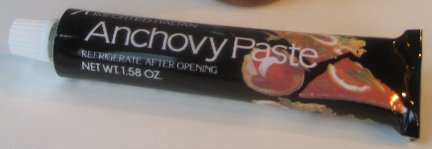
Anchovy Paste is ground anchovy fillets ground to a paste, then blended with salt and a small amount of sugar (to mellow the flavor. For dishes that use just a touch of anchovy, the convenience of the squeezable tube can not be beat.
1 (2 ounces) tube of anchovy paste = 5 tablespoons or 1/4 cup chopped anchovies
1/2 teaspoon anchovy paste = 2 anchovy fillets
1 teaspoon mashed anchovies = 1 teaspoon anchovy paste
Categories:
Anchovy & Herring