
The BEST Balsamic Vinegars have nothing else added to them – Only The Grapes
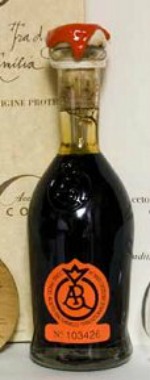 There is a lot of confusion about balsamic vinegar. On the grocery shelves you will find $3.00 bottles next to $25.00 bottles (often the $3.00 bottles have fancier labels). But, buyer beware! Not all balsamic vinegars are what they appear to be.
Standards adopted and administered by consortia in Modena and Reggio Emilia govern every aspect of how balsamic vinegar is produced and aged. This includes the bottle shape and even the foil that covers the cap.
According to the Cook’s Illustrated Magazine, March 1, 2007:
Tasted straight from the bottle, there was no contest between supermarket and traditional balsamic vinegars. Even the best of the commercial bunch – while similarly sweet, brown, and viscous – couldn’t compete with the complex, rich flavor of true balsamic vinegar. With notes of honey, fig, raisin, caramel, and wood; a smooth, lingering taste; and an aroma like fine port, traditional balsamic is good enough to sip like liqueur.
Guide To Balsamic Vinegars:
What is balsamic vinegar? Balsamic vinegar is a reduction made from grapes, but it is not considered a wine vinegar because the grape juice used is unfermented. The unfermented white sweet grape juice that is used is called must and comes from the Trebbiano grapes.
You will find lots of balsamic vinegars in your local stores. Some are worth their high price and others are not. Often, the less expensive ones may suit your needs just fine. While there is really only one “True” balsamic vinegar, there are actually three types of balsamic vinegars that you will encounter on your next shopping experience. Determine which type of balsamic vinegar is for you to use in your cooking and different recipes:
True aceto balsamic vinegar comes in 3.4 ounce bottles and sells from $50.00 to $500.00 per bottle. It must be aged a minimum of 10 year. The better balsamic vinegars are aged 25 to 50 years (these are not to be poured, but used by the drop). Dark in color and syrup in consistency, they have a flavor that is a balance of sweet and sour. Tradizionale has a mellow acidity and a sharp aroma.
Look at the seal, list of ingredients, and the cap for clues. Read the label for cooked grape must, the word “tradizionale,” and the length of time vinegar has aged.
Follow these helpful clues offered by The Vinegar Institute:
Make sure the consortium seal is over the cap, as well as on the label.
Traditional balsamic vinegar of Modena is only bottled in the distinct bulb-shaped, 100-milliliter bottle.
Modena brands use red and silver labels to indicate aging of 12 and 18 years respectively.
A gold cap indicates a minimum age of 20 years.
Look for a bottle that comes in a box with a book containing recipes and a description of the process of manufacture and recipes.
Locate traditional balsamic vinegar of Modena in fine gourmet shops.
Find a Good-Quality, Medium-Priced, Balsamic Vinegar to use in your cooking:
Use a good-quality balsamic vinegar that is usually aged around ten years. Use in recipes calling for larger quantities of balsamic vinegar. This grade of balsamic vinegar is also known as salad balsamic (balsamic insalata), which gives you a clue as to how it’s used. This is the grade of balsamic vinegar used in your cooking, such as for a flavorful salad dressing, to flavor enhance soups and stews, and also used as a marinade.
Good-quality balsamic vinegars have brown sugar or caramel added to mimic the sweetness of the besy-quality ones.
If a company produces a “traditional” balsamic vinegar, they will also produce a less expensive, but high quality vinegar as well. This is the same vinegar with the same heritage but not aged as long. You can have confidence in purchasing these balsamic vinegars. CHECK YOUR LABELS!
Short History of Balsamic Vinegar:
Until approximately 25 years ago in the late 1970s, true balsamic vinegar or Aceto Balsamico Tradizionale, as it is called in Italian, was an Italian artisan product relatively unknown outside of Italy.
The same country that brought you such notable artists as Michelangelo and Leonardo da Vinci, as part of the Renaissance, also provides a culinary artistry that offers incomparable quality and taste – the wonderfully adaptable aged balsamic vinegar, aceto balsamico di Modena. Balsamic vinegar can only be produced in the regions of Modena and Reggio in Italy.
Aceto Balsamico Tradizionale has actually been being made for nearly a thousand years, but never for commercial use. It was a well kept guard family secret to the rest of the world and relatively unknown even to other Italians. Instead families would pass it on as an heirloom, give it away in very small vials to friends, or bequeath it to a daughter as part of her dowry.
The first historical reference to balsamic vinegar dates back to 1046, when a bottle of balsamic vinegar was reportedly given to Emperor Enrico III of Franconia as a gift. In the Middle Ages, it was used as a disinfectant. It also had a reputation as a miracle cure – good for everything from sore throats to labor pains.
For more information on the history of traditional balsamic vinegar: History – History of Traditional Balsamic Vinegar of Modena.
Production of Balsamic Vinegar:
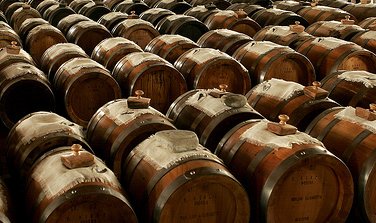 The production of balsamic vinegar resembles that of wine making. Balsamic vinegar is an aged reduction of white sweet grapes (Trebbiano for red and Spergola for white sauvignon) that are boiled to a syrup.
The grapes are cooked very slowly in copper cauldrons over an open flame until the water content is reduced by over 50%. The resulting “must” is placed into wooden barrels and an older balsamic vinegar is added to assist in the acetification.
Each year the vinegar is transferred to different wood barrels so that the vinegar can obtain some of the flavors of the different woods. The only approved woods are oak, cherry, chestnut, mulberry, a cacia, juniper, and ash. The age of the vinegar is divided into young – from 3 to 5 years maturation; middle aged 6 to 12 years and the highly prized very old which is at least 12 years and up to 150 years old.
Recipes using Top-Quality Balsamic Vinegar (Aceto balsamico tradizionale):
This is the top-grade and absolute best balsamic vinegar. True aceto balsamic vinegar comes in 3.4 ounce bottles and sells from $50.00 to $500.00 per bottle. Traditional Aceto Balsamico is used sparingly as a condiment or seasoning. This balsamic vinegar works best uncooked, as a drizzle to finish a dish.
Anytime Balsamic Shrimp
An all-time favorite grilled shrimp dish, and it couldn’t be simpler. Just brush the aged balsamic vinegar on the shrimp as you grill them.
Asparagus Parmigiano
This is one of my favorite ways to prepare and serve fresh Spring asparagus. It is so simple to do and so good.
Baked Sweet Onions
These baked onions are so simple to make and so good, plus these onions are low calorie!
Balsamic Strawberries
This is heavenly! – You’ll love seeing the surprised look on your guests faces after they take the first bite.
Fig Brulee with Balsamic Vinegar
I have to make this every year when fresh figs appear. If you have a blowtorch, it takes all of 30 seconds, looks really cool, and tastes great.
Fresh Figs with Fleur de Sel, Aged Balsamic, and Hazelnuts
This is one of my favorite late-summer/early-autumn desserts and a lovely way to end a meal.
Fresh Strawberry Granita
When fresh strawberries are in season in your area, this is a must make!
Grilled Fig and Arugula Salad
The combination of flavors in this delicious salad will send you to new heights in flavor. Your guests will absolutely adore this salad.
Tomato Bruschetta
This Tomato Bruschetta Is the most wonderful appetizer during fresh tomato season. Try it and you’ll be hooked!
Watermelon Cubes with Aged Balsamic Vinegar
This charming little amuse is comprised of two ingredients, and when there are only two, they had better be the best there are! When Aged balsamic vinegar is paired with watermelon, it is heavenly.
Recipes using Good-Quality Balsamic Vinegar (Aceto balsamico tradizionale):
This is the grade of balsamic vinegar used in your cooking, such as for a flavorful salad dressing, to flavor enhance soups and stews, and also used as a marinade.
Asparagus with Balsamic Viniagrette
Balsamic and Dijon Glazed Ham with Roasted Pearl Onions
Brussels Sprouts with Pancetta, Garlic and Basil
Cherry-Tomato Salad with Tarragon
Chocolate Panna Cotta with Port-Balsamic Cherries
Couscous Salad with Dried Cherries
Fusilli with Shrimp, Tomatoes, and Basil
Goat Cheese & Balsamic-Honey Crostini
Green Beans and Red Bell Pepper in Balsamic Vinegar
Green Beans with Balsamic-Shallot Butter
Grilled Balsamic-Dijon Chicken
Grilled Rack of Lamb with Pinot Noir Marinade
Italian Panzanella Salad (Bread Salad)
Parma Salad (Prosciutto Di Parma Salad)
Red Potato and Green Bean Salad
Roasted Beets with Blue Cheese and Pecans
Roasted Garlic and Goat Cheese Tomato Tart
Roasted Garlic Dipping Sauce with Fresh Ginger
Roasted Pork Loin and Vegetables
Roast Salmon with Pinot Noir Syrup
Seared Tuna with Gingered Plum Ragout
Shish Kebobs (Portuguese Espetadas)
Wilted Balsamic Spinach Salad with Asparagus
Wilted Spinach Salad with Bacon and Balsamic Vinaigrette
Recipes using Imitation Commercial-Grade Balsamic Vinegar:
The fact is, there are no standards or controls in making this grade of balsamic vinegar. It is a mixture of wine vinegar, sugar, water, preservatives, caramel, and flavorings. This grade of balsamic vinegar is found in most of your supermarkets and grocery stores. Do not waste your money on pricey traditional balsamic vinegar if you’re going to toss it on salad or cook with it.
I very seldom use this grade of balsamic vinegar. My main use of this low quality of balsamic vinegar is to make the Faux Aged Balsamic Vinegar, also known as Balsamic Reduction. If desired, you could also use this grade in the vinaigrette recipes.
Artichoke Mushroom Cannelloni Lasagna
Faux Aged Balsamic Vinegar
Learn to do as the Italians so – reduce your inexpensive balsamic vinegar with a little brown sugar. It’s a good second to the aged balsamic vinegars!
Grilled Balsamic Chicken and Peaches
Grilled Green Beans with Gorgonzola Vinaigrette
Slow-Cooked Balsamic Pork Chops and Gravy
Categories:
Baking Hints & Tips Balsamic Vinegar Condiments - Sauces - Butters - Relishes - Jam and Jelly Recipes