
Selection and Storage of Chile Peppers
Be careful when you handle any kind of chile peppers. Chile peppers contain oils which can burn your skin and especially your eyes. Avoid direct contact as much as possible. Many cooks wear rubber gloves while handling chilies. Another way is to generously grease your fingers with any kind of shortening (even the cooking sprays can help).
Generally speaking, the smaller the chile pepper, the more intense the heat. Chile peppers contain oils which can burn your skin and especially your eyes. Avoid direct contact as much as possible. Many cooks wear rubber gloves while handling chilies, or or generously grease your fingers with any kind of shortening (even the cooking sprays can help). In any case, after working with the chiles, be sure to wash your knives, cutting board and anything else thoroughly with hot soapy water.
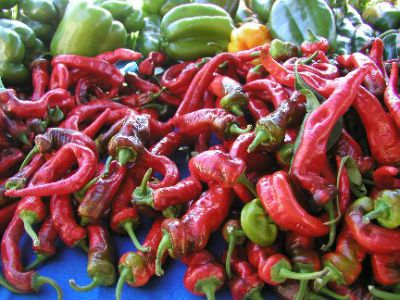
Fresh Chile Peppers: Make sure that they are firm to the touch and the skin is smooth. Once they are wrinkled, their crisp texture and fresh flavor are gone. Use your chile peppers as soon after purchasing as possible. Otherwise store them for up to two weeks wrapped in a dry terry-cloth towel inside a paper bag in the refrigerator or a cool dark place. Do not freeze.
To select chile peppers for cooking: If you are searching for milder chiles, always select ones that have broad shoulders and blunt tips. For hotter chile peppers, select chiles with pointed tips and narrow shoulders. This is important because you can have up to 35 different piquancies on one plant at a time.
Testing the chile pepper’s heat: Chile peppers get their hotness from a family of chemicals called capsaicinoids with two members (capsaicin and dihydrocapsaicin) of the group making up 90 percent of the capsaicinoids. The spiciness or heat of each pepper depends on the relative amounts of these hot compounds hidden inside the pepper’s flesh.
Did you know that most of the heat in a chile pepper is contained in the white, spongy mass of the core of the chile and the ribs. It is actually a misconception that the heat is in the seeds themselves. Even chile peppers of the same variety can range widely in their heat – some jalapenos chile peppers are mild and others are spicy hot! Here is a simple test too test your chile pepper. – Find Cooking Magazine, Feb/Mar 2013
First cut chile pepper open and bring it close to your nose. If the chile pepper is hot, you will immediately feel a tingling sensation, which can vary in intensity. If you sense no tingling, the chile pepper is mild.
Dried Chile Peppers: The best dried chile peppers are the ones that have been sun dried. If possible, buy loose, rather than packaged chile peppers so that you can examine them closely. Dried chile peppers should have a rich (not dusty), uniform color, unbroken skins, and a slight flexibility. Do not buy those with skin blemishes. Select chilies that are still a little flexible and not dried to a crisp.
Dried chile peppers should be used within 1 year of production. Store in a cool and dry area or in a very airtight container (tightly sealed jar or freezer bag) in the refrigerator.
Some Favorite Types of Chile Peppers and Recipes
Chile peppers are available year round and in the United States they are mainly grown in California, New Mexico, and Texas. I have included many recipes from this web site using different types of chile peppers. Experiment with recipes and substitute different varieties of chile peppers:
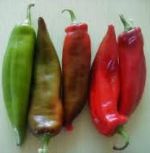 Anaheim Chile Peppers: When a green color, they are known as California green chile, long green pepper, and chile verde. When mature, they turn a bright red and are known as a chile Colorado and California red chile. These are very mild chiles that grow to 8 inches in size. Often stuffed or added to salsas. They have a tough skin, but it peels off easily if you first char the chiles over a flame and then steam them in a paper bag for several minutes. Anaheims chile peppers are available year-round, but they are best in the summer.
Beef Tongue (Lengua de Res)
Braised Lamb Shanks with Anchovy Butter and Peppers
Enchiladas (Rolled Enchiladas)
Enchiladas with Green Sauce (Enchiladas con Salsa Verde)
Ensalada de Colores – Vegetable Salad
Mike’s Bachelor-Style Enchiladas
Goat Cheese Medallions with Mango-Pepper Salsa
Guacamole Dip with Cilantro
Killer Shrimp
Salsa Verde
Southwestern Chile Relleno Quiche
Tolbert’s Original Bowl of Red
Traditional New Mexican Red Stacked Enchiladas
Turkey in Mole Sauce (Mole Poblano de Guajolote)
Zesty Chicken Pasta with Peppers
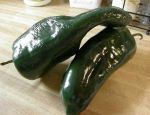 Ancho or Poblano Chile Peppers: Pronounced AHN-choh. A dried deep reddish brown chile pepper about 3 inches wide and 4 inches long with a sweet hot flavor. When fresh they are referred to as poblanos. They look like small bell peppers. Anchos are flat, wrinkled, and heart shaped. They range in color from very dark red to almost black. Anchos are mild to moderately hot and often soaked and ground for use in sauces.
Cheesy Creamed Poblano Chile with Corn
Chipotle Corn Salad
Butternut Squash with Green Chile and Mustard Seeds
Enchilada Suizas
Mole Poblano de Guajolote (Turkey in Mole Sauce)
New Mexican Spicy Beef Stew
Pork Adobo Tacos
Pork Stew with Green Chiles
Roasted Chile Pepper & Tomatillo Salsa
Southwest Corn Custard with Roasted Peppers
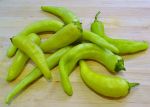 Banana Chile Peppers: Also known as yellow wax pepper and banana chili. The name comes from the fact that its shape and color resemble a banana. Most banana chile peppers are typically yellow, but they can also be orange or red. The flavor varies from mild to moderately hot depending on the maturity of the pepper, with the most ripe being sweeter than younger chiles. Yellow peppers are generally served pickled.
Black Valentine Beans with Garlic and Green Chile Pepper
Braised Italian Cross Rib Roast
Chicken Breasts with Sweet Chiles and Basil
Marinated Chinese Long Beans with Peppers
Round Zucchini Squash with Banana Peppers
Sweet Pickled Banana Chile Peppers
Weeknight Porchetta
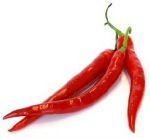 Cayenne Chile Peppers: Also known as the Guinea spice, Ginnie pepper, Cow Horn pepper, finger chili, and bird pepper. These peppers range from 4 to 12 inches in length and are one of the most common chile peppers available. Deep green, yellow, orange, or red. Long, skinny, and wrinkled in appearance. Hot in taste and often used in Cajun recipes.
Cajun Chow Chow Relish
Fruity Nachos
Pork Stew with Green Chiles
Pureed Potato & Cheddar Cheese Soup
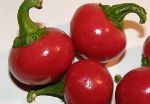 Cherry Chile Peppers: Also known as hot cherry pepper, Hungarian cherry pepper, bird cherry pepper, Creole cherry pepper, and wiri-wiri. These peppers are round and red like a cherry, and so named because of their resemblance to cherries. Sold fresh or pickled in jars, these chile peppers range from mild to moderately hot. Also a great pickling pepper.
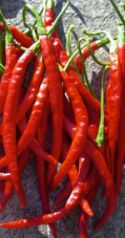 Chiles de Arbol Chile Peppers: Chiles de arbol or arbol chile (ARE-bowl) are narrow, curved chiles that start out green and mature to a 3-inch to 5-inch bright red pod. The arbol chile is very hot, and related to cayenne pepper. These chiles register around 50,000-65,000 on the scoville heat unit scale (or about 7-8 on a 1-10 scale). These chile peppers are found Mexican Food Stores and in most Hispanic food sections of grocery stores.
Cinnamon Lamb Chops with Spicy Chile Pepper Sauce
Pork Adobo Tacos
Portuguese Braised Beef Shanks
Smokey Toasted Arbol (or Guajilla) Salsa
Spicy Chile Pepper Sauce
Trombocino Squash with Tomatoes
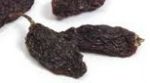 Chipotle Chile Peppers: They are a dried jalapeno chile pepper. Chipotle chiles originated in Mexico as a way to preserve Jalapeno peppers. These chile peppers are slowly smoked over a natural wood fire until they are infused with a smoky flavor and are completely dried. They can then ground into a chipotle powder that can easily be used to add a spicy flavor any food, or be added to many dishes dishes whole for flavor. You can also find these Chipotle chiles, canned, in an adoblo sauce (spicy tomato sauce).
Beef Barbacoa
Carne Apache
Chipotle Corn Salad
Chipotle Grilled Filet Mignon
Lemon Chipotle Chicken
Quesadillas – Sincronizadas
Smoky Chipotle Hummus
Spicy Chipotle Chilaquiles
 Giant Marconi Chile Peppers: Giant Marconi is an improved Italian grilling pepper. About 6 to 8-inches long, the tapered green pepper will mature to red. They taste excellent raw, but are best when grilled. They have a memorable sweet, smoky flavor. They are great stuffed with cheese, used in stir-fry, and cooked into taco or burrito fillings.
Pork Stew with Green Chiles
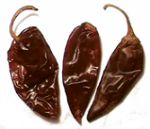 Guajillo Chile Peppers: Guajilla Chile Peppers are one of the backbone chile peppers used in cooking Mexican-style dishes. This shiny, deep orange with brown tones measures about 4 to 6 inches long and 1 to 1 1/2 inches across. Not hot, but rich, smoky, and complex. Perfect for chili and especially nice with pork. Also used in salsas, chile sauces, and stews.
Cinnamon Lamb Chops with Spicy Chile Pepper Sauce
Slow-Cooked Pork Shoulder with Lime and Chile Pepper – Crock Pot Recipe
Smokey Toasted Arbol (or Guajillo) Salsa
Spicy Chile Pepper Sauce
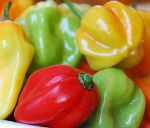
Habanero Chile Peppers: Also know as Scotch Bonnet. Unripe habaneros are green, and they color as they mature. Typically yellow-orange but they can be green, red, or orange. These peppers are lantern shaped and typically about 2 inches long. This are the hottest pepper grown commercially with intense fiery flavor, a unique floral flavor, and an extremely intense heat that affects the nasal passages. The Habanero Pepper is generally recognized as being the hottest, weighing in at around 150,000 to 300,000 Scoville heat units.
Grilled Hot Chile Wings
Spice-Rubbed Crusty Pork Tenderloin
Thai Chicken with Fresh Basil
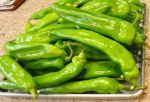 Hatch Chile Peppers: Hatch Chiles are available fresh for a short time in well-stocked local markets from late August to early September. Check with your local store to find out their availability. Because of their short season, I roast them for storage in the freezer throughout the year. Following is how I process 10 pounds of these flavorful peppers each year.
Learn how to prepare Hatch Chile Peppers (Blistering and Processing Hatch Chile Peppers for Freezing).
Beef and Bean Burritos with Hatch Chiles
Beef Braised In Barolo Wine
Beef Short Ribs with Lime and Chile Sauce
Beef Tacos
Black Valentine Beans with Garlic and Green Chile Pepper
Breakfast Burritos with Chorizo
Huevos Rancheros in Tortilla Cups
Pork Stew with Green Chiles
Randy’s Chili
Rice with Chiles and Herbs
Ropa Vieja – Cuban Beef Stew
Smoked Turkey, Bean and Kale Soup
Tex-Mex Salad Taco Bowls
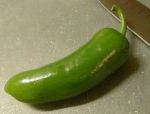 Jalapeno Chile Peppers: Most often green when mature but sometimes red. They are very hot, with an immediate bite. Use whenever recipe simply calls for hot chile peppers. They can be fresh or canned. When smoked, jalapenos are called chipotles.
Avocado Mojo Dressing or Dip
Avocado-Corn Salsa
Baked Asparagus with Swiss Gruyere and Red Chile Pepper
Basil Pesto with Pistachio Nuts
Black Valentine Beans with Garlic and Green Chile Pepper
Breakfast Quesadilas
Cafe Terra Cotta Garlic Custard
Chicken Tortilla Soup
Chile-Mint Sauce
Chocolate Jalapeno Cake
Chunky Avocado Salad – Guacamole Salad
Clod Tenders with Bell Peppers and Beans
Cornbread Salad
Corn Radish Salad with Chile-Jalapeno Dressing
Crab Cakes with Ginger-Citrus Vinaigrette
Crab Cakes with Orange-Dill Sauce
Cranberry Salsa with Cream Cheese
Cucumber Salsa
Fresh Mango Salsa
Fresh Tomato Corn Salsa
Fresh Tomato Pasta Salad
Fresh Tomato Salsa
Fried Potatoes with Sausage and Eggs
Grilled Jalapeno Poppers
Grilled Pork Loin with Blackberry-Wine Sauce
Guacamole (Garden Style)
Hawaiian Poke
Jalapeno Cheese Quiche
Jalapeno Pepper Jelly
Jambalaya with Roasted Lemon
Lobster Cakes with Papaya Mayonnaise
Marinated Chinese Long Beans with Peppers
Mayan Hot Chocolate and Mexican Hot Chocolate
Mango-Black Bean Salsa
New Mexican Spicy Beef Stew
Northwest Mini Crab Cakes with Orange Sauce
Orca Bean, Jalapeno Chile, and Yellow Rice Soup
Pasta with Roasted Cauliflower and Anchovies
Pepper Crusted Halibut with Chile-Mint Sauce
Quesadillas – Sincronizadas
Red Quinoa Salad with Lime Chipotle Vinaigrette
Rick’s (soon to be famous) Salsa
Savory Squash Rolls
Shish Kebobs (Portuguese Espetadas)
Shrimp Martini Ceviche with Chili-Cumin Chips
Southwest Cowboy Caviar – Texas Caviar
Spanish Rice
Spicy Chicken and Tomatillo Soup
Spicy Chile with Peppers
Spicy Chipotle Chilaquiles
Tequila Lime Chicken
Thai Chicken Noodle Soup with Ginger and Cilantro
Thai Chicken with Fresh Basil
Tomatillo-Avocado Salsa
Tomatillo-Avocado Guacamole
Tomato Raisin Fusion Salsa
Vegetable Pizza with Potato Crust
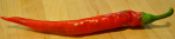 Jimmy Nardello Chile Peppers: From outward appearances, you may assume that this 10-inch long pepper, which turns from kelly green to scarlet red when it is ripe, is a pepper that will produce heat on your tongue. But it is actually not hot at all. Quite the contrary, in fact. These peppers are deliciously sweet and can be munched raw, right from the garden. They are a great frying pepper, turning even sweeter. Use them to top your steaks or chicken, and they are excellent in salsas.
Arrabbiata Sauce
Braised Lamb Shanks with Anchovy Butter and Peppers
Jazzy Pinto Beans
Marinara Sauce
Mediterranean Stuffed Shells
Tuscan-Style Vegetable Soup
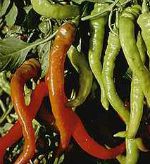 Pepperoncini, Pepperoncino (pep-per-awn-CHEE-nee): Also known as Tuscan peppers, sweet Italian peppers, and golden Greek peppers. The Italian varieties, grown in the Tuscany region of Italy, tend to be more bitter than their Greek counterparts. The more popular Greek varieties are sweeter and commonly found in pizzerias tossed in salads for a crunchy, salty taste. They have a bushy plant that grows to 30 inches tall and producing sweet green peppers that turn red when mature. Usually picked at 2 to 3 inches long, these bright red, wrinkled peppers taper to a blunt, lobed end and are very popular for pickling. These peppers are mild and sweet with a slight heat to them, and are commonly jarred for use in Greek salads and salad bars.
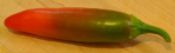 Serrano Chile Peppers (suh rah noh): – The serrano chili pepper is a smaller version of the jalapeno, similar in color, but smaller, about 1 to 2 inches long, 1/2 inch wide. They are commonly red, brown, orange, or yellow. Moderate to very hot with an intense bite. Serrano chile peppers have thin walls, and they don’t need to be steamed or peeled before using, making it the easiest chile pepper to use for salsas. The serrano is said to be about 5 times hotter than the jalapeno. Can be found canned, pickled, or packed in oil with vegetables. Often served in Thai or Mexican dishes.
Arrabbiata Sauce
Baked Asparagus with Swiss Gruyere and Red Chile Pepper
Grilled Hot Chile Wings
Jazzy Pinto Beans
Marinara Sauce
Mediterranean Stuffed Shells
Pesto and Cheese Omelet with Balsamic Tomatoes
Pork Chile Verde
Pork Chile Verde Stew – Slow Cooker
Pork Stew with Green Chiles
Rick’s (soon to be famous) Salsa – Canned Tomato Salsa
Roasted Chile Pepper & Tomatillo Salsa
Ropa Vieja – Cuban Beef Stew
Southwest Cowboy Caviar – Texas Caviar
Thai Chicken with Fresh Basil
Tomatillo and Cucumber Gazpacho Soup
Tuscan-Style Vegetable Soup
How To Prepare Fresh Chile Peppers
This photo tutorials for preparing and roasting fresh chile peppers is courtesy of Cynthia Detterick-Pineda of Andrews, TX. Check out more of Cynthia’s Southwest Recipes.
To use fresh chile peppers in your recipe, you want to remove the tough skin, the seeds and the ribs.
Warning: Always wear gloves when working with hot chile peppers (fresh, dried or roasted chiles). Never touch your eyes when working with chiles. Gloves will protect your hands, but the capsaicin in the chile pepper sticks to all it touches, and if you touch near your eyes it will burn. Rinse well with copious amounts of water. If the chile pepper is too hot for your taste buds, drinking milk is a sure way to stop the burn. Sugar may also help. Please do not learn this lesson the hard way!
First wash the chile pepper.
There is no certain way to tell if a pepper is hot by looking at it, although I have heard many, many wife’s tales about dark spots, cracks and anything else. But the only sure way to tell is by tasting.
Slice the chile pepper down the center with the tip of your knife.
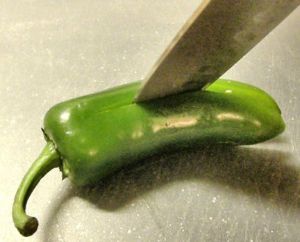
You can see the membranes and seeds here in these two halves. The membranes are where the capsaicin is stored. It is this part of the chile pepper that carries the heat. The seeds are not as hot, but since they are a part of the membrane they do have a slight bit more heat than the green outer chile pepper.
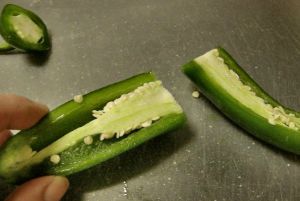
If you are simply dicing your chiles, the easiest way to clean them is to cut them into quarters. Then you can simply slide a sharp knife carefully down the green outer part of the chile pepper removing the white membrane and the seeds.
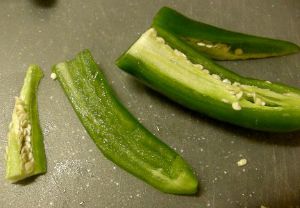
If you are making a dish which requires chile pepper halves, you can still clean them out easily with a sharp knife run along the inside edge to cut loose the membranes and remove the seeds. Just be very careful, as much as a small cut from a sharp knife hurts, it is much worse when it is touched by chile pepper!
How To Roast Fresh Chile Peppers
Preheat the broiler of your oven. Wash and dry the chile peppers.
Place chili peppers on a baking sheet; broil 3 to 5 minutes each side until blackened. Remove from oven.
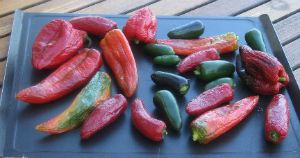
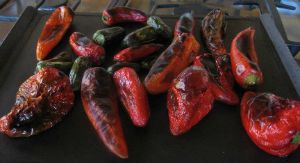
Place the hot roasted chile peppers in a bowl, cover with plastic wrap or an air-tight lid, and allow to steam for 10 minutes.
After 10 minutes, remove chile peppers. Using a sharp knife, remove stems, skins, and seeds. Peel the charred skin off the peppers and remove stems and seeds.
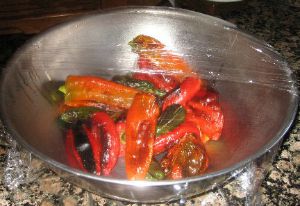
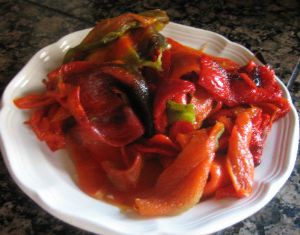
Roasted chile peppers can play many culinary roles:
Dice and mix with scrambled eggs and cheese.
Saute with skillet potatoes and onions.
Slice and layer on sandwiches, quesadillas, and burgers.
Mix into your favorite salsa recipe.
Perk up store-bought salsa.
slice and layer on fried eggs or eggs over easy, topped with cheese and briefly run under the broiler to melt the cheese.
Use instead of (or in addition to) sliced tomatoes in a grilled cheese sandwich.
As a condiment: Mash up diced chiles with crushed garlic and salt. Add to anything you like.
Stir into soups, stews, and pasta sauces to add depth and complexity.
Dice and add to stir-fries.
Add to meatloaf and sloppy Joes.
How To Prepare and Roast Fresh Poblano Chiles:
Roast the Poblano chiles either in a cast-iron skillet over medium high heat, under the broiler, or over an open flame (such as your grill). Turn the chile frequently to prevent over cooking on any one side, and let the entire chile pepper become charred and blackened.
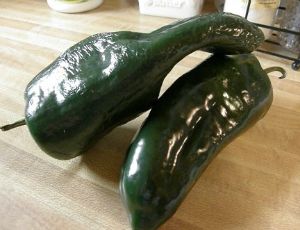
Remove from the heat and place in a slightly damp towel, allow to cool. Cooling the chile in a damp towel will help to loosen any skin that is still stuck on the chile pepper.
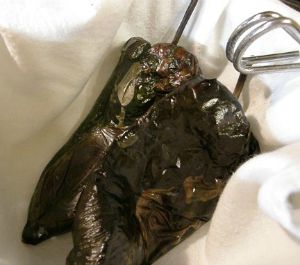
Once cool, carefully peel the skin from the chile pepper, remove the stem end, and slice open to remove the seeds. Once this is done, dice the chile pepper in 1/2-inch by 1/2-inch pieces; set to the side until ready to use.
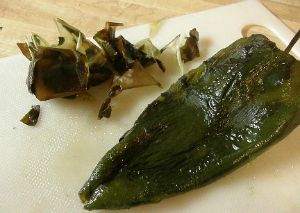
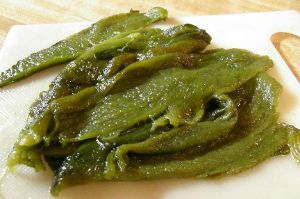
Check out What’s Cooking America’s web page on Hatch Chile Peppers – Blistering and Processing Hatch Chile Peppers for Freezing
How To Prepare Dried Chile Peppers
With a damp cloth or under running cool water remove the dust and dirt from the dried chile peppers.
To remove the seeds from a dried chiles, pull or cut off the stem, split the chile pepper lengthwise, then scrape out the seeds with a spoon.
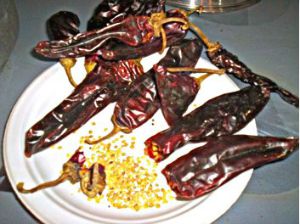
In a large pot, place chile peppers and cover with hot (not boiling) water and let soak for approximately 1 hour (do not soak more than an hour and save the juice to spice soups).
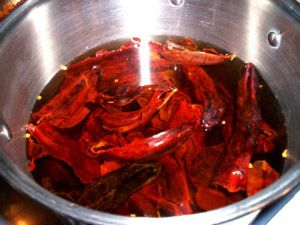
NOTE: Some people remove the seeds and membrane after the soak process.
Categories:
Chile Pepper Recipes Chile Peppers Cooking Lessons - Cooking 101 Herbs, Spices and Seasoning Hints & Tips
One Response to “How To Prepare Chile Peppers – Chile Pepper Recipe Index”
Margo Haynes
I once had a book with information about all types of chili peppers and lost it in a flood. At that time due to expenses I could not afford to replace it….since then I have been gathering information online.
This article is so beautifully done and the information in it is superb! Thank you so very much for your hard work, your knowledge, research, time & all of the delicious recipes! I have been clicking on them & there are no words to express my joy at such a “treasure trove” of delicious recipes for me prepare!
Have a very blessed day, 24/7 all year long!
Margo